

Basements are the one room in most houses where the ceiling fights you. There is no daylight to soften a bad layout, the joists sit lower than they do upstairs, and the air holds moisture that an upstairs drywall ceiling never sees. That is why picking the best recessed lighting kits for basements comes down to clearance, damp ratings, and whether you can still change your mind after the drywall goes up.
We went through the specs and owner feedback on twelve of the highest-rated canless and retrofit kits on the market, then judged each one against basement conditions rather than showroom conditions. The short version: a 6 inch canless wafer light that needs no more than 2 inches of plenum space and carries an IC rated junction box handles almost every basement ceiling we have seen, while the real differences come down to color temperature control, wet location listings, and how the dimming behaves at low levels.
If your basement is already finished and you are lighting a bar, a rec room, or a home theater, the selection criteria shift toward dimming range and warm color temperatures. If you are standing in an unfinished space with joists and ducts in the way, clearance and pack size matter far more. We cover both, along with how many fixtures to buy and where to place them. Our recessed lighting kit guide for kitchens covers the same fixture families from a different angle if you are lighting multiple rooms at once.
Table of Contents
- Top 3 Recessed Lighting Kits for Basements in 2026
- All 12 Kits Compared in 2026
- Why Basement Lighting Is a Different Job
- 1. Amico 12 Pack 6 Inch 5CCT Canless Wafer – Best Overall for Basements
- 2. Ensenior 6 Pack 6 Inch 5000K 1200 Lumens – Best for Workshops and Utility Spaces
- 3. Amico 6 Pack 6 Inch 1050 Lumens 5CCT – Best Value for a Single Room
- 4. Ensenior 12 Pack 6 Inch 5CCT 1200 Lumens – Best for Large Open Basements
- 5. Sunco 12 Pack 6 Inch 5CCT – Best Warranty Coverage
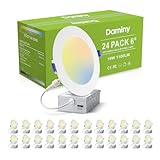
- 6. DAMINY 24 Pack 6 Inch Canless – Best for Covering a Whole Basement at Once
- 7. zouzai 24 Pack 6 Inch 5CCT – Best for Damp Basements and Tightest Ceilings
- 8. LUXRITE 4 Pack 5/6 Inch Retrofit – Best for Replacing Existing Cans
- 9. Meconard 12 Pack 6 Inch with Night Light – Best for Stairways and Hallways
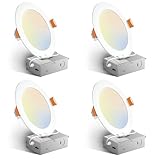
- 10. Amico 4 Pack 6 Inch Ultra-Thin – Best for Small Basement Rooms
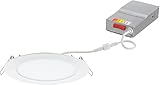
- 11. Juno 6 Inch Ultra-Thin Wafer – Best for Wet-Rated Basement Areas
- 12. ECOELER 6 Inch Slim Canless – Best Budget Starter Pack
- How Many Recessed Lights Your Basement Needs
- Finished vs Unfinished: Which Kit Fits
- How to Choose a Recessed Lighting Kit for a Basement
- Frequently Asked Questions
- What type of recessed lighting is best for a basement?
- How many recessed lights should I put in my basement?
- What is the best type of lighting for an exposed basement ceiling?
- Do recessed lights need to be wet rated in a basement?
- Who makes the best canless recessed lighting?
- What color temperature is best for a basement?
- The Verdict for 2026
Top 3 Recessed Lighting Kits for Basements in 2026

Amico 12 Pack 6 Inch 5CCT
- 1050 lumens at 12 watts
- 5 selectable color temperatures
- IC rated canless wafer
- Damp location rated
- ETL and FCC certified

Ensenior 6 Pack 5000K 1200LM
- 1200 lumens at 12 watts
- Fixed 5000K daylight
- 5%-100% dimming
- Damp rated
- IC rated junction box

Amico 6 Pack 6 Inch 1050LM
- 1050 lumens at 12 watts
- 5 CCT-in-1 selection
- IC rated canless design
- Damp rated
- Energy Star and ETL
All 12 Kits Compared in 2026
| Product | Specifications | Action |
|---|---|---|
| Amico 12 Pack 6 Inch 5CCT Canless |
|
Check Latest Price |
| Ensenior 6 Pack 6 Inch 5000K |
|
Check Latest Price |
| Amico 6 Pack 6 Inch 1050LM 5CCT |
|
Check Latest Price |
 Ensenior 12 Pack 6 Inch 5CCT Ensenior 12 Pack 6 Inch 5CCT |
|
Check Latest Price |
 Sunco 12 Pack 6 Inch 5CCT Sunco 12 Pack 6 Inch 5CCT |
|
Check Latest Price |
 DAMINY 24 Pack 6 Inch Canless DAMINY 24 Pack 6 Inch Canless |
|
Check Latest Price |
 zouzai 24 Pack 6 Inch 5CCT zouzai 24 Pack 6 Inch 5CCT |
|
Check Latest Price |
 LUXRITE 4 Pack 5/6 Inch Retrofit LUXRITE 4 Pack 5/6 Inch Retrofit |
|
Check Latest Price |
 Meconard 12 Pack with Night Light Meconard 12 Pack with Night Light |
|
Check Latest Price |
 Amico 4 Pack 6 Inch Ultra-Thin Amico 4 Pack 6 Inch Ultra-Thin |
|
Check Latest Price |
 Juno 6 Inch Ultra-Thin Wafer Juno 6 Inch Ultra-Thin Wafer |
|
Check Latest Price |
 ECOELER 6 Inch Slim Canless ECOELER 6 Inch Slim Canless |
|
Check Latest Price |
Why Basement Lighting Is a Different Job
Recessed lighting works upstairs partly because you are adding to a room that already has light. In a basement, the ceiling fixtures are doing nearly all of the work, and they have to survive conditions that never reach the second floor.
Clearance is the first constraint. A 7 foot basement ceiling usually means a plenum of 5.5 to 6 inches between the drywall and the joists above, and a duct or a beam will cut that further in places. That is why every canless kit in this roundup specifies how little ceiling space it needs, most at 2 inches, and why the shortest-profile options earn their place on a tight basement.
Moisture is the second. Basement air carries more humidity, and condensation forms on cool fixture surfaces in summer. Damp location rated fixtures tolerate that; wet location rated fixtures tolerate direct spray. Sellers use both words loosely, so the specification sheet matters more than the listing title.
Daylight is the third, and it changes everything about color temperature. A bar, rec room, or basement bedroom needs 2700K to 3000K because there is no window to balance a cold tone. A workshop, laundry, or utility corridor needs 4000K to 5000K because there is no other light to lean on. Kits with selectable CCT let you cover both in one purchase, which is why eight of the twelve here carry a five-setting switch.
Forum discussions about basement lighting name Halo and NuWatt as the reference brands for a down-to-the-studs remodel, and that matches what we see in the ratings: the kits with the largest review counts and most consistent 4.7 averages are the ones people actually install more than once.
1. Amico 12 Pack 6 Inch 5CCT Canless Wafer – Best Overall for Basements
Amico 12 Pack 6 Inch LED Recessed Lighting, Canless Wafer Downlight, White
1050 lumens at 12 watts
5 CCT settings 2700K-5000K
2 inch clearance
6.7 inch diameter
Pros
- Bright even output with no hot spots
- Slim profile fits tight joist gaps
- Five color temperatures on the junction box switch
- Smooth flicker-free dimming down to 5%
- UL recognized push-in connectors
Cons
- Cut-hole tolerance is tight
- Thinner-gauge metal junction box
- Included gasket is poorly made
This is the kit we kept coming back to while reviewing the group. Twelve 6 inch canless wafers, 1050 lumens each, with a five-position color temperature switch on the junction box covering 2700K through 5000K. For a basement that runs from a finished rec room to a utility corner, one pack type covering both ends of the warmth scale is the reason this one tops our list.
Output is 1050 lumens at 12 watts, which is 87.5 lumens per watt. That is enough to light roughly a 100 square foot area at a comfortable level from eight to ten fixtures, which is the normal density for a basement ceiling at 7 feet. The aluminum body handles heat well, and the listed service life keeps the pack relevant for a long time.
The two details that catch new installers are both in the junction box. It is IC rated and thermally protected, so it can sit directly against blown-in or batt insulation without being a fire concern, and it still needs only about 2 inches of ceiling space. Both matter enormously in a basement where the joist cavity is the tightest thing in the room.
The most repeated caution across thousands of reviews is about the cut hole. At 6.7 inches in diameter, the fixture leaves very little lip for drywall to grip, and owners advise cutting a few millimeters inside the template so the gap does not show as a black ring. It is a ten-minute adjustment that saves an afternoon of patching.
Check the Color Temperature Switch Before You Close the Wall
The five CCT settings are selected by a slide switch on the junction box, not from the wall. Once the box is buried above the drywall, changing your mind means opening the ceiling back up. Decide the tone room by room before install, and mark each junction box with painter tape so you know which setting you picked.
Owners also flag that the gasket included in the box is not particularly good and that the wire gauge is thinner than ideal. Both are common across canless wafer lights at this tier, so we treat them as minor rather than disqualifying.
Who Should Skip This Kit
Skip it if you need true wet location rating for a basement shower or sauna. This fixture is damp rated, which covers a humid room but not direct water spray. Buyers who wanted a shower-rated fixture should look at the LUXRITE retrofit or the Juno wafer, both of which carry wet location listings.
Also consider a different pack size if your basement is small. Twelve fixtures covers a lot of ceiling, and a four-pack variant from the same line fits a single alcove or laundry room without leftovers.
2. Ensenior 6 Pack 6 Inch 5000K 1200 Lumens – Best for Workshops and Utility Spaces
Ensenior 6 Pack 6 Inch 5000K Dimmable Canless Wafer LED Recessed Light
1200 lumens at 12 watts
Fixed 5000K daylight
5% to 100% dimming
Damp location rated
Pros
- Highest lumen output per watt in the group
- Fixed 5000K suits task-heavy spaces
- Damp rated for humid rooms
- IC rated junction box
- Template and junction box included
Cons
- Fixed 5000K with no selectable option
- Cool tone is wrong for living areas
This pack carries the highest average rating in the group at 4.8 across more than 4,000 reviews, and the reason is straightforward. It does one thing very well: it puts 1200 lumens of clean 5000K daylight on a task surface for 12 watts, and it dims smoothly from 100% down to 5% when you want it softer.
For a basement workshop, a laundry room, or a storage corridor with no daylight, that fixed daylight tone is the right default. Basement lighting threads consistently recommend 4000K to 5000K for exactly these spaces, and owning a dedicated task pack means you are not tuning a living room fixture to do a job it was not built for.
The construction is standard canless wafer: an aluminum body, an IC rated junction box, UL listed terminals, and ETL and FCC certification. Dimensions are 6.69 inches square by 0.94 inches deep, so it clears most basement plenums without a fight. The listed lifespan is 50,000 hours and the warranty runs five years from the manufacturer.
Dimming is the part reviewers mention most. Compatibility with most dimmers and a 5% floor means you get usable light levels on a staircase landing or in a storage corner where full output would be blinding, which is a meaningful advantage in a room with no daylight buffer.
Why a Fixed Color Temperature Is an Advantage Here
Because the setting cannot change, you get consistency. Every fixture in the pack is exactly the same tone, which matters in a workshop where you are judging paint, wood, or metal surfaces. With selectable CCT kits, one fixture set to the wrong position in a 24-pack is visible and permanent.
The 5% dim floor also means this pack doubles as accent lighting. Pair it with a second run of warm fixtures in a bar area and the same wall switch group can handle both, since the dimmer does the work instead of the color temperature.
Where This Pack Falls Short
A basement rec room or bedroom is the wrong room for 5000K. With no windows to balance it, a cool daylight tone reads clinical and shows every surface imperfection. Homeowners consistently rate the pack lower for living spaces than for task areas, and that is a room choice rather than a product flaw.
The six-fixture quantity is also small for a large open basement. A 20 by 30 finished room usually needs more than six positions, so plan on a second pack or a different product for the main ceiling.
3. Amico 6 Pack 6 Inch 1050 Lumens 5CCT – Best Value for a Single Room
Amico 6 Pack 6 Inch LED Recessed Light with Junction Box, 5CCT, 1050LM, 12W
1050 lumens at 12 watts
5 CCT-in-1 selection
2 inch clearance
Energy Star and ETL
Pros
- Five selectable color temperatures
- IC rated canless design fits tight cavities
- 1050 lumens is ample for a 6 inch canless
- Energy Star and ETL certified
- Slim body clears joists and ducts
Cons
- Color temperature must be set before final install
- Needs a compatible dimmer for smooth low-end dimming
This is the smaller sibling of our top pick, and for a single basement room it is the smarter order. Six fixtures, same 1050 lumen output and same five-setting color temperature switch, with the same IC rated canless body that needs about 2 inches of ceiling space.
It carries both Energy Star and ETL certification, which neither every competitor on this list can say. Energy Star is a useful signal in a basement because it reflects tested energy performance over a published standard, and that matters when the lights run for long stretches in a room with no daylight to turn off.
Buyers rate it highly for how well the CCT switch covers everything from warm to daylight. In practice that means a laundry area, a storage room, and a bedroom in the same basement can all run from one product family, which simplifies wiring, dimmer selection, and future replacements considerably.
The physical design is the standard wafer body with a junction box included in the package. Rated damp for basements, bathrooms, and soffits, it handles the humidity conditions of a below-grade room without needing a wet location fixture.
Getting the Dimmable Version Right
Owners note that a separate compatible dimmer is needed for smooth low-end dimming. A canless LED driver and an old incandescent dimmer will not always cooperate, and the symptom is flicker or a buzzy floor rather than a clean fade. Choosing a dimmer listed for LED loads removes most of the complaints we saw in the reviews.
The second practical point is the junction box switch. Set the color temperature before the box goes above the ceiling, because there is no way to change it from a wall switch afterward.
Who This Is Not For
A whole-basement install needs more than six positions. If you are lighting an open 20 by 30 space, this pack leaves you short and the per-fixture math gets worse than ordering a 12-pack once.
It is also not the choice for a shower stall or any spot with direct water exposure, since the rating is damp rather than wet.
4. Ensenior 12 Pack 6 Inch 5CCT 1200 Lumens – Best for Large Open Basements
Ensenior 12 Pack 6 Inch LED Recessed Ceiling Light, 5CCT, 1200LM 12W 120V
1200 lumens at 12 watts
5 selectable CCT settings
2 inch clearance
CRI 80 or higher
Pros
- High output across a large open space
- Bypasses joists and ductwork with 2 inch clearance
- Flicker-free dimming from 5% to 100%
- Aluminum body resists yellowing
- 50000 hour lifespan
Cons
- Color temperature locked once set on the junction box
- Shade material listed as plastic despite aluminum body
When the basement is one big open room with a duct running through it, brightness and clearance decide the purchase. This 12-pack delivers 1200 lumens per fixture at 12 watts and fits into about 2 inches of ceiling space, which the manufacturer states is enough to bypass joists and ductwork rather than requiring you to move anything.
The five selectable color temperatures run from 2700K to 5000K on a junction box dip switch. That flexibility is what lets one product cover a theater area at 2700K and a workbench corner at 4000K, provided you set the switch before the drywall goes up.
Dimming runs 5% to 100% flicker-free, and the CRI of 80 or higher is adequate for most basement uses. If you are displaying anything color-critical, a higher CRI retrofit like the LUXRITE is a better match, but for general living and task space this specification is fine.
Both ETL and Energy Star certifications are present, and the listed 50,000 hour lifespan with a five-year warranty is a reasonable durability claim for a room that will be lit for long evening sessions.
Where Clearance Actually Decides the Layout
Basement remodelers planning a ceiling layout will hit obstructions. A supply duct, a drain line, or a beam often forces a row of lights off the ideal grid, and a 2 inch profile is what keeps those positions workable. Measure the tightest point in the room before you finalize a fixture count, because the count changes.
Two reviewers flag a minor specification inconsistency: the shade material is listed as plastic in places even though the body is described as aluminum. It did not produce installation problems, but it is the kind of detail worth knowing if you are weighing similar kits.
Who Should Look Elsewhere
The single biggest limitation is the same one shared by most selectable kits. The CCT setting is locked once it is set, so a mistaken choice is permanent until you open the ceiling. Label the junction boxes.
Buyers who want wet location capability for a basement bathroom should use a wet rated fixture instead. This one is built for damp conditions only.
5. Sunco 12 Pack 6 Inch 5CCT – Best Warranty Coverage
Sunco 12 Pack 6 Inch Canless LED Recessed Lights, 5CCT, 14W, Dimmable
1200 lumens at 14 watts
5 selectable CCT
10% to 100% dimming
7 year warranty
Pros
- Longest warranty in the group at 7 years
- Spring clips fit single drywall and double drywall
- 1200 lumens with selectable color temperature
- Energy Star ETL FCC and RoHS certified
- US-based manufacturer support
Cons
- Lowest rating of the 12 packs at 4.5 stars
- Listed as not water resistant
- Dimming floor is 10 percent not 5 percent
Warranty length is rarely the deciding factor and occasionally the deciding factor. Sunco backs this 12-pack for seven years, longer than anything else we reviewed, which matters when you are installing a dozen fixtures into a finished ceiling and want the least friction if a driver fails.
Output is 1200 lumens at 14 watts, so this fixture draws a bit more power than the 12-watt competitors for the same brightness. The trade is a slightly higher energy bill in exchange for a longer warranty and a few installation conveniences we will get to.
The spring-loaded brackets are the practical stand-out. They fit double drywall, single drywall, and soffit applications, which means the same pack works whether you are adding lights to an existing ceiling or building a new one over a framed basement wall.
Color rendering is described as high CRI for truer color accuracy, and it is one of the reasons this pack comes up for craft rooms, game tables, and any basement where paint and fabrics matter. Five selectable color temperatures give you the full 2700K to 5000K range on the junction box.
What a Lower Star Rating Means Here
The 4.5 average is the lowest among the 12-packs we reviewed, and reviewers account for it directly with a 6% one-star share. In practice that shows up as mixed experiences with dimming compatibility on older circuits rather than a defect in the light output itself.
Two other limits are worth planning around. Dimming bottoms out at 10% rather than 5%, so the lowest setting is not quite a night-light level. And the fixture is listed as not water resistant, so it is a poorer fit for a damp laundry or bathroom area than the damp-rated alternatives.
Why Seven Years Is Worth Looking At
Longer coverage reduces the expected cost of a failure across a dozen fixtures. It also signals a manufacturer willing to stand behind the driver and electronics, which is the part of a canless light most likely to fail in a cool, humid basement.
If your basement ceiling has double drywall, the bracket claim alone justifies a close look, since that construction is common in finished basements and frequently causes retrofit fixtures to sit proud of the ceiling.
6. DAMINY 24 Pack 6 Inch Canless – Best for Covering a Whole Basement at Once
DAMINY 24 Pack 6 Inch LED Recessed Lighting, Canless Wafer Downlight
1100 lumens at 10 watts
5 CCT-in-1
2 inch clearance
24 fixtures per pack
Pros
- One pack covers an entire basement ceiling
- 1100 lumens at only 10 watts is highly efficient
- Five color temperatures on the junction box
- Dims smoothly from 5% to 100%
- Strong price-to-performance ratio
Cons
- Highest one-star share at 5 percent
- Listed as not water resistant
- One reviewer reports a unit lasting about 1.5 years
Twenty-four fixtures is the pack size that matches a whole-basement job. If your finished area runs 600 to 800 square feet at typical fixture spacing, one order covers the ceiling and you are not left splicing together kits with slightly different color bins.
Efficiency is the headline number here. 1100 lumens at 10 watts is better than most of the field, and it is the reason this pack appeals to anyone lighting a large space on a circuit with capacity concerns.
Color temperature is a five-position slide switch on the junction box covering 2700K through 5000K, and dimming runs 5% to 100%. The junction box is IC rated and thermally protected, which is the safety specification you want when blown-in insulation sits directly above the ceiling.
Body depth is about 1.05 inches and it needs as little as 2 inches of ceiling space, so it clears joists and ducts in an unfinished space as readily as it clears a tight finished ceiling.
Reading the Warranty and Longevity Data Carefully
The manufacturer warranty is listed as five years, though no formal warranty type is stated on the listing. That is thinner documentation than several competitors here, and it is worth asking about before committing to a large single-purchase order.
Longevity feedback is mixed. Most owners report steady operation, while at least one reports a fixture lasting about 1.5 years, and the one-star share of 5% is the highest among the packs we reviewed. For a 24-fixture install, factor that into your expectation and check the retailer return window before ordering.
Choosing This Over the Other 24-Pack
The other 24-pack option in this group runs thinner at 0.43 inches and carries a damp location rating, so it is the safer pick for a humid basement or a room with a slight water risk. This one is the better pick for maximum efficiency and lowest wattage at a given output.
If your basement includes a bathroom or laundry area, use a wet rated fixture in that section and this pack for the rest of the ceiling.
7. zouzai 24 Pack 6 Inch 5CCT – Best for Damp Basements and Tightest Ceilings
zouzai 24 Pack 6″ LED Recessed Ceiling Light, 5CCT, Dimmable, 12W 1080LM
1080 lumens at 12 watts
0.43 inch body depth
Damp location rated
90 lumens per watt
Pros
- Thinnest profile in the group at 0.43 inches
- 1080 lumens at 90 lumens per watt
- Five color temperatures with a reset switch
- Flicker-free and silent dimming
- Damp location rated for basements
Cons
- CCT locked at install with no wall switch control
- Fewer reviews than the Amico and Ensenior packs
- Higher per-pack cost than other 24 packs
This is the fixture we would specify for a basement with genuinely low clearance. At 0.43 inches deep it is the thinnest body in the group by a wide margin, which means it slides into cavities where a 1 inch wafer simply will not sit flush.
Output is 1080 lumens at 12 watts, a listed 90 lumens per watt. That efficiency figure is the best we saw among the 6 inch canless options here, and it holds even in a large open space where you might be running more fixtures than you first expected.
Damp location rating is the differentiator for basement use. Sellers use the wet and damp words interchangeably, so when a listing states damp location rated for basements and soffits explicitly, that is a real specification you can plan around, not marketing language.
Certification includes ETL, Energy Star, and FCC with UL certified wire terminals. Dimming is 5% to 100% and reviewers describe it as flicker-free and silent, which addresses one of the most common complaints in recessed LED discussions.
What the Reset Switch Changes About Installation
The color temperature control is a reset-style click switch on the junction box rather than a slide. Practically that means one deliberate click per setting instead of finding a small switch in a dark ceiling cavity, which is a genuine time saver with 24 fixtures to set.
It also means the tone is set once and stays set. There is no wall control, so changing the mood of the room has to come from the dimmer rather than from shifting between warm and cool.
Balancing the Trade-offs
With 641 reviews, this pack has the smallest evidence base of the larger multi-packs. A 4.7 average on a smaller base is encouraging but less conclusive than a 4.7 across several thousand reviews, so we would not treat it as risk free for a whole-house install.
It is also the higher per-pack option among the 24 packs, and the profile advantage only matters where clearance is actually tight. In a room with 6 inches of plenum, you are paying for thickness you do not need.
8. LUXRITE 4 Pack 5/6 Inch Retrofit – Best for Replacing Existing Cans
LUXRITE 5/6 Inch LED Recessed Retrofit Downlight, 14W=90W, 1100 LM (4 Pack)
1100 lumens at 14 watts
CRI 90
Wet location rated
Fits existing 5 and 6 inch cans
Pros
- Drops into existing cans with no ceiling demolition
- CRI 90 gives truer color than typical wafer lights
- Wet location rated for showers and soffits
- Five color temperatures on one fixture
- Metal tabs give a flush ceiling finish
Cons
- Requires an existing can housing so no new construction
- Dims to 10 percent not 5 percent
- Second highest one-star share at 6 percent
If your basement already has traditional recessed housings installed, this is the fixture that avoids opening the ceiling. The screw-in E26 base adapter and metal tabs let the assembly drop straight into an existing 5 or 6 inch can and sit flush, which turns a two-day job into an afternoon.
Color rendering is the technical headline. CRI 90 is meaningfully higher than the 80-plus common on wafer lights in this group, and it shows on paint colors, wood tones, and anything else where you want the light to tell the truth.
It is also wet location rated, which makes it the choice for a basement bathroom shower area or any spot where water spray is possible. That rating is not available on most of the canless kits in this roundup, so it fills a real gap.
Five color temperatures run from 2700K to 5000K on a rear switch, and the listed 50,000 hour rated life comes with a foam gasket and baffle trim in the box. Output is 1100 lumens at 14 watts, replacing a 90 watt incandescent for an 84% energy reduction.
When a Retrofit Beats a New Canless Install
Retrofit wins on three conditions: you already have functioning housings, you want to avoid the drywall work, and you need a wet location rating in a specific room. Under those conditions it is clearly the right fixture and no canless kit competes.
It also wins where color accuracy matters. CRI 90 beats the typical 80 rating on wafer lights, which shows in a craft room, a paint-finishing area, or a bar where the lighting should flatter the room rather than tint it.
Where It Cannot Be Used
This is not a new construction product. Without an existing can there is nothing to screw into, and a basement with exposed joists and no housings needs a canless kit or an IC rated housing installed new.
The dimming floor of 10% is shallower than the 5% available on most canless kits, and the 6% one-star share is the second highest here, with reviewers pointing to build consistency rather than output as the issue.
9. Meconard 12 Pack 6 Inch with Night Light – Best for Stairways and Hallways
Meconard 12 Pack 6 Inch 5CCT LED Recessed Lighting with Night Light, White
2000K amber night light
5 selectable CCT
3% to 100% dimming
0.47 inch body
Pros
- Amber 2000K night light built into the trim
- Highest rating among the 12 packs
- 0.47 inch body fits low drop ceilings
- Dims from 3% to 100%
- Owners report strong units after three years
Cons
- Night light and downlight modes can fall out of sync
- Not rated water resistant
- Color temperature locked at install
The feature that separates this kit is a 2000K amber night light built into the trim, switched by a quick power cycle. In a basement, where stairs and hallways often have no other fixture and no window, that is not a gimmick. It is the difference between stumbling to a switch and walking down the stairs safely.
A second rating of 4.8 with a 90% five-star share puts this on equal footing with the highest rated product in the group. The body is 0.47 inches deep, thin enough for a low drop ceiling, and it is IC rated with a five-setting CCT switch on the junction box.
Dimming runs from 3% to 100%, the deepest floor of any kit we reviewed. That range is what makes the night light mode practical, since it lets you run the same fixture at a very low level for path lighting and full output for general illumination.
Durability feedback is encouraging. Several owners describe fixtures still running strongly after three years, and the listed lifespan is 50,000 hours with a five-year warranty. Certification is ETL with UL certified wire terminals.
Fixing the Sync Problem Before You Hit Stairs at Night
The one real complaint is synchronization. When multiple fixtures are on the same circuit, some fixtures may stay in downlight mode while others switch to night light after a power cycle. A few buyers resolved it with an RC snubber or a specific dimmer module on the circuit.
Decide this before installing. If a shared circuit is unavoidable, plan on the snubber. If you can put the stairwell fixtures on their own switch and circuit, most owners report no trouble at all.
What You Give Up for the Night Light
The fixture is listed as not water resistant, so it is a damp-space product at best despite how commonly basements use these lights. Keep it away from a basement bathroom ceiling and use a wet rated fixture there.
The color temperature is also locked at install with no wall switch control, so the amber mode is the only runtime adjustment you get beyond dimming.
10. Amico 4 Pack 6 Inch Ultra-Thin – Best for Small Basement Rooms
Amico 4 Pack 6 Inch 5CCT Ultra-Thin LED Recessed Ceiling Light
1050 lumens at 12 watts
5 CCT-in-1 selection
4 fixtures per pack
2 inch clearance
Pros
- Smallest pack size for single rooms and alcoves
- Five selectable color temperatures
- IC rated and damp location rated
- 1050 lumens at 12 watts
- Lowest per-light cost in the Amico line
Cons
- Only four fixtures so larger rooms need a second order
- Color temperature locked once set on the junction box
Not every basement room needs twelve fixtures. A laundry room, a basement half-bath without a shower, a storage alcove, or a single bedroom is usually four to six positions, and this pack matches that job without leaving you nine unused lights.
The specification matches the rest of the Amico canless line: 1050 lumens at 12 watts, five selectable color temperatures from 2700K to 5000K, IC rated thermally protected junction box, and damp location rating for basements, bathrooms, and covered outdoor areas.
Body depth is about 1.18 inches and it still needs only 2 inches of ceiling space, so it fits the same tight cavities as the larger pack. ETL and FCC certification and a five-year warranty round out the specification.
Owners treat this as the flexible small-quantity version of the Amico range, and the ratings track the rest of the line closely, which is a good sign that the smaller pack is not a step down in build quality.
When Four Is the Right Number
Four fixtures works when the room is roughly 100 square feet with a 7 foot ceiling. That covers most laundry rooms, storage rooms, and small finished bedrooms, and it is enough to light those spaces at full output without over-installing.
Over-installing is the most common recessed lighting mistake. More fixtures at lower output looks flat, wastes wattage, and costs more than the layout needs, so matching the pack to the room is a real saving.
When to Order Something Bigger
Any space over roughly 160 square feet, or any room with a dropped ceiling that lowers the mounting height, will need more positions. Two of these packs cover most single rooms comfortably.
Also note that the color temperature is locked once set on the junction box, so plan the tone before install rather than after.
11. Juno 6 Inch Ultra-Thin Wafer – Best for Wet-Rated Basement Areas
Juno 6″ LED Recessed Lights, 5-in-1 CCT, Ultra-Thin Flat Trim, White, 1-Pk
970 lumens at 13 watts
Wet location listed
Airtight construction
Remote driver box
Pros
- Wet location and airtight listing covers wet basements
- Remote driver frees up plenum space
- 90 CRI polycarbonate lens diffuses light evenly
- Energy Star and CSA certified
- Established commercial-grade brand
Cons
- Sold as a single fixture only
- 970 lumens is the lowest output here
- Shortest warranty at 3 years
- Dims only to 10 percent
Wet location listed and airtight is a combination you rarely find in a canless wafer, and it is the reason this fixture belongs in a basement bathroom or a below-grade room where condensation is a constant problem. Most competitors stop at damp rated.
The remote driver is the second basement-specific benefit. Instead of an integrated junction box occupying plenum depth, the driver mounts remotely in a confined space elsewhere, leaving the wafer body itself very thin. That matters when the cavity between joists is tight.
Juno is an established commercial lighting brand, and owners cite tight trim tolerances as a visible difference. The edge-lit wafer design uses a 90 CRI polycarbonate lens for even diffusion with no hot spot in the middle of the beam.
Five color temperature settings run from 2700K to 5000K, so the same fixture can be warm in a bedroom corner and daylight in a laundry area. Output is 970 lumens at 13 watts with a listed 50,000 hour life, Energy Star and CSA certified.
Why Wet Location and Airtight Matter Below Grade
Wet location rated means the fixture is built to handle direct water exposure, not just humid air. In a basement bathroom, near a utility sink, or in any spot where a ceiling leaks during a storm, that is the difference between a fixture that lasts and one that fails.
Airtight construction does something quieter but just as useful. It keeps moist basement air from circulating through the fixture body and condensing on cold surfaces, which is a common source of both short lifespan and visible water spotting.
Handling the Trade-offs
This is sold as a single fixture, so lighting a room means multiple purchases. At 970 lumens it also has the lowest output in the group, which reviewers notice in larger rooms where you need more positions.
The three-year warranty is the shortest we saw, and dimming bottoms out at 10%. For a single bathroom ceiling or a small wet-area retrofit, those limits are reasonable trade-offs for the wet rating.
12. ECOELER 6 Inch Slim Canless – Best Budget Starter Pack
ECOELER 6 Inch Slim Recessed Lighting with Junction Box, Dimmable Recessed Can Lights, 5000K Daylight, 12W 1100Lm Dimmable LED Downlight, ETL & FCC Listed
1100 lumens at 12 watts
0.4 inch profile
5% to 100% dimming
IC rated junction box
Pros
- Lowest per-fixture cost in the group
- 1100 lumens from a 0.4 inch profile
- Dims from 5% to 100% without flicker
- Frosted lens reduces glare
- Junction box and cut template included
Cons
- Lowest rating at 4.4 with a 7 percent one-star share
- One-year warranty is far shorter than competitors
- Fixed 5000K on this variant
- Listed as not water resistant
If you are lighting one corner of a basement and you are not sure whether recessed lighting is the right look for the space, this is a low-commitment way to find out. Single fixture, 1100 lumens, 0.4 inch body, and a junction box and cut template in the box.
The output to wattage ratio is genuinely good. 1100 lumens at 12 watts from a body under half an inch thick is the kind of number that makes the low per-fixture cost make sense, and dimming runs from 5% to 100% without flicker on most dimmers.
The frosted lens reduces glare, which is a real benefit in a low-ceilinged room where you see the fixture from a seated position. The body is acrylic, aluminum, and metal, and the junction box is IC rated and thermally protected.
ETL and FCC listings are present, and the fixture is dimmable across a wide range. Mechanically it is a competent design that underdelivers only on documentation and longevity.
Reading the Warranty and Rating Gaps Honestly
The one-year warranty is the shortest available, against three to five years on most competitors here. In a damp basement where fixtures work harder than in a climate-controlled room, warranty length is a durability signal, not just paperwork.
The 4.4 average carries the highest one-star share in the group at 7%, and one buyer reports a fixture failing after about a year. Reviewers otherwise praise the brightness-to-cost ratio and the thin, easy-install format.
When the Low Cost Is the Right Trade
This is the sensible pick for a trial install, a single utility nook, or a rental where the ceiling will come down eventually. The 5% dim floor and the 0.4 inch profile are real functional benefits, not just budget compromises.
For a main ceiling in a finished basement where you want the lights to last, choose a kit with a five-year warranty and a larger review base. The fixed 5000K also limits this fixture to task or utility spaces.
How Many Recessed Lights Your Basement Needs
The number of fixtures follows two numbers: ceiling height and room area. For a 7 foot basement ceiling with 7 foot joists, the standard starting point is one 6 inch fixture per 10 to 12 square feet of floor, which puts most finished basement rooms in the range of 8 to 14 fixtures.
Spacing between fixtures should fall between 0.7 and 1.0 times the ceiling height. On a 7 foot ceiling that means roughly 5 to 7 feet apart, center to center. Closer than 5 feet and the room looks flat and over-lit; further than 7 feet and you get visible dark bands between lights.
Distance from the walls matters too. Place fixtures about half the ceiling height from any wall, so around 3.5 feet on a 7 foot ceiling. This washes light onto the wall rather than leaving a dark perimeter, which is the single most visible difference between a professionally planned layout and a DIY one.
Here is a worked example for a typical 20 by 30 basement room with a 7 foot ceiling. The area is 600 square feet, so divide by 12 for roughly 50 fixtures. That sounds wrong, and the reason is that this is a whole open space with no walls to break it up. In practice you use 20 to 24 fixtures arranged in three rows of seven or eight, spaced at 7 feet, set 3.5 feet from the perimeter walls.
For a 12 by 12 room at the same ceiling height, the answer is 10 to 12 fixtures in a 4 by 3 grid at 4 foot spacing. Smaller rooms need proportionately fewer lights, and a 7 by 7 storage nook is happy with four.
Finally, check obstructions before you order. A basement with ducts, beams, or a lowered ceiling section will reduce the available positions. Measure the tightest point in the room and confirm your fixture count against that, not against the empty floor plan.
Finished vs Unfinished: Which Kit Fits
The distinction that decides your product is whether drywall is going up. In a finished basement you are working inside a cavity of known depth, and in an unfinished basement you are working between exposed joists with whatever the house happens to have routed through them.
For a finished basement, canless wafer lights are the clear answer. The plenum is tight, the drywall is already there, and a retrofit into an existing can only works if old housings survived. This is where the 2 inch clearance models earn their place, and where the shortest-profile kits like the 0.4 inch option make sense if your cavity is genuinely tight.
For an unfinished basement with exposed joists, you have more room but more obstacles. If you are planning to drywall later, choose a canless kit with an IC rated junction box now, because those fixtures tolerate direct insulation contact and can sit in a cavity without being boxed in. If you are leaving the ceiling exposed, recessed lights stop making sense altogether. Surface-mounted fixtures or joist-mounted brackets suit an open ceiling far better than downlights hung between beams.
For an existing basement with old cans still in place, the retrofit route is the answer. Swapping fixtures keeps the drywall intact, which is the difference between an afternoon and a demolition project.
One caution for older homes: existing wiring in many basements is knob-and-tube or aluminum, and neither pairs well with modern LED drivers. Have an electrician check the circuit before you buy fixtures, especially if you plan to add a dimmer.
How to Choose a Recessed Lighting Kit for a Basement
A recessed lighting kit bundles LED downlights with their housings or canless housings, trims, and junction boxes, so one purchase covers everything needed to light a ceiling. Most basement kits are canless wafer style, where the driver and junction box sit in the cavity behind the drywall while a thin wafer sits flush against the surface. Traditional kits use an IC rated housing that nests between joists and needs a cutout matched to the trim.
Measure Your Joist Spacing First
Standard joist bays are 16 inches on center, which leaves about 14.5 inches of clear space. A 6 inch canless light needs about a 6.7 inch hole, so it fits inside a bay. A traditional can housing is deeper and often needs the bay itself, which is why exposed-joist ceilings limit can placement.
Measure before ordering. Find the narrowest bay and the tightest duct or pipe clearance, and confirm your chosen fixture needs less ceiling depth than that number. This is the check most often skipped and most often regretted.
Choose Between 4 Inch and 6 Inch Apertures
Six inch fixtures are the default for basements. They deliver more lumens from a single can, cost less per fixture, and cover a 12 by 12 room in fewer positions. Four inch fixtures earn their place in tight spots, over staircases, or where a 6 inch hole would land on a joist and require notching.
If your room is small or your ceiling is very low, four inch fixtures spaced closer together can look better than a sparse grid of six inch cans. If your basement is a normal open space, six inch is the efficient answer.
Pick Lumens by Room Function
Aim for roughly 30 to 40 lumens per square foot in a finished basement living space and closer to 50 in task areas. A 12 by 12 room at 12 fixtures and 1050 lumens each delivers a comfortable, even result without over-installing, and that over-installing problem is the most common layout error we see.
Judging brightness by watts is the mistake to avoid. Output in lumens is what matters now, and the competing fixtures here all produce between 970 and 1200 lumens at 10 to 14 watts, so the differences that feel real are about placement rather than raw output.
Match Color Temperature to the Room
Bar, rec room, and bedroom: 2700K to 3000K. Storage and hallways: 3000K to 3500K. Laundry, workshop, and utility: 4000K to 5000K. Basement bathroom: 3000K to 4000K, since very warm light looks unflattering on tile.
If a kit has selectable CCT, set the switch on the junction box before drywall goes up. If it does not, you are choosing one tone for the life of the fixture, so match the room rather than the average.
Know Damp From Wet
Damp location rated means the fixture tolerates humid air and occasional condensation, which covers most basements, laundry rooms, and covered outdoor soffits. Wet location rated means it tolerates direct water spray, which is required in a shower area and recommended anywhere a leak is possible.
Most canless kits are damp rated and only a few are wet rated. If your basement includes a bathroom with a shower, use wet rated fixtures there rather than assuming the whole ceiling can match. Basement humidity is also why an airtight fixture is worth a premium where you can get one.
Check Dimmer Compatibility and Flicker
Buzzing and flickering at low dim levels is the most common complaint across recessed LED kits, and it is usually the dimmer rather than the light. Use a dimmer listed for LED loads, and check whether the fixture supports the low end of the range before you promise yourself a 5 percent night-light setting.
Also confirm the fixture is dimmable at all. Non-dimmable models cannot be retrofitted with a dimmer later, and replacing them after drywall is closed is an expensive lesson.
Read Reviews for the Two-Year View
Beyond the star rating, look at the one-star share and at how many reviews there are. A 4.7 across several thousand reviews tells you far more about durability than a 4.8 across a few hundred, and that difference shows up in basement conditions where heat and humidity are working on the driver continuously.
Real install photos are worth more than studio renders, and so is a stated warranty length. Our track lighting guide for kitchens covers the accent lighting side of the same rooms, and for a basement bar our home bar lighting kit picks are worth a look alongside a recessed ceiling.
Frequently Asked Questions
What type of recessed lighting is best for a basement?
Canless LED wafer lights with an IC rated junction box are the best type for most basements. They need as little as 2 inches of ceiling space, so they fit between low joists and around ducts, and the IC rating allows direct contact with ceiling insulation. Choose damp location rated fixtures for most rooms and wet location rated fixtures for a basement bathroom or shower area.
How many recessed lights should I put in my basement?
Plan one 6 inch fixture per 10 to 12 square feet of floor for a 7 foot ceiling. Space fixtures 5 to 7 feet apart, which is 0.7 to 1.0 times the ceiling height, and set them about 3.5 feet from the walls. A 12 by 12 room usually takes 10 to 12 fixtures, and a 20 by 30 open basement room usually takes 20 to 24.
What is the best type of lighting for an exposed basement ceiling?
For an exposed joist ceiling, surface-mounted fixtures or joist-mounted brackets work better than recessed downlights, because downlights mounted between beams create harsh pools of light and shadows. If you plan to drywall later, install canless wafer lights now with an IC rated junction box so they are ready before the ceiling is closed.
Do recessed lights need to be wet rated in a basement?
Most basements only require damp location rated fixtures, which tolerate humidity and condensation. Wet location rating is required where direct water spray is possible, such as a shower area in a basement bathroom, and is wise anywhere a ceiling leak is a risk. Check the specification sheet rather than the listing title, since sellers use both terms loosely.
Who makes the best canless recessed lighting?
For canless recessed lighting, the most established options come from commercial-grade brands such as Halo, NuWatt, and Juno, which are frequently named in DIY lighting forums for remodel work. In the value tier, the Amico, Ensenior, and Sunco lines carry large review counts, Energy Star or ETL listings, and multi-year warranties that make them safe for basement conditions.
What color temperature is best for a basement?
Use 2700K to 3000K for a bar, rec room, or basement bedroom, since cool tones read harsh without daylight to balance them. Use 4000K to 5000K for a workshop, laundry, or utility area where task visibility matters. Kits with five selectable CCT settings let you match the tone room by room, but the setting is chosen on the junction box before install.
The Verdict for 2026
The best recessed lighting kits for basements in 2026 come down to clearance, rating, and reversibility. The Amico 12-pack 5CCT takes the top spot because it combines a 2 inch clearance profile, an IC rated junction box, damp location rating, and five selectable color temperatures across more than 8,000 reviews. It covers a whole basement with one product type and one dimmer.
Pair it with the Ensenior 6-pack for fixed 5000K daylight in a workshop or laundry corner, and use the LUXRITE retrofit or the Juno wafer anywhere you need a true wet location listing. The Meconard night light model is the one to install on basement stairs.
Whatever you pick, measure the tightest point in your ceiling, set the color temperature switches before the drywall goes up, and use a dimmer rated for LED loads. Those three steps prevent nearly every problem we saw described in owner reviews. If you want more context on how fixtures pair with the rest of a room, our softbox lighting kits for video guide covers the supplemental lighting side of a finished basement media space.