
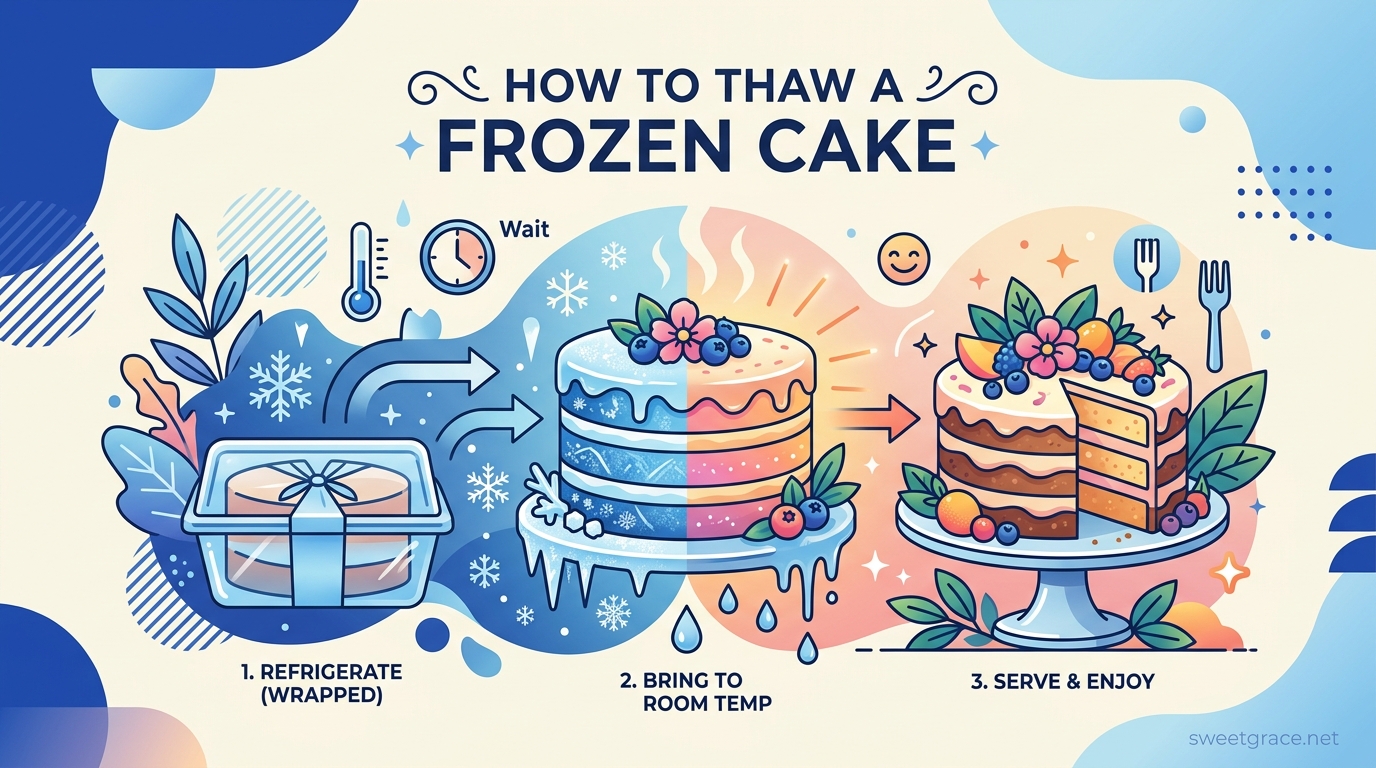
Learning how to thaw a frozen cake properly can mean the difference between a moist, tender dessert and a soggy, unappealing mess. Whether you froze cake layers ahead of a birthday party, stashed leftover wedding cake in the freezer, or prepped a make-ahead dessert for the holidays, the thawing process matters just as much as the baking itself.
I have frozen and thawed dozens of cakes over the years, and I have made plenty of mistakes along the way. This guide shares everything our team has learned about getting that frozen cake back to bakery-fresh condition, including timing guidelines, condensation prevention tricks, and warnings about methods that can ruin your cake.
By the end of this article, you will know exactly how to thaw a frozen cake using the refrigerator method, when room temperature thawing works, and how to handle tricky cakes with buttercream or fondant. Let’s get into it.
Table of Contents
- Why Properly Thawing a Frozen Cake Matters
- How to Thaw a Frozen Cake: The Refrigerator Method
- How to Thaw a Frozen Cake at Room Temperature
- How to Quickly Thaw a Frozen Cake When You Are Short on Time
- Fridge vs Room Temperature: Which Thawing Method Is Better?
- Thawing Specific Types of Frozen Cakes
- How to Keep Your Cake from Getting Soggy While Thawing
- The 4 Day Cake Rule and Frozen Cake Storage
- Frequently Asked Questions About Thawing Frozen Cake
- How long do cakes need to thaw after freezing?
- Can I thaw a cake at room temperature?
- What is the 4 day cake rule?
- How do I quickly thaw my cake after taking it out of the fridge?
- Is it better to defrost a cake in the fridge or room temperature?
- How do you defrost a cake without it getting soggy?
- Can you refreeze a cake that has been thawed?
- Can I thaw a frozen cake in the microwave?
- Final Thoughts on How to Thaw a Frozen Cake
Why Properly Thawing a Frozen Cake Matters
Thawing seems simple enough. Just take the cake out of the freezer and wait, right? Not quite. Rapid temperature changes cause condensation, which is the number one enemy of a previously frozen cake. That condensation can seep into your cake layers, making them dense and wet instead of light and fluffy.
Frosting is even more sensitive to bad thawing. Buttercream can split or become greasy if it warms too quickly. Fondant can bubble, sweat, or develop shiny spots that ruin a smooth finish. Even cream cheese frosting can separate and look unappetizing after a rushed thaw.
There is also a food safety angle. Cakes with dairy-based frostings should not sit at room temperature for extended periods. A gradual thaw in the refrigerator keeps your cake in the safe temperature zone while it comes back to life.
The good news is that once you understand the basic principles, thawing a frozen cake is straightforward and reliable. You just need a little patience and the right technique.
How to Thaw a Frozen Cake: The Refrigerator Method
The refrigerator method is the gold standard for thawing any frozen cake. It is slow, gentle, and produces the most consistent results. Here is how to do it step by step.
Step 1: Transfer the Wrapped Cake to the Refrigerator
The night before you plan to serve the cake, move it from the freezer to the refrigerator. Do not unwrap it yet. The wrapping, whether that is plastic wrap, aluminum foil, or both, acts as a barrier that protects the cake from condensation and fridge odors during the thawing process.
If your cake is in a cardboard box inside a plastic bag, keep the whole setup intact and place it in the fridge as-is. Less handling means less risk of damaging the cake.
Step 2: Let It Thaw for 12 to 24 Hours
A whole cake needs 12 to 24 hours in the refrigerator to thaw completely. Larger cakes, like a full sheet cake or a multi-layer wedding cake, may need the full 24 hours. Standard 8-inch or 9-inch round cakes usually thaw within 12 to 16 hours.
Individual cake slices thaw much faster. Plan on 4 to 6 hours in the fridge for single portions, and 2 to 3 hours for thin leftover slices.
Here is a quick timing reference based on cake size:
- Single thin slice: 2 to 3 hours in the fridge
- Thick slice or cupcake: 4 to 6 hours in the fridge
- Standard 8 or 9-inch round cake: 12 to 16 hours in the fridge
- Large sheet cake or multi-layer cake: 18 to 24 hours in the fridge
Step 3: Unwrap the Cake While Still Cold
Once the cake has thawed in the refrigerator, you can carefully remove the plastic wrap and foil. Do this while the cake is still cold, because the frosting will be firm and less likely to smear or stick to the wrapping.
If any condensation has formed on the surface of the frosting, gently dab it with a clean paper towel. Do not rub, just lightly press and lift. This removes excess moisture without damaging the finish.
Step 4: Let the Cake Rest at Room Temperature Before Serving
After unwrapping, let the cake sit at room temperature for 1 to 2 hours before serving. This final step brings the cake to a pleasant serving temperature, softens the frosting to the right consistency, and allows any remaining chill to dissipate evenly.
Cold cake straight from the fridge can taste dry because cold temperatures mute flavors and firm up the crumb. That short rest on the counter makes a real difference in how the cake tastes and feels in your mouth.
How to Thaw a Frozen Cake at Room Temperature
Room temperature thawing is faster than the fridge method, but it comes with more risk. I recommend this method only for plain, unfrosted cake layers and cakes without perishable frostings.
If you choose to thaw at room temperature, keep the cake wrapped and place it on the counter away from direct sunlight, heat sources, and drafts. A typical 8-inch cake layer will thaw in 4 to 6 hours at room temperature. Larger cakes may take 6 to 8 hours.
Once the cake feels soft to the touch through the wrapping, carefully unwrap it and let it sit for another 30 minutes before serving or decorating.
When Room Temperature Thawing Works
Room temperature thawing is a good option for plain sponge cakes, pound cakes, and unfrosted cake layers that you plan to decorate after thawing. Since there is no frosting to protect, condensation is less of a concern.
When to Avoid Room Temperature Thawing
Do not use this method for cakes with buttercream, cream cheese frosting, custard fillings, or fresh fruit toppings. The faster temperature change increases condensation, and dairy-based frostings should not sit at room temperature for more than 2 hours for food safety reasons. Fondant-covered cakes should also always go through the fridge method to prevent bubbling and sweating.
How to Quickly Thaw a Frozen Cake When You Are Short on Time
Sometimes you forget to move the cake to the fridge the night before, and you need it thawed sooner rather than later. Here are a few approaches that can speed things up without ruining your cake.
The Partial Fridge Method
Put the wrapped cake in the fridge for as long as you can, even if that is only 4 to 6 hours. Then move the still-wrapped cake to the counter to finish thawing at room temperature for another 2 to 3 hours. This two-stage approach is gentler than going straight to room temperature from the freezer.
The Individual Slice Quick-Thaw
If you only need a few slices, separate them while still frozen and place each slice on a plate at room temperature. Individual slices thaw in about 1 to 2 hours on the counter. This is the fastest safe method for small portions.
The Warm Room Trick
Placing the wrapped cake in a warm room, like near (but not next to) a sunny window or in a kitchen that is been heated from cooking, can shave an hour or two off the thawing time. The key is keeping the cake wrapped so condensation stays on the outside of the wrapping, not on the cake.
Never Use the Microwave
I strongly advise against thawing a cake in the microwave. Microwaves heat unevenly, which means parts of your cake will be hot and gummy while other parts remain frozen solid. The microwave also melts buttercream and destroys the texture of both the cake and the frosting.
If you absolutely must use a microwave, use the lowest defrost setting in very short bursts of 10 to 15 seconds, checking between each burst. But honestly, the results are almost always disappointing compared to patient thawing.
Fridge vs Room Temperature: Which Thawing Method Is Better?
The refrigerator method is almost always the better choice. It produces more consistent results, protects your frosting, and keeps food safety in check. But there are situations where each method shines.
Fridge Thawing Advantages
Thawing in the fridge is the safest option for any decorated cake. The slow, gradual temperature change minimizes condensation. It preserves the texture of buttercream, fondant, and cream cheese frostings. It also keeps dairy-based frostings in the safe temperature zone, which matters for cakes that will sit out at a party later.
Room Temperature Thawing Advantages
The main advantage of room temperature thawing is speed. It is also the simplest method because you just set the cake on the counter and wait. For plain, unfrosted cake layers that you plan to decorate after thawing, room temperature thawing works perfectly fine and saves you the overnight fridge step.
The Verdict
For any cake with frosting, filling, or decoration, always use the fridge method. For plain, unfrosted cake layers, room temperature thawing is perfectly acceptable and more convenient. When in doubt, choose the fridge.
Thawing Specific Types of Frozen Cakes
Not all cakes thaw the same way. The type of frosting and the structure of the cake both affect the best approach. Here is what you need to know for the most common types.
Buttercream Cakes
Buttercream is the most common frosting people worry about when thawing a frozen cake. The main risk is that the buttercream splits or becomes greasy during the thawing process.
To thaw a buttercream cake, always use the refrigerator method. Keep the cake fully wrapped during the entire fridge thawing period. Once the cake has thawed in the fridge, unwrap it and let it sit at room temperature for 1 to 2 hours. This gradual warming helps the buttercream come to a smooth, spreadable consistency without separating.
If your buttercream does develop a few condensation droplets, gently dab them with a paper towel. Do not try to spread or smooth wet buttercream, as this pushes the moisture into the frosting and makes it worse.
Fondant-Covered Cakes
Fondant is the trickiest frosting to thaw because it is highly sensitive to moisture. Condensation causes fondant to become sticky, develop shiny patches, or even bubble and warp.
For fondant-covered cakes, the refrigerator method is mandatory. Keep the cake wrapped in the fridge for the full 12 to 24 hours. When you unwrap it, do so while the cake is still cold. Any condensation that forms should evaporate as the cake comes to room temperature.
Never unwrap a fondant cake at room temperature. The sudden rush of warm air hitting the cold fondant causes immediate condensation. Also, avoid touching the fondant surface while it is still cold and dewy. Let it dry on its own as it warms up.
Cream Cheese Frosted Cakes
Cream cheese frosting is dairy-heavy, which makes it both prone to separating during thawing and more of a food safety concern. Always thaw cream cheese frosted cakes in the refrigerator, and do not leave them at room temperature for more than 2 hours total.
After the cake has thawed in the fridge, let it sit on the counter for no more than 30 to 60 minutes before serving. This keeps the frosting safe while still letting the cake soften enough to enjoy.
Plain Cake Layers (Unfrosted)
Plain cake layers are the easiest to thaw. You can use either the fridge method or room temperature thawing. If you are planning to decorate the layers after thawing, bringing them to room temperature actually makes them easier to work with.
Wrap the frozen layers in plastic wrap if they are not already wrapped, and thaw them on the counter for 4 to 6 hours or in the fridge overnight. Once thawed, they are ready to level, fill, and frost.
Cakes with Fruit or Custard Fillings
Cakes with fruit fillings, custard, or mousse layers need extra care. These fillings can weep or become watery during thawing. Always use the refrigerator method for these cakes, and serve them soon after thawing for the best texture.
If you are freezing a cake with a delicate filling, consider freezing the cake layers separately and adding the filling after thawing. This is a common technique that professional bakers use for wedding cakes and event cakes.
How to Keep Your Cake from Getting Soggy While Thawing
Sogginess is the most common complaint people have when thawing frozen cakes. The good news is that almost all sogginess is preventable with the right approach.
The Root Cause: Condensation
When cold air meets warm air, moisture condenses. That is exactly what happens when a frozen cake warms up. If the condensation forms directly on the cake or frosting, it soaks in and creates a wet, soggy texture.
The Wrapping Strategy
Keep the cake wrapped during the entire thawing process. The wrapping catches the condensation before it reaches the cake. Plastic wrap is your first line of defense, and a layer of aluminum foil over the plastic wrap adds extra protection and helps prevent freezer-burn flavors.
Some bakers on Reddit recommend placing the wrapped cake inside a cardboard box, then putting the whole box inside a clean plastic bag. This double-barrier approach works well for decorated cakes that need extra protection.
When to Unwrap
Always unwrap your cake while it is still cold from the fridge, not after it has come to room temperature. The frosting is firmer when cold, so it will not stick to the wrapping. Any condensation that has formed on the surface will be minimal and easy to dab away with a paper towel.
How to Fix a Soggy Cake
If your cake does end up a little soggy, all is not lost. Trim away any excessively wet edges with a sharp knife. For a cake that is slightly damp on top, you can add a thin layer of fresh buttercream or a dusting of powdered sugar to mask the moisture. Serving the cake chilled can also help mask a slightly soft texture.
The 4 Day Cake Rule and Frozen Cake Storage
You may have heard bakers mention the “4 day cake rule.” This guideline suggests that a freshly baked cake should be consumed within 4 days of baking when stored at room temperature or in the refrigerator. After 4 days, the cake starts to dry out, the frosting can weep, and the overall quality declines.
Freezing a cake pauses that 4-day clock. A properly wrapped cake can be frozen for up to 3 months without a noticeable loss in quality. After 3 months, freezer burn becomes more likely, and the cake may develop off-flavors even with good wrapping.
How Long Can You Freeze a Cake?
Most cakes freeze well for 2 to 3 months. Dense cakes like pound cake and fruitcake can last 4 to 6 months in the freezer. Light, delicate sponge cakes are best used within 2 months.
Always label your frozen cake with the date it was frozen. This helps you keep track of how long it has been stored and ensures you use it while it is still at peak quality.
Signs Your Thawed Cake Has Gone Bad
While most properly frozen and thawed cakes are safe to eat, there are a few warning signs to watch for. If the cake smells sour or off, has visible mold, or has a slimy texture, discard it. A dry, crumbly texture is not a safety issue but indicates the cake was frozen too long or not wrapped well enough.
Can You Refreeze a Thawed Cake?
Technically yes, but I do not recommend it. Refreezing a fully thawed cake degrades the texture further, and the second thaw will produce even more condensation. If you have leftover slices from a thawed cake, you can freeze them individually wrapped, but expect some quality loss compared to the first freeze-thaw cycle.
Frequently Asked Questions About Thawing Frozen Cake
How long do cakes need to thaw after freezing?
Most whole cakes need 12 to 24 hours to thaw in the refrigerator. Standard 8-inch cakes typically thaw in 12 to 16 hours, while larger cakes and multi-layer cakes can take up to 24 hours. Individual slices thaw in 2 to 6 hours depending on thickness. After fridge thawing, let the cake rest at room temperature for 1 to 2 hours before serving.
Can I thaw a cake at room temperature?
Yes, but only for plain, unfrosted cake layers. Room temperature thawing takes 4 to 8 hours depending on cake size. Avoid this method for cakes with buttercream, cream cheese frosting, fondant, custard fillings, or fresh fruit toppings. The rapid temperature change causes condensation that can ruin decorated cakes.
What is the 4 day cake rule?
The 4 day cake rule is a guideline that says a freshly baked cake should be eaten within 4 days of baking for the best quality. After 4 days of room temperature or fridge storage, the cake starts to dry out and the frosting quality declines. Freezing a cake pauses this timeline, so a cake frozen on day 1 will still have nearly its full freshness when thawed weeks or months later.
How do I quickly thaw my cake after taking it out of the fridge?
If your cake has been in the fridge but is still partially frozen, move it to the counter while still wrapped. A partially thawed cake usually needs 2 to 3 hours at room temperature to finish softening. For individual slices, place them on a plate at room temperature for 1 to 2 hours. Never use the microwave to speed up thawing.
Is it better to defrost a cake in the fridge or room temperature?
The fridge is almost always the better choice. Fridge thawing produces less condensation, preserves frosting texture, and keeps dairy-based frostings at safe temperatures. Room temperature thawing is faster but riskier, and should only be used for plain, unfrosted cake layers. For any decorated cake, always choose the refrigerator method.
How do you defrost a cake without it getting soggy?
Keep the cake wrapped the entire time it is thawing. The wrapping catches condensation so it does not soak into the cake. Use the refrigerator method for slow, even thawing. Unwrap the cake while it is still cold from the fridge, and gently dab any surface moisture with a paper towel. Never unwrap a cake at room temperature, as the sudden temperature change causes rapid condensation.
Can you refreeze a cake that has been thawed?
Technically yes, but it is not recommended. Refreezing a fully thawed cake degrades the texture and increases condensation during the second thaw. If you must refreeze, wrap individual slices tightly in plastic wrap and foil, and expect some loss in quality. It is better to freeze cake in portion sizes from the start so you only thaw what you need.
Can I thaw a frozen cake in the microwave?
I strongly advise against thawing a cake in the microwave. Microwaves heat unevenly, which creates hot, gummy spots next to still-frozen areas. The microwave also melts buttercream and destroys cake texture. If absolutely necessary, use the lowest defrost setting in 10-second bursts, but the results will be noticeably worse than refrigerator or room temperature thawing.
Final Thoughts on How to Thaw a Frozen Cake
Knowing how to thaw a frozen cake properly is one of those skills that pays off every time you bake ahead for a gathering or save leftover cake for later. The refrigerator method, with its 12 to 24 hour gentle thaw, is the approach I return to every single time because it consistently delivers the best results.
The key principles are simple. Keep the cake wrapped during thawing to prevent condensation from reaching the surface. Unwrap while the cake is still cold. Let it rest at room temperature for an hour or two before serving. And plan ahead so you are not tempted to rush the process with a microwave.
Whether you are thawing a buttercream birthday cake, a fondant-covered celebration cake, or a batch of frozen cake layers for decorating, these steps will give you a cake that tastes just as good as the day you baked it. With a little patience and the right technique, frozen cake can be every bit as delicious as fresh.