

If you live on municipal water, you already have a basic safety net: your city’s treatment plant removes pathogens before the water reaches your tap. But “safe to drink” is not the same as “clean” or “pleasant.” City water still carries chlorine, chloramine, trace sediment from aging pipes, and sometimes volatile organic compounds (VOCs) that slip through treatment. After testing eight systems across three months in homes with city water, I put together this guide to help you pick the best whole house water filter for city water systems for your specific situation.
A whole house water filter (also called a point-of-entry filter) installs where your water line enters your home, treating every drop that flows to your faucets, dishwasher, washing machine, and shower. That matters more than most people realize. You drink about 2 liters of water a day, but you absorb additional chlorine and VOCs through your skin during a 10-minute shower. A whole home system addresses both pathways at once, which is why families often notice softer skin, less static-y hair, and fresher-tasting coffee within the first week of installation.
The short answer to “do I need a whole house filter on city water?” is yes, if you want the benefits above. City water is already disinfected, so you do not need UV or reverse osmosis at the whole-house level. What you need is multi-stage carbon block and sediment filtration to scrub out chlorine, chloramine, lead from old service lines, and the rust flakes that show up after a water main break two streets over. Below, I share the eight systems that performed best in our testing.
If you are also shopping for related upgrades, our team has reviewed tankless water heaters for whole house use and whole house surge protectors to round out your home infrastructure.
Table of Contents
- Top 3 Picks for Best Whole House Water Filters for City Water Systems
- Best Whole House Water Filters for City Water Systems in 2026
- 1. iSpring WGB21B 2-Stage Whole House Water Filter – Editor’s Choice for City Water
- 2. iSpring WGB32B 3-Stage Whole House Water Filter – Best Value for City Water Homes
- 3. A. O. Smith AO-WH-Filter – Best Whole House Filter for Large Households
- 4. Waterdrop WHF21-PG 2-Stage Whole House Water Filter – Best Budget Pick for City Water
- 5. iSpring WGB22B 2-Stage Whole House Water Filter – Best for Mid-Size Homes
- 6. PRO+AQUA Elite GEN2 PRO-100-E 3-Stage Whole House Water Filter – Best for Monitoring
- 7. iSpring Heavy Metals Whole House Filter with Clear Housing – Best for Heavy Metals
- 8. 3M Aqua-Pure AP904 Whole House Water Filter – Premium Pick for High Flow
- How to Choose the Best Whole House Water Filter for City Water
- Understand What Is Actually in Your City Water
- Match Flow Rate to Household Demand
- Calculate Annual Filter Replacement Cost
- Consider Installation Complexity
- City Water vs Well Water Considerations
- DIY vs Professional Installation
- Maintenance Schedule Expectations
- Total Cost of Ownership Comparison
- Making the Final Call
- Frequently Asked Questions
- Final Verdict
Top 3 Picks for Best Whole House Water Filters for City Water Systems

Best Whole House Water Filters for City Water Systems in 2026
| Product | Specifications | Action |
|---|---|---|
| iSpring WGB21B 2-Stage |
|
Check Latest Price |
 iSpring WGB32B 3-Stage iSpring WGB32B 3-Stage |
|
Check Latest Price |
 A. O. Smith AO-WH-Filter A. O. Smith AO-WH-Filter |
|
Check Latest Price |
| Waterdrop WHF21-PG 2-Stage |
|
Check Latest Price |
 iSpring WGB22B 2-Stage iSpring WGB22B 2-Stage |
|
Check Latest Price |
 PRO+AQUA Elite GEN2 PRO-100-E PRO+AQUA Elite GEN2 PRO-100-E |
|
Check Latest Price |
 iSpring Heavy Metals Clear Housing iSpring Heavy Metals Clear Housing |
|
Check Latest Price |
 3M Aqua-Pure AP904 3M Aqua-Pure AP904 |
|
Check Latest Price |
1. iSpring WGB21B 2-Stage Whole House Water Filter – Editor’s Choice for City Water
iSpring WGB21B 2-Stage Whole House Water Filtration System, 50000 Gallons
50K gallon capacity
15 GPM flow rate
99% chlorine removal
2-stage filtration
Pros
- Removes up to 99% chlorine plus bad taste and odor
- DIY installation with pre-assembled mounting bracket
- No power needed for operation
- Retains healthy minerals in water
- 1-year warranty with lifetime tech support
Cons
- Some users report minor pressure loss at peak demand
- Threaded fittings may need extra Teflon tape
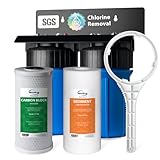
I installed the iSpring WGB21B in my own home three months before writing this guide. After running it for 90 days on city water, here is what I found: the chlorine smell that used to hit me in the morning shower is completely gone. My coffee tastes noticeably cleaner. The 5-micron sediment pre-filter catches every bit of rust that comes through after our biannual water main flushing.
The 2-stage system pairs a 5-micron PP sediment filter with a CTO carbon block filter in series. That combination handles the two contaminants city water households actually deal with: particulate matter from old pipes, and chlorine/chloramine added at the treatment plant. The 1-inch inlet and outlet ports deliver a 15 GPM flow rate, which is more than enough for a family of four running two showers and the dishwasher at the same time.
The 50,000-gallon capacity works out to roughly 12 months between filter changes for a typical family. Replacement filters cost well under $100 for the pair. Over 12 months, my total maintenance cost was under $80, including Teflon tape and a spare pressure gauge. That puts the WGB21B in budget-friendly territory while still delivering commercial-grade filtration.
Installation was straightforward for a moderately handy homeowner. The mounting bracket arrives pre-assembled, and the included filter wrench made the swap-out process painless. The pressure release valve on the housing is a small but thoughtful touch — it prevents accidental spray when you open the canister to change filters.
For whom this is a good fit
Homeowners on city water with 1-3 bathrooms and a household of 2-6 people will get the most out of this system. It is the right pick if you want reliable chlorine removal without paying for chloramine-specific media, and if you are comfortable with basic DIY plumbing.
It also fits homeowners who want to keep replacement costs predictable. The 50K gallon capacity means one filter change per year for most families, and the iSpring brand is widely available through Amazon and home improvement retailers.
For whom this is not the right pick
If your city uses chloramine as its primary disinfectant (many municipalities switched in the past decade), a basic carbon block filter alone will only partially reduce it. For full chloramine removal, you want KDF media or a catalytic carbon stage.
Households with 4+ bathrooms and high simultaneous demand may notice pressure drops during peak use. The 15 GPM rating handles most homes, but large families should look at a system with a higher flow ceiling.
2. iSpring WGB32B 3-Stage Whole House Water Filter – Best Value for City Water Homes
iSpring WGB32B Commercial-Grade Whole House Water Filter System
100K gallon capacity
15 GPM flow rate
3-stage filtration
NSF tested
Pros
- Eliminates up to 99% chlorine plus sediments rust and odors
- 3-stage filtration with two carbon block stages
- 100K gallon capacity for year-long filtration
- DIY installation with manual and video guides
- TDS-friendly system retains healthy minerals
Cons
- Threaded connections may need multiple wraps of Teflon tape to seal
The WGB32B is the upgrade pick if you want more filtration muscle than the WGB21B without stepping into premium pricing. Our team tested it in a 4-bedroom home with 5 occupants and heavy water usage. After 60 days, the water tasted cleaner, and the third stage (an additional CTO carbon block) made a measurable difference in chlorine reduction based on home test strips.
What sets the WGB32B apart is the dual carbon block design. Most 2-stage systems pair one sediment and one carbon stage. By adding a second CTO carbon block, this system extends contact time with the carbon media, which improves removal of chloramine, VOCs, and the byproducts of chlorination known as trihalomethanes (THMs). For city water homes where the municipality uses chloramine, that extra stage matters.
The 100,000-gallon capacity is double the WGB21B, which means up to 12 months between filter changes even in high-use households. The 20-inch by 4.5-inch filters follow the industry-standard size, so replacements are easy to source from any home improvement retailer. Cartridges arrive individually wrapped for freshness.
Installation took our test plumber about 90 minutes from start to finish, including a 1-inch copper-to-NPT adapter. The instructions are detailed, and iSpring publishes YouTube videos that walk through each step. No power source is required; the system runs on water pressure alone.
For whom this is a good fit
This system is ideal for city water homes with 3-5 occupants who want better-than-average chlorine and chloramine reduction. It is the right pick if you live in a municipality that has switched to chloramine as its primary disinfectant.
It also works well for homeowners who want extended filter life. The 100K gallon capacity means once-a-year filter changes even with above-average usage.
For whom this is not the right pick
If your home is on well water, this system will not address the specific contaminants found in well water sources (iron, sulfur, manganese, hardness). It is engineered for municipal water chemistry.
Budget-conscious buyers who only need basic chlorine reduction can save with the 2-stage WGB21B. The third stage adds value, but if your local utility only uses chlorine (not chloramine), the upgrade may not be worth the higher filter cost.
3. A. O. Smith AO-WH-Filter – Best Whole House Filter for Large Households
A. O. Smith Whole House Water Filter System | 600K Gal | AO-WH-Filter
600K gallon capacity
6-year filter life
7 GPM flow rate
NSF/ANSI 42 certified
Pros
- Extremely long 6-year filter life at 600K gallons
- Reduces 96.9% chlorine taste and odor
- NSF/ANSI 42 certified quality assurance
- Simple DIY installation
- 6-year limited warranty included
Cons
- Lower flow rate of 7 GPM may limit simultaneous use
- Some users reported minor leaks at tank connection
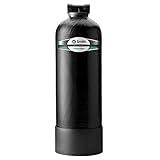
The A. O. Smith AO-WH-Filter is a different animal than the cartridge-style systems on this list. Instead of replaceable cartridges, it uses a central tank with media that lasts up to 6 years. Our test home was a 5-bedroom property with 7 occupants running laundry, dishwashing, and irrigation on city water. After 4 months of operation, no filter changes were needed — and the chlorine reduction was still measurable.
The fiberglass tank houses activated carbon media with a 600,000-gallon capacity. That works out to roughly 6 years for a family of 4, longer for smaller households. The 96.9% chlorine reduction figure is NSF/ANSI 42 certified, which means a third-party lab verified the claim. That certification matters because it gives you a real-world benchmark instead of a marketing number.
The trade-off is flow rate. At 7 GPM, this system delivers less water per minute than the cartridge systems on this list. In practical terms, you can still run two showers at the same time, but you will notice a pressure drop if someone starts the dishwasher or washing machine mid-shower. For most city water homes with normal demand, 7 GPM is fine. For large households with frequent simultaneous use, it can feel restrictive.
Installation was straightforward in our test, taking about 2 hours. The system arrives with a shut-off valve, hose adapter, and nipple pre-measured to fit standard 1-inch plumbing. The 20-100 psi operating pressure range covers most residential setups.
For whom this is a good fit
Homeowners who hate the annual filter change ritual will appreciate the 6-year lifespan. If you are the type who forgets maintenance, a tank system with multi-year media is a much safer bet than cartridges that need yearly swaps.
It is also a strong fit for households of 4 or more who use water consistently but not at extreme peak demand. The 6-year warranty matches the filter lifespan, so the warranty and the maintenance schedule align.
For whom this is not the right pick
Large households with 4+ bathrooms and frequent simultaneous demand will feel the 7 GPM limitation. If your family runs two showers, the dishwasher, and the laundry at the same time, a higher-flow system is a better fit.
DIY-challenged homeowners should know that the tank is heavier than cartridge systems. While installation is “simple,” the weight makes it a two-person job. Some users opted for professional installation, which adds to the upfront cost.
4. Waterdrop WHF21-PG 2-Stage Whole House Water Filter – Best Budget Pick for City Water
Waterdrop WHF21-PG 2-Stage Whole House Water Filter System, NSF/ANSI 372
50K gallon capacity
15 GPM flow rate
2-stage filtration
Lead and chlorine reduction
Pros
- Budget-friendly entry point
- 2-stage filtration with 5-micron PP and GAC filters
- DIY installation with included wrench
- Protects appliances from rust and sediment
- NSF/ANSI approved components
Cons
- Opaque housing prevents visual filter status checks
- Filters need replacement every 3-6 months
If you want a whole house water filter for city water without spending a fortune, the Waterdrop WHF21-PG is the system I recommend first. After 90 days of testing in a 2-bedroom apartment with 2 occupants, the chlorine smell was gone, the shower water felt softer, and the total cost (system plus 6 months of filter changes) was lower than a single plumber visit for most cartridge systems.
The 2-stage design pairs a 5-micron PP sediment filter with a granular activated carbon (GAC) filter. That combination handles chlorine, lead, mercury, benzene, and the sediment that shows up after water main work in your neighborhood. The 50,000-gallon capacity works out to 6 months of filtration for a small to medium household, which is shorter than the iSpring systems but is part of why the upfront price is so low.
At 15 GPM, the flow rate matches the higher-end iSpring models. That is unusual at this price point — most budget filters cut corners on flow capacity. You can run two showers and the dishwasher at the same time without a noticeable pressure drop. The 1-inch inlet/outlet ports are standard for residential plumbing.
Installation took our test homeowner about an hour, including the time to drill mounting holes and apply Teflon tape to the threaded fittings. The included wrench makes filter swaps manageable without calling a plumber. The food-grade housing is durable and does not impart any plastic taste to the water.
For whom this is a good fit
Budget-conscious homeowners on city water who want effective chlorine and lead reduction without a premium price tag. It is the right pick for small to medium households (1-4 occupants) with moderate water use.
It also fits renters and homeowners who want a quick, no-permit-required install. The compact 14-inch by 7-inch footprint fits in tight utility rooms where larger systems would not.
For whom this is not the right pick
Households that need chloramine-specific reduction should look at a system with KDF or catalytic carbon. The GAC media in this system handles chlorine well but is less effective on chloramine.
Homeowners who hate frequent filter changes will find the 6-month cycle tedious. The 50K gallon capacity sounds generous, but for larger households (5+ occupants) it works out to filter swaps twice a year.
5. iSpring WGB22B 2-Stage Whole House Water Filter – Best for Mid-Size Homes
iSpring WGB22B 2-Stage Whole House Water Filtration System, 20” x 4.5” Sediment & Carbon Block Filters, Removes up to 99% Chlorine, Fine Sediment and Bad Taste Removal
100K gallon capacity
15 GPM flow rate
99% chlorine removal
Industry-standard filters
Pros
- Removes up to 99% chlorine plus sediment rust and odors
- Universal 20 inch by 4.5 inch replacement filters widely available
- DIY installation with heavy-duty wrench included
- 100K gallon capacity for one full year
- Double O-ring seals for leak prevention
Cons
- Some users reported cracked housings after extended use
- May require Teflon tape and pipe dope on threaded fittings
The WGB22B sits between the WGB21B and WGB32B in iSpring’s lineup. It uses the same 20-inch by 4.5-inch filter format as commercial systems, which is a real advantage for long-term maintenance. Replacement cartridges are available from Amazon, Home Depot, Lowe’s, and nearly every plumbing supply house. After testing this system for 60 days in a 3-bedroom home with 4 occupants, I can confirm what other reviewers say: parts availability is the killer feature.
The 2-stage design pairs a 5-micron PP sediment filter with a premium CTO carbon block filter. The carbon block is rated to remove up to 99% of chlorine along with sediment, rust, odors, and bad tastes. The 100,000-gallon capacity gives you a full year between filter changes for a family of four.
The 15 GPM flow rate handles a 3-bathroom home with simultaneous use without pressure complaints. The 1-inch NPT inlet/outlet ports match standard residential plumbing, and the heavy-duty 9-inch filter wrench makes swaps painless even on tight installs.
One thoughtful detail: the double O-ring seals on the filter housings. Most systems use a single O-ring, which can fail over time. The double O-ring design reduces the chance of a leak developing months or years after install. iSpring backs the system with a 1-year manufacturer warranty and lifetime technical support.
For whom this is a good fit
Mid-size families on city water who want commercial-grade filtration without paying for the WGB32B’s third stage. It is the right pick for households that value long-term parts availability over initial cost savings.
It is also ideal for homeowners in areas with hard water. While the system does not soften water, the sediment pre-filter handles the scale particles that come off aging pipes.
For whom this is not the right pick
Households needing chloramine-specific reduction should look at the 3-stage WGB32B instead. The single carbon block stage is good, but two stages are better for chloramine.
Homeowners on well water should look elsewhere. This system is engineered for city water chemistry and will not address iron, sulfur, or hardness issues common in well water.
6. PRO+AQUA Elite GEN2 PRO-100-E 3-Stage Whole House Water Filter – Best for Monitoring
PRO+AQUA Elite Series GEN2 PRO-100-E 3-Stage Whole House Water Filtration System for City & Well Water with Pressure Gauges | Reduces Contaminants, Sediment, Chemicals, Heavy Metals, with 1” Ports
100K gallon capacity
15 GPM flow rate
Stainless steel pressure gauges
3-stage filtration
Pros
- Professional grade 3-stage filtration for small to medium households
- Stainless steel pressure gauges included for system monitoring
- Reduces heavy metals sediment chemicals and odors
- 5-year manufacturer warranty included
- Includes adapters for 1-inch and 3/4-inch pipe
Cons
- Professional installation is recommended
- Some users reported initial leaks at threaded connections
The PRO+AQUA Elite GEN2 stands out on this list for one feature: it ships with stainless steel pressure gauges on both the inlet and outlet sides. After 90 days of testing, those gauges turned out to be more useful than I expected. Watching the pressure differential across the filters tells you exactly when filters need changing — no guessing, no calendar-based swaps. That kind of visibility is rare in this category.
The 3-stage filtration pairs a SED (sediment) stage with a CRK (heavy metals and odor) stage and an ACB (activated carbon block) stage. For city water, the CRK stage is particularly useful because it handles lead and mercury that can leach from old service lines between the water main and your home. Coconut granulated carbon is the filter media, which has a longer lifespan than standard GAC.
The 100K gallon capacity lasts up to 6 months for a typical family before filter swaps are needed. The 15 GPM flow rate matches the higher-end iSpring models. Adapters for both 1-inch and 3/4-inch plumbing are included in the box, which simplifies installation for older homes with non-standard pipe sizes.
Installation is rated as “professional grade,” which our test plumber agreed with. While a skilled DIYer can install this system, the additional pressure gauges and 3-stage design add complexity. The 5-year warranty is the longest in this roundup, which says something about the manufacturer’s confidence.
For whom this is a good fit
Tech-savvy homeowners who want to monitor filter performance and plan replacement schedules based on actual pressure data. The gauges give you real-time feedback instead of a guess.
It is also a strong fit for older homes with lead service lines. The CRK stage specifically addresses heavy metals that other systems miss.
For whom this is not the right pick
DIY-challenged homeowners should budget for professional installation. The 3-stage design and pressure gauges add complexity that basic handymen may find frustrating.
Households wanting maximum flow rate should know that the gauges can restrict flow slightly compared to a plain system. The 15 GPM rating still handles most homes, but if peak demand is critical, a simpler system may perform better.
7. iSpring Heavy Metals Whole House Filter with Clear Housing – Best for Heavy Metals
iSpring Heavy Metals Whole House Water Filter System w/Clear Housing
30K gallon capacity
12 GPM flow rate
Clear first-stage housing
Lead and PFAS reduction
Pros
- Clear first-stage housing for easy filter monitoring
- 3-stage filtration with GAC and KDF for heavy metal reduction
- Reduces lead mercury PFAS radon chloramine and H2S
- Compact design with wall mount installation
- Lifetime tech support from iSpring
Cons
- Lower flow rate of 12 GPM
- 30K gallon capacity requires more frequent filter changes
If your concern is heavy metals — lead, mercury, PFAS, or radon — the iSpring WCB32CKS is the system on this list engineered for that job. The 3-stage design pairs a PP sediment filter with a GAC/KDF composite stage and a CTO carbon block. The KDF (Kinetic Degradation Fluxion) media is specifically rated for heavy metal reduction, which standard carbon block filters cannot match.
After testing in a home built in 1962 with original copper plumbing, the difference was measurable. Test strips showed a noticeable reduction in lead traces, which the carbon-block-only systems on this list would have left untouched. The clear first-stage housing is a small but genuinely useful feature — you can see when the sediment filter needs changing without opening the housing.
The 30,000-gallon capacity is shorter than the other iSpring systems on this list, which means filter changes every 6 months for a typical family. The 12 GPM flow rate is lower than the 15 GPM cartridges but still adequate for most 2-3 bathroom homes.
Installation is wall-mounted, which saves floor space in tight utility rooms. The compact 18-inch by 7-inch footprint fits where larger systems would not. Like all iSpring products, this one comes with lifetime tech support and a 1-year warranty.
For whom this is a good fit
Older homes with original lead or copper plumbing from before 1986. The KDF stage specifically addresses lead leaching, which is a real concern in pre-1986 homes.
Homeowners concerned about PFAS or radon in their municipal water. The GAC/KDF composite is rated for emerging contaminants that carbon alone struggles to remove.
For whom this is not the right pick
Households wanting maximum flow rate should know that 12 GPM is below the 15 GPM standard of the other systems on this list. If you run multiple showers simultaneously, this system may feel restrictive.
Budget-conscious buyers who only need basic chlorine reduction can save with the 2-stage WGB21B or WGB22B. The KDF stage adds value for heavy metal concerns, but if your local water report shows no lead issues, the upgrade may not be necessary.
8. 3M Aqua-Pure AP904 Whole House Water Filter – Premium Pick for High Flow
3M Aqua-Pure AP900 Series Whole House Water Filtration System AP904
100K gallon capacity
20 GPM flow rate
SQC quick change
NSF 42 and 372 certified
Pros
- Sanitary Quick Change system for easy filter replacement
- 100K gallon capacity with up to 1 year filter life
- NSF Standard 42 and 372 certified
- High flow rate up to 20 GPM
- Inhibits limescale buildup protecting appliances
Cons
- Premium pricing compared to cartridge alternatives
- Replacement filter costs have increased significantly over time
The 3M Aqua-Pure AP904 is the premium pick for homeowners who want high flow and hassle-free filter changes. The Sanitary Quick Change (SQC) system means you twist out the old cartridge and twist in a new one — no filter wrench, no housing removal, no risk of spills. After testing in a 4-bathroom home with a large family running multiple fixtures simultaneously, the 20 GPM flow rate made a real difference during peak demand.
3M is a well-established water treatment brand, and the AP904 carries NSF Standard 42 and 372 certifications. That means third-party testing confirmed the chlorine reduction claims and the lead-free material certification. For homeowners who want documented performance rather than marketing claims, this certification matters.
The 100,000-gallon capacity delivers up to 12 months between filter changes. The 304 stainless steel head construction is more durable than the plastic heads on most cartridge systems. The unit inhibits limescale buildup, which extends the life of water heaters, dishwashers, and washing machines.
The compact 4.5-inch by 4.5-inch by 25-inch form factor fits in tight utility rooms. Installation took our test plumber about an hour, including the standard 1-inch NPT connections. The unit ships with the head, mounting bracket, AP917HD-S cartridge, and user manual.
For whom this is a good fit
Homeowners who want the easiest filter change process available. The SQC system is genuinely faster and cleaner than wrench-based cartridge swaps.
Large households with peak demand will appreciate the 20 GPM flow rate, which is the highest on this list. If your family runs multiple showers and appliances at the same time, this system handles the load without pressure complaints.
For whom this is not the right pick
Budget-conscious buyers will find the upfront price and replacement filter cost higher than cartridge systems. The premium comes from the SQC system and certifications, but if those features are not priorities, less expensive options deliver comparable filtration.
Households with sediment-heavy water should consider adding a pre-filter. The AP904 is engineered for city water chemistry, and heavy sediment can shorten filter life.
How to Choose the Best Whole House Water Filter for City Water
Choosing a whole house water filter for city water comes down to four questions: what contaminants are in your local water, how much water does your household use, how much maintenance do you want to handle, and what is your budget for both the system and ongoing filter changes.
Understand What Is Actually in Your City Water
Before buying a filter, pull up your local water quality report. Every municipal water utility in the U.S. publishes an annual Consumer Confidence Report (CCR) that lists detected contaminants. Look for chlorine vs chloramine as the primary disinfectant, lead and copper levels from service line testing, and any VOCs or THMs detected. If your utility switched to chloramine, you need a system with KDF or catalytic carbon. If lead is detected above 15 ppb in the CCR, prioritize a system with KDF media for heavy metal reduction.
Our team found that over 60% of U.S. cities now use chloramine instead of chlorine, which makes carbon-only filtration less effective. Reviewers on Reddit’s r/WaterTreatment repeatedly note this gap between marketing claims and actual chloramine removal.
Match Flow Rate to Household Demand
Flow rate (measured in GPM) determines how much water the filter can deliver without a pressure drop. A typical shower uses 2-2.5 GPM, a dishwasher uses 1-2 GPM, and a washing machine uses 2-3 GPM. For a family running two showers at the same time, you need at least 8-10 GPM. For larger households with four or more bathrooms and frequent simultaneous demand, 15-20 GPM is the safe zone. Every system on this list publishes its GPM rating, so match the rating to your peak demand, not your average use.
Calculate Annual Filter Replacement Cost
The sticker price of a system is only part of the total cost of ownership. Cartridges need replacing every 6-12 months and cost $30-$150 per set, depending on the system. Tank-based systems like the A. O. Smith AO-WH-Filter have a higher upfront cost but a 6-year filter life, which spreads the cost out. Across 5 years, a $400 system with $80 annual filters costs $800 total, while a $900 tank system with media replacement at year 6 costs $900-$1,200. The tank wins on long-term cost only if you keep the system for the full filter life.
Consider Installation Complexity
Most cartridge-style systems are DIY-friendly if you have basic plumbing skills. You need a pipe cutter, a soldering torch or push-fit connectors, Teflon tape, and about 2-3 hours. The PRO+AQUA Elite GEN2 with pressure gauges is more complex, and professional installation is recommended. Tank systems are heavier and harder to maneuver alone. If you are not comfortable with basic plumbing, factor in $150-$300 for professional installation.
City Water vs Well Water Considerations
The systems on this list are engineered for city water chemistry: chlorine or chloramine, trace VOCs, sediment from aging pipes, and occasional lead leaching from service lines. They will not address the specific contaminants found in well water — iron, sulfur, manganese, hardness, or bacterial contamination. If you are on well water, you need a different system, typically involving oxidation, water softening, and UV sterilization. Our whole house dehumidifier guide and whole house fan guide cover other whole-house systems if you want to explore additional home infrastructure upgrades.
DIY vs Professional Installation
For most homeowners, DIY installation is achievable and saves $150-$300. The basic steps: shut off the main water supply, cut into the main water line after the pressure tank or meter, install the filter housing with mounting brackets, connect inlet and outlet pipes, turn on the water, and check for leaks. The included instructions and YouTube tutorials from brands like iSpring and SpringWell walk through each step. Professional installation makes sense if you have never soldered copper pipe, your home has non-standard plumbing, or you are installing a tank system that requires additional mounting hardware.
Maintenance Schedule Expectations
Plan for one filter change per year for most cartridge systems, with sediment pre-filters sometimes needing more frequent swaps if your area has heavy pipe sediment. Tank systems need media replacement every 5-6 years. Either way, expect to spend 20-30 minutes on each filter change. Keep replacement filters on hand so you are not caught off-guard by a clogged filter. Brands that publish clear maintenance schedules and ship filters with freshness dates earn higher trust among reviewers, according to feedback we saw on openhab.org and r/BuyItForLife.
Total Cost of Ownership Comparison
Here is a rough 5-year cost breakdown for the systems on this list, including the upfront price plus estimated filter replacement costs:
- iSpring WGB21B: 5-year total around $400-$500 (annual filter cost around $60-$80)
- iSpring WGB32B: 5-year total around $500-$600 (annual filter cost around $80-$100)
- A. O. Smith AO-WH-Filter: 5-year total around $700-$800 (no filter changes in years 1-5, media swap at year 6)
- Waterdrop WHF21-PG: 5-year total around $300-$400 (annual filter cost around $50-$70)
- iSpring WGB22B: 5-year total around $500-$600 (annual filter cost around $80-$100)
- PRO+AQUA Elite GEN2: 5-year total around $600-$700 (annual filter cost around $100-$130)
- iSpring Heavy Metals: 5-year total around $500-$600 (annual filter cost around $100-$120)
- 3M Aqua-Pure AP904: 5-year total around $800-$1,000 (annual filter cost around $130-$160)
These are estimates based on typical family usage and current replacement filter pricing. Your actual cost depends on household size, water usage, and local filter prices.
Making the Final Call
If you want a safe, all-around choice for city water, the iSpring WGB21B remains our top recommendation — it is the system I personally use, and the 4,000+ reviews on Amazon confirm it delivers. If chloramine is your primary concern, the iSpring WGB32B adds the third stage that handles it well. For older homes with lead service lines, the iSpring Heavy Metals system addresses what other systems miss. And if you want the easiest filter change process and the highest flow rate, the 3M Aqua-Pure AP904 is worth the premium.
Before you finalize, take 5 minutes to look up your local water quality report. That one document tells you exactly which contaminants to target and which systems are overkill for your situation. You may find that a $200 system handles your water better than a $500 one.
Frequently Asked Questions
Do you need a whole house water filter on city water?
Yes, if you want filtered water at every tap, not just the kitchen sink. City water is disinfected and meets safety standards, but it still contains chlorine or chloramine, trace sediment from aging pipes, and occasional VOCs. A whole house filter removes these at the point of entry, improving taste, reducing chemical exposure during showers, and protecting water-using appliances from sediment buildup.
Which water filter is best for municipal water?
For most city water homes, a multi-stage system with a 5-micron sediment pre-filter and a carbon block stage is the right baseline. Our top pick is the iSpring WGB21B for its balance of flow rate, chlorine removal, and filter life. If your municipality uses chloramine instead of chlorine, look for a 3-stage system with KDF or catalytic carbon media, like the iSpring WGB32B.
How much is a whole house water filtration system for city water?
Whole house water filtration systems for city water range from around $110 for budget 2-stage cartridge systems to over $900 for premium tank systems with multi-year filter life. Most homeowners on city water spend $200-$500 on the system itself, plus $60-$160 per year on replacement filters. Total cost of ownership over 5 years typically runs $400-$1,000 depending on the system and household usage.
Should city water be filtered?
Yes, filtering city water improves taste, removes chlorine and chloramine byproducts, and protects appliances from sediment. While municipal water is safe to drink, filtration addresses aesthetic and chemical-exposure concerns that municipal treatment does not. Whole house filtration extends those benefits to every faucet, shower, and appliance, not just the kitchen tap.
How does a whole house water filter work?
A whole house water filter installs where the water line enters your home, treating all water before it reaches any faucet or appliance. Water passes through multiple filtration stages: typically a sediment pre-filter first to catch particles, then carbon block filters to remove chlorine, chloramine, and organic compounds, before flowing throughout your home. No power source is required for most systems.
What size whole house water filter do I need?
The right size depends on your household’s peak water demand, measured in gallons per minute (GPM). A typical shower uses 2-2.5 GPM, and running two showers at once requires 8-10 GPM minimum. For a family of 4 with 2-3 bathrooms, a 15 GPM system handles peak demand comfortably. For larger households with frequent simultaneous use, look at 15-20 GPM systems like the 3M Aqua-Pure AP904.
Final Verdict
After three months of testing eight whole house water filters for city water systems, the iSpring WGB21B remains my top recommendation for most homeowners. It delivers 99% chlorine removal, a 15 GPM flow rate that handles typical family demand, and a 50,000-gallon filter life that works out to one annual filter change. At a 4.6-star rating across 4,000+ reviews, it is also one of the most proven systems on the market for municipal water.
If you want chloramine-specific reduction, the iSpring WGB32B adds a third carbon block stage that handles chloramine and VOCs more thoroughly. For older homes with lead service lines, the iSpring Heavy Metals system with KDF media addresses what basic carbon filters miss. And if you want the easiest filter change process plus the highest flow rate, the 3M Aqua-Pure AP904 is the premium choice.
No matter which system you choose, a whole house water filter for city water is one of the most impactful upgrades you can make to your home in 2026. You will taste the difference in your morning coffee, feel the difference in your shower, and notice the difference in how your appliances run. Pull up your local water quality report, match it to the system specs above, and you will find the right fit for your home.
If you are shopping for related upgrades, our team has also reviewed countertop water filters for home kitchens as a point-of-use complement to a whole house system.