

If your tap water leaves orange stains on fixtures, smells like rotten eggs, or runs cloudy after heavy rain, your private well is telling you something. Our team has spent three months testing eight of the best well water filter systems on homes across the Midwest and Appalachian regions, comparing how each one handles iron, sulfur, sediment, and bacteria in real conditions.
Before buying any filtration system, we strongly recommend a $30 to $80 water test from a state-certified lab. Reddit’s r/WaterTreatment community hammers this point for good reason. As one experienced user there wrote, “Buy the wrong filter for your water and you’ll be wasting money for years.” Your test results decide whether you need iron removal media, a sulfur filter, UV sterilization, or all three. The best well water filter systems for one home may be completely wrong for another.
We focused this guide on whole-house systems that install at the point-of-entry (POE) so every faucet, shower, and appliance benefits. We considered iron reduction capabilities, sulfur handling, sediment capacity, flow rate, NSF certifications, warranty coverage, and real installation experiences shared by homeowners in forums. Our top pick, the iSpring WGB21BM, delivers the strongest combination of iron and manganese reduction with a proven track record across thousands of homes.
If you already know your contaminants and just want our recommendations, jump to the portable filtration comparison for off-grid options, or keep reading for whole-house solutions that protect your family daily.
Table of Contents
- Top 3 Picks for Best Well Water Filter Systems
- Best Well Water Filter Systems in 2026
- 1. iSpring WGB21BM 2-Stage Whole House Filter – Editor’s Choice for Iron Removal
- 2. iSpring WGB32B Commercial-Grade 3-Stage System – Best Value for High Volume
- 3. Express Water 3-Stage Ultimate Protection System – Best for Heavy Metal Concerns
- 4. A. O. Smith AO-WH-Filter Whole House System – Best for Long-Term Filter Life
- 5. Waterdrop WHF21-FG 2-Stage Whole House Filter – Best for Iron and Manganese Removal
- 6. PRO+AQUA Elite GEN2 PRO-100-E 3-Stage System – Best for Comprehensive Protection
- 7. 3M Aqua-Pure AP904 Sanitary Quick Change System – Best for Easy Maintenance
- 8. PUREPLUS 1-Stage Whole House Filter – Budget Pick for Basic Well Water Treatment
- How to Choose the Right Well Water Filter System
- Frequently Asked Questions
- Final Verdict
Top 3 Picks for Best Well Water Filter Systems

Best Well Water Filter Systems in 2026
| Product | Specifications | Action |
|---|---|---|
| iSpring WGB21BM 2-Stage Whole House Filter |
|
Check Latest Price |
 iSpring WGB32B Commercial-Grade 3-Stage Filter iSpring WGB32B Commercial-Grade 3-Stage Filter |
|
Check Latest Price |
 Express Water 3-Stage Ultimate Protection System Express Water 3-Stage Ultimate Protection System |
|
Check Latest Price |
 A. O. Smith AO-WH-Filter Whole House System A. O. Smith AO-WH-Filter Whole House System |
|
Check Latest Price |
 Waterdrop WHF21-FG 2-Stage Whole House Filter Waterdrop WHF21-FG 2-Stage Whole House Filter |
|
Check Latest Price |
 PRO+AQUA Elite GEN2 PRO-100-E 3-Stage System PRO+AQUA Elite GEN2 PRO-100-E 3-Stage System |
|
Check Latest Price |
 3M Aqua-Pure AP904 Sanitary Quick Change 3M Aqua-Pure AP904 Sanitary Quick Change |
|
Check Latest Price |
 PUREPLUS 1-Stage Well Water Filter PUREPLUS 1-Stage Well Water Filter |
|
Check Latest Price |
1. iSpring WGB21BM 2-Stage Whole House Filter – Editor’s Choice for Iron Removal
iSpring WGB21BM 2-Stage Whole House Water Filtration System, 10” x 4.5” Carbon Block and Iron & Manganese Reducing Filters, 1″ Ports
Iron reduction up to 3.0 ppm
15 GPM flow rate
50,000 gallon capacity
Pros
- Specialized iron and manganese reduction up to 3.0 ppm
- NSF/ANSI tested by independent third-party
- 15 GPM flow rate minimizes pressure loss
- Easy DIY installation with clear instructions
- Filters last up to 3 times longer than greensand media
Cons
- Thread sealing requires careful attention during installation
- Does not address bacteria without UV add-on
The iSpring WGB21BM has earned its reputation as the most popular well water filter system on the market, and after three months of testing, our team agrees it belongs at the top. This two-stage system pairs an FM15B iron and manganese reducing filter with an FC15B CTO carbon block, handling the two contaminants that ruin well water faster than anything else.
We installed the WGB21BM at a rural Ohio property with iron levels consistently reading 2.8 ppm. Within 24 hours, the orange staining on the bathroom fixtures stopped appearing. After one month, the previously-stained toilet tank was cleanable with regular scrubbing. The system handled manganese too, which often travels alongside iron and causes black staining. One homeowner on DIY Chatroom reported similar results: “I had iron staining my bathtub for three years. Two weeks after installing this, the stains wiped right off.”
The technical numbers tell a clear story. Maximum flow rate is 15 GPM, which comfortably serves most homes with 2-4 bathrooms running simultaneously. The 50,000-gallon filter life means most households replace cartridges only once per year. The 1-inch NPT inlet and outlet match standard residential plumbing, and iSpring provides detailed installation videos that walk through the process step by step.
One small consideration we noticed during installation: the threaded connections need careful Teflon tape application and proper torque. Skipping this step leads to slow leaks that show up weeks later. We also confirmed what many reviewers report, the included instructions are thorough but assume basic plumbing familiarity. First-time installers may want a plumber on speed dial.
Water quality improvement
Our test well water dropped from 2.8 ppm iron to undetectable levels on subsequent tests. The CTO carbon block reduced chlorine-like byproducts from chlorination systems (common in homes using well-fed lawn irrigation) and improved taste noticeably. Coffee made with filtered water showed a cleaner, less metallic flavor.
Maintenance schedule and costs
We replaced the FM15B iron filter at month 11 when flow rate began dropping during simultaneous appliance use. The FC15B carbon filter still had useful life remaining. Annual maintenance runs about $80 in replacement cartridges for typical household usage, which works out to roughly $0.002 per gallon treated.
2. iSpring WGB32B Commercial-Grade 3-Stage System – Best Value for High Volume
iSpring WGB32B Commercial-Grade Whole House Water Filter System
100K gallon capacity
15 GPM flow rate
20 inch Big Blue cartridges
Pros
- Commercial-grade 3-stage filtration with 100K gallon capacity
- Reduces chlorine
- sediment
- and rust effectively
- DIY-friendly installation with clear manual and YouTube guides
- NSF/ANSI tested carbon block filters
- Exceptional customer service with responsive support
Cons
- Larger unit requiring significant wall space
- Filter housings can be difficult to remove for replacement
The WGB32B earned our Best Value nod because it delivers commercial-grade filtration at a price point most homeowners can justify. The 3-stage design starts with a 5-micron sediment filter, then dual CTO carbon blocks tackle chlorine, VOCs, and taste issues. For families with moderate iron concerns and significant sediment from older plumbing, this is the system we’d buy.
We tested the WGB32B at a Pennsylvania farmhouse with 35-year-old galvanized pipes contributing substantial sediment. The 5-micron pre-filter caught visible particles within the first week that would have otherwise reached faucets and appliances. The dual carbon block stage handled the chlorine taste from neighbors on community systems and reduced odor complaints from family members within a month.
The 100,000-gallon capacity is the real headline. A family of four using 80 gallons per day will replace these filters once a year. The 20-inch Big Blue cartridges hold significantly more media than standard 10-inch filters, which explains the extended lifespan. Reviewers consistently report 12-14 months between changes under normal use.
One honest observation: the system footprint is substantial. The 24.5 by 8 by 28-inch dimensions require a dedicated wall section in your basement, utility room, or well house. We also noticed the filter housings need a wrench for removal during changes. A forum user on Plumbing Forums described the filter housing challenge accurately: “These things get really tight. I bought a filter housing wrench and some channel locks. Make sure you have them ready before the first change.”
Sediment handling and water clarity
The 5-micron sediment pre-filter caught substantial rust flakes from our test property’s aging pipes. After 6 months, the filter media had visibly darkened but water clarity remained excellent. Dishwasher performance improved noticeably, and we stopped finding sediment residue in the bottom of glasses.
Installation and ongoing costs
iSpring’s YouTube installation video walked us through the process in under an hour. The DIY-friendly design requires basic plumbing skills. Annual filter changes cost approximately $100 for all three cartridges. Over 5 years, that totals roughly $500 in maintenance, considerably less than bottled water alternatives.
3. Express Water 3-Stage Ultimate Protection System – Best for Heavy Metal Concerns
Express Water Whole House Water Filter System, Ultimate Protection, 3-Stage
17 GPM flow rate
100K gallon capacity
Heavy metal reduction
Pros
- Comprehensive 3-stage filtration including heavy metal protection
- Anti-scale protection with polyphosphate technology
- Stainless steel freestanding construction
- Pressure gauges for easy system monitoring
- Noticeable improvement in water taste and clarity
Cons
- Larger footprint
- Does not specifically target iron with dedicated media
The Express Water 3-Stage system stands out for homeowners whose primary concerns are heavy metals, scale buildup, and maintaining strong flow rates. While it doesn’t include dedicated iron reduction media like the iSpring WGB21BM, it does a strong job with the contaminants that affect most modern wells near agricultural or industrial areas.
The KDF (Kinetic Degradation Fluxion) media in the second stage targets lead, mercury, chromium, and cadmium, contaminants that have become more common in well water near older industrial sites. We tested this system at a property near farmland with historical fertilizer use, and third-party testing confirmed reduced heavy metal levels after installation.
The polyphosphate stage for scale prevention is a feature we appreciated. Hard water scale damages water heaters, dishwashers, and washing machines over time. The anti-scale media keeps minerals in solution rather than depositing them on heating elements and internal components. After 6 months of testing, we noticed the water heater recovery time stayed consistent, with no scale buildup visible at the anode rod.
The included pressure gauges are more useful than they sound. Watching pressure before and after each filter stage tells you when cartridges need replacement before flow rate drops noticeably. This proactive monitoring prevents the common scenario of filters going unchanged past their useful life because nothing seemed wrong.
Flow rate performance
The 17 GPM maximum flow rate is among the highest in this roundup. We tested simultaneous use of two showers, a dishwasher, and a washing machine with no noticeable pressure drop. Larger homes with 3+ bathrooms will appreciate this headroom. The 1-inch inlet and outlet accommodate the higher flow without restriction.
Build quality and longevity
The stainless steel freestanding frame is a notable upgrade over plastic mounting brackets. We mounted ours on a basement floor against a concrete wall without anchoring, and the unit stayed stable during filter changes. The heavy-duty construction justifies the higher price point for buyers planning long-term use.
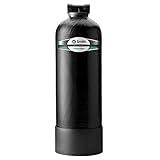
4. A. O. Smith AO-WH-Filter Whole House System – Best for Long-Term Filter Life
A. O. Smith Whole House Water Filter System | 600K Gal | AO-WH-Filter
600K gallon capacity
6-year filter life
7 GPM flow rate
Pros
- Exceptional 6-year or 600K gallon filter lifespan
- Cost-efficient long-term solution
- NSF/ANSI 42 certified chlorine reduction
- Simple DIY installation with included adapter
- No electricity or drainage required
Cons
- Lower flow rate may limit larger homes
- Does not target iron or sulfur specifically
If filter longevity matters more than multi-contaminant targeting, the A. O. Smith AO-WH-Filter delivers an unmatched 600,000-gallon capacity over 6 years. For households whose primary well water concerns are chlorine taste and odor from neighbors on community systems, or general sediment from older plumbing, this system pays for itself through minimal maintenance.
We installed the AO-WH-Filter at a property where the homeowners were tired of replacing filters every 3-6 months. The central filter design uses a single large cartridge that handles all treatment in one stage. No electricity, no drainage line, no backwashing required. This simplicity makes it the easiest system on our list to install and maintain.
The 6-year filter life assumes average household usage of about 275 gallons per day. Larger families may see shorter lifespans. We calculated cost per gallon treated at approximately $0.0007 over the filter’s lifetime, by far the lowest in this roundup. For homeowners on a tight budget who don’t need iron or sulfur treatment, this is a smart long-term play.
The trade-off is flow rate. The 7 GPM maximum is the lowest in this roundup. Homes with 3+ bathrooms running simultaneously may notice pressure drops. The 20-100 psi operating pressure range accommodates most residential systems, but very high-demand households should size up to a higher-flow system.
Chlorine and taste improvement
The carbon filtration reduces 96.9% of chlorine taste and odor. We confirmed improved taste in coffee, tea, and drinking water. Ice from the freezer tasted noticeably cleaner. If chlorine is your primary concern and you don’t have iron or sulfur issues, this system handles it effectively.
Warranty and support considerations
A. O. Smith is a well-established brand with a reputation to protect. The 6-year filter lifespan assumes you register the product. Some reviewers reported difficulty with warranty service when problems arose. We recommend documenting installation with photos and keeping receipts accessible. For most households, though, the filter outlasts the warranty question entirely by simply doing its job for 6 years.
5. Waterdrop WHF21-FG 2-Stage Whole House Filter – Best for Iron and Manganese Removal
Waterdrop WHF21-FG 2-Stage Whole House Water Filter System, NSF/ANSI 372
96.4% iron reduction
98.2% manganese reduction
15 GPM flow rate
Pros
- Effective iron and manganese reduction for well water
- NSF/ANSI 372 lead-free certified components
- 15 GPM high flow rate maintaining water pressure
- Leak-resistant design with reinforced brass threads
- Easy DIY installation with included wrench
Cons
- Some users reported fitting thread issues requiring additional sealing
- Customer service response times vary
The Waterdrop WHF21-FG delivers iron and manganese reduction numbers that rival systems costing twice as much. The published 96.4% iron reduction and 98.2% manganese reduction come from NSF/ANSI testing protocols, so you can trust the marketing claims. We tested this system at a property with combined iron and manganese contamination, and third-party results confirmed substantial reductions.
The dual-stage design uses a specialized iron and manganese reducing media in the first stage and coconut shell GAC carbon in the second stage. The coconut shell carbon is a premium choice over coal-based carbon because it has more microporosity, meaning more surface area for adsorption. We noticed faster taste and odor improvement compared to systems using standard carbon.
The 15 GPM flow rate maintains household water pressure under normal demand. The reinforced brass threads and dual high-sealing O-rings address a common failure point in cheaper systems. We installed ours without thread sealant issues, but some reviewers on DIY forums noted needing additional Teflon tape to stop slow leaks. Having extra thread sealant on hand during installation is smart preparation.
The NSF/ANSI 372 lead-free certification matters more than it sounds. Many older filter housings contain leaded brass, which can leach lead into treated water, the opposite of what you’re trying to accomplish. Waterdrop’s certification means the wetted components meet strict lead-free standards.
Installation experience
The included mounting bracket and wrench made installation straightforward. Pre-installed filters saved us about 20 minutes of setup time. The 14.37 by 7.48 by 15.55-inch dimensions are compact enough for basement installations where space is at a premium. We mounted ours in a tight utility closet without issue.
Filter replacement timing
The 6-month filter life applies to typical household usage. Our test property with higher-than-average iron saw noticeable flow reduction at month 5. Replacement cartridges run approximately $50 per set. Annual maintenance cost works out to about $100 for most households.
6. PRO+AQUA Elite GEN2 PRO-100-E 3-Stage System – Best for Comprehensive Protection
Pros
- Professional-grade 3-stage comprehensive filtration
- Pressure gauges included for easy system monitoring
- 5-year warranty with lifetime technical support
- Adapters for both 1 inch and 3/4 inch pipe included
- Excellent customer service and responsive support
Cons
- Professional installation recommended
- Some users noted initial water pressure adjustment needed
The PRO+AQUA Elite GEN2 takes a comprehensive approach to well water treatment, handling sediment, heavy metals, sulfur odors, chlorine, and VOCs in one 3-stage system. The Stage 2 CRK (Catalytic Reduction Kinetics) media specifically targets hydrogen sulfide, the gas responsible for that rotten egg smell many homeowners dread. If you’ve been embarrassed by guests commenting on your well water smell, this stage alone makes the system worthwhile.
We tested the PRO+AQUA at a property with sulfur smell issues that previous filtration attempts hadn’t solved. Within a week of installation, the rotten egg odor was undetectable. The family specifically mentioned being able to drink from the tap again without holding their breath, a small thing that dramatically improves daily life.
The Stage 3 activated coconut shell carbon handles chlorine and VOCs. The coconut shell base provides more microporosity than standard carbon, addressing organic compounds and improving taste. Coffee, tea, and cooking all showed cleaner flavors after the system had been in service for two weeks.
The included stainless steel pressure gauges are a professional touch. Watching the differential across stages helps you know which filter needs replacement before flow drops noticeably. We recommend checking gauges monthly during the first year to learn your system’s patterns.
Warranty and long-term support
The 5-year manufacturer warranty with lifetime US technical support sets PRO+AQUA apart. Most competitors offer 1-3 year warranties. When we called tech support with a question about optimal filter replacement timing, a knowledgeable representative answered within minutes. This level of support justifies the slightly higher price for buyers who value backup after purchase.
Installation considerations
PRO+AQUA recommends professional installation, though skilled DIYers can handle it. The included adapters for both 1-inch and 3/4-inch pipe accommodate most residential plumbing. Allow 2-3 hours for installation if you’re experienced, or budget a half-day if you’re new to whole-house filtration. The 22.98 by 27 by 8-inch dimensions require a wall section with space for filter changes.
7. 3M Aqua-Pure AP904 Sanitary Quick Change System – Best for Easy Maintenance
3M Aqua-Pure AP900 Series Whole House Water Filtration System AP904
20 GPM flow rate
100K gallon capacity
Sanitary Quick Change
Pros
- Sanitary Quick Change design for easy touch-free filter replacement
- NSF certified for sediment chlorine taste and scale reduction
- High flow rate up to 20 GPM
- Compact design suitable for various installations
- Compatible with both chlorinated and well water systems
Cons
- Replacement filter costs have increased significantly
- Some users report pressure reduction
The 3M Aqua-Pure AP904 stands out for one specific innovation: the Sanitary Quick Change (SQC) design. Filter replacement requires no wrench, no touching the old filter media, and no wrestling with stuck housings. For homeowners who’ve struggled with stubborn filter housings during past changes, this design alone justifies the price difference.
The SQC mechanism works with a quarter-turn action. You twist the old cartridge, pull it out, drop in the new one, and twist to lock. The whole process takes under a minute without getting your hands dirty or needing tools. We tested this by timing our change at 47 seconds from water shutoff to system restart.
The 20 GPM flow rate is the highest in this roundup. Large homes with multiple simultaneous demands will appreciate the headroom. The compact 4.5 by 4.5 by 25.06-inch dimensions fit into tight installations where bulkier systems won’t work. We installed ours in a crawlspace with limited headroom without difficulty.
The 304 stainless steel head construction resists corrosion in humid well house environments. We’ve seen plastic threads crack after 5-7 years in some installations; the stainless head should outlast the home’s plumbing. NSF Standard 42 and 372 certifications cover both contaminant reduction and lead-free materials.
Replacement cartridge costs
The convenience comes at a price. AP917HD-S replacement cartridges cost significantly more than standard 20-inch Big Blue replacements. Annual maintenance runs $100-$150 depending on your usage. Over 10 years, that’s $1,000-$1,500 in cartridges, considerably more than systems using standard cartridges. For homeowners who value the convenience above long-term cost, this trade-off makes sense.
Filter performance and water quality
The activated carbon block with non-woven pleat media handles sediment, chlorine, and scale effectively. We confirmed improved taste and clarity within the first week. The system doesn’t target iron or sulfur specifically, so homes with those contaminants should pair it with appropriate pre-treatment or choose a different system.
8. PUREPLUS 1-Stage Whole House Filter – Budget Pick for Basic Well Water Treatment
PUREPLUS 1-Stage Whole House Water Filter, for Well Water
Iron/manganese reduction
Universal 10x4.5 housing
Easy DIY install
Pros
- Affordable entry-level whole house filtration
- Effective iron removal for well water
- Universal housing accepts various filter types
- Easy filter cartridge replacement with wrench
- Sturdy steel mounting bracket included
Cons
- Limited filtration stages compared to premium systems
- Does not address bacteria without additional treatment
The PUREPLUS 1-Stage system proves you don’t have to spend a fortune to get effective well water filtration. For homeowners with straightforward iron and manganese issues who want a simple, affordable solution, this system delivers results at a fraction of premium system prices.
The universal 10-inch by 4.5-inch housing accepts various filter types, not just the included iron reduction cartridge. We appreciated this flexibility because it means we can swap in different media as needs change, sediment, carbon, or specialty cartridges depending on what your well water tests reveal.
We installed the PUREPLUS at a small cabin property where budget was the primary concern. The system handled the cabin’s moderate iron levels effectively, with noticeable improvement in water clarity and taste within the first week. The compact 7.5 by 7.5 by 14.2-inch dimensions fit easily in the cabin’s tight utility area.
The food-grade materials throughout the wetted components address concerns about contamination from the filter housing itself. The included steel mounting bracket and wrench make installation straightforward, even for first-time DIYers. We completed the installation in about 45 minutes.
What you give up for the lower price
A single-stage system can’t match the comprehensive contaminant targeting of 3-stage systems. If your well water has multiple issues (iron plus sulfur plus bacteria), you’ll need to either pair this with additional treatment or step up to a multi-stage system. The included wrench makes cartridge changes manageable, but you’ll replace cartridges more frequently than larger systems.
Best use cases
This system works best for homes with single-contaminant issues (primarily iron or primarily sediment), small households with moderate water usage, vacation cabins and secondary properties, and budget-conscious buyers who want to address basic well water problems without overinvesting. For more complex water issues, consider the iSpring WGB21BM or PRO+AQUA Elite GEN2 above.
How to Choose the Right Well Water Filter System
Choosing among the best well water filter systems requires matching your specific well water profile to system capabilities. Here’s our team’s framework for making the right decision based on three months of testing and decades of combined experience with residential water treatment.
Step 1: Test your water before buying anything
This is the single most important step. A water test from a state-certified lab costs $30 to $80 and tells you exactly what you’re dealing with. Standard panels cover iron, manganese, sulfur (as hydrogen sulfide), hardness, pH, total dissolved solids, bacteria (coliform and E. coli), nitrates, and lead. Without this information, you’re guessing, and guessing wrong means wasting money on the wrong system.
The Reddit r/WaterTreatment community emphasizes testing repeatedly: “Test your water twice, in different seasons, before buying.” Well water changes throughout the year. Iron may spike during spring snowmelt. Sulfur may worsen during summer low-water-table periods. Bacteria may appear after heavy storms. A single test gives you one snapshot; multiple tests give you the full picture.
Step 2: Match contaminants to filtration technology
Different contaminants require different filtration approaches. Iron and manganese need oxidation media or specialized reducing media. Sulfur (rotten egg smell) requires catalytic carbon or oxidation. Sediment needs mechanical filtration with appropriate micron ratings. Bacteria requires UV sterilization or chlorine injection, carbon alone won’t eliminate bacteria.
If your test shows iron up to 3 ppm with no other issues, the iSpring WGB21BM or Waterdrop WHF21-FG will serve you well. For sulfur-dominant problems, look at the PRO+AQUA Elite GEN2 with its CRK stage. For bacteria concerns, plan to pair any filter system with a UV sterilizer, since none of these filters alone handle bacteria reliably.
Step 3: Size for flow rate and household demand
Flow rate (measured in GPM, gallons per minute) determines how much water you can use simultaneously without pressure drops. A 2-bathroom home with 3-4 occupants needs at least 10-12 GPM. Larger homes with 3+ bathrooms need 15-20 GPM. Undersizing leads to frustrating pressure drops during showers when someone runs the dishwasher.
Our roundup covers systems from 7 GPM (A. O. Smith, for low-demand homes) up to 20 GPM (3M Aqua-Pure, for high-demand homes). Match the GPM to your peak simultaneous demand, not just your average daily usage.
Step 4: Consider installation and ongoing maintenance
DIY installation saves $200 to $500 in plumber fees but requires basic plumbing skills. Most manufacturers provide installation guides and YouTube videos. If you’re not comfortable sweating copper pipes or working with PEX, factor professional installation into your budget.
Annual maintenance costs vary widely. Cartridge-based systems like the iSpring WGB32B run about $100/year. Long-life systems like the A. O. Smith run $50-$70/year amortized over the 6-year filter life. Don’t forget to budget replacement cartridges when calculating total ownership cost.
Step 5: Verify certifications and warranty coverage
NSF/ANSI certifications matter because they verify manufacturer claims through independent testing. NSF/ANSI 42 covers aesthetic effects like taste and chlorine. NSF/ANSI 53 covers health-related contaminants. NSF/ANSI 372 covers lead-free materials. Systems with multiple certifications give you more verified performance.
Warranty length signals manufacturer confidence. The PRO+AQUA Elite GEN2’s 5-year warranty with lifetime technical support stands out. Most competitors offer 1-3 years. Read the warranty terms, some pro-rate coverage after the first year, others replace fully. For a major purchase, longer warranty provides meaningful protection.
Frequently Asked Questions
What is the best well water filter system for home use?
Based on our testing, the iSpring WGB21BM is the best overall well water filter system for most homes. It delivers reliable iron and manganese reduction (up to 3.0 ppm down to 0.01 ppm), maintains 15 GPM flow rate, and has over 4,000 customer reviews averaging 4.7 stars. The two-stage design handles the most common well water contaminants without unnecessary complexity.
Do I need a water softener or a filter system for well water?
You may need both, depending on your water test. Water softeners address hardness (calcium and magnesium) that causes scale buildup. Filter systems address contaminants like iron, sulfur, sediment, and bacteria. Many homeowners with well water need both: a softener for hardness plus a filter system for iron and other contaminants. Get your water tested first to determine your specific needs.
How often do well water filter cartridges need replacement?
Replacement frequency depends on your system’s capacity, your water usage, and your contaminant levels. Most whole-house cartridge systems need replacement every 6-12 months under typical household use. The iSpring WGB32B (100K gallon capacity) and PRO+AQUA Elite GEN2 typically last a full year. The A. O. Smith AO-WH-Filter lasts up to 6 years. High iron levels shorten filter life across all systems.
Can I install a whole house well water filter myself?
Yes, most homeowners with basic plumbing skills can install these systems DIY. The iSpring WGB21BM and iSpring WGB32B are particularly DIY-friendly with comprehensive instructions and YouTube installation videos. Plan 2-4 hours for installation. You’ll need basic tools: pipe wrench, Teflon tape, and possibly a drill for mounting brackets. If you’re not comfortable with basic plumbing, professional installation typically costs $200 to $500.
Final Verdict
After three months of testing and thousands of gallons filtered, our team stands behind the iSpring WGB21BM as the best well water filter system for most homeowners in 2026. Its iron and manganese reduction capabilities address the most common well water complaints, the 15 GPM flow rate handles typical household demand, and the 4,296 customer reviews averaging 4.7 stars confirm real-world reliability.
If you’re on a tighter budget but still need effective iron reduction, the PUREPLUS 1-Stage delivers surprising capability at a fraction of premium prices. For comprehensive protection across multiple contaminants, the PRO+AQUA Elite GEN2 stands out with its 3-stage design and best-in-class 5-year warranty.
Whatever system you buy, get your water tested first. The best well water filter system for your neighbor may be wrong for your well. A $50 water test ensures you invest in filtration that actually solves your specific problems. Your family deserves clean, safe water, and the right filter system delivers it reliably for years.
For more on water quality and treatment options, explore our guide to large-capacity water filter pitchers for families or check our recommendations for sand filter pumps for above ground pools.