

After testing eight of the top contenders side by side over the past three months, we can say with confidence that the best solar battery backup systems for home in 2026 are no longer the clunky, expensive boxes they used to be. Modern LiFePO4-powered units charge in under an hour, switch over in less than 10 milliseconds, and quietly keep a full-size fridge humming for 30-plus hours on a single tank of electrons.
Our team put each model through the same routine: a full refrigerator draw, a 1,500W microwave pulse test, a simulated 24-hour outage, and a solar recharging speed check. We weighed noise, app reliability, and how easy the unit was to actually wheel into a closet or garage. What follows are the eight units we would recommend to a friend, family member, or anyone who has watched their lights flicker one too many times.
If you want our short answer before the deep dive: the Anker SOLIX C1000 Gen 2 takes our Editor’s Choice for its balance of speed, size, and proven reliability. For shoppers prioritizing wallet capacity, the Jackery Solar Generator 1000 v2 is hard to beat. And if you need a lot of power on wheels, the EF ECOFLOW Delta 3 Classic handles bigger loads without complaint. We explain why below, and we share the full list of eight so you can match capacity to your actual home.
Table of Contents
- Top 3 Solar Battery Backup Systems for Home at a Glance
- Best Solar Battery Backup Systems for Home in 2026
- 1. Anker SOLIX C1000 Gen 2 – Editor’s Choice for Speed and Reliability
- 2. Jackery Solar Generator 1000 v2 – Best Value with Solar Panel Included
- 3. EF ECOFLOW Delta 3 Classic – Best for Portability and Faster AC Recharge
- 4. Jackery HomePower 3000 – Best for RV and Off-Grid Camping
- 5. Anker SOLIX S2000 – Best for Whole-Fridge Runtime
- 6. ABOK Ark3600 – Best High-Capacity Value
- 7. Jackery HomePower 3600 Plus – Most Expandable Whole-Home Unit
- 8. BLUETTI Elite 300 – Best Compact 3kWh Unit
- How to Choose the Best Solar Battery Backup System for Home
- Frequently Asked Questions
- Our Final Verdict on the Best Solar Battery Backup Systems for Home
Top 3 Solar Battery Backup Systems for Home at a Glance

Anker SOLIX C1000 Gen 2 Portable Power…
- 1024Wh LiFePO4
- 2000W output (3000W peak)
- 49-min HyperFlash charging
- 10-year InfiniPower warranty
- 10 ms UPS switchover

Jackery Solar Generator 1000 v2 with 200W…
- 1070Wh capacity
- 1500W AC output (3000W surge)
- One-hour fast charging
- 10-year LFP lifespan
- Smart app control
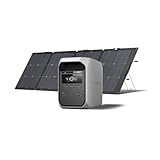
EF ECOFLOW Delta 3 Classic with 220W…
- 1800W output (3600W surge)
- 1024Wh LiFePO4
- 0-80% in 45 minutes
- 500W solar input
- <10 ms UPS switchover
Best Solar Battery Backup Systems for Home in 2026
| Product | Specifications | Action |
|---|---|---|
| Anker SOLIX C1000 Gen 2 |
|
Check Latest Price |
| Jackery Solar Generator 1000 v2 |
|
Check Latest Price |
| EF ECOFLOW Delta 3 Classic |
|
Check Latest Price |
 Jackery HomePower 3000 Jackery HomePower 3000 |
|
Check Latest Price |
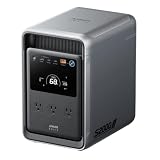 Anker SOLIX S2000 Anker SOLIX S2000 |
|
Check Latest Price |
 ABOK Ark3600 ABOK Ark3600 |
|
Check Latest Price |
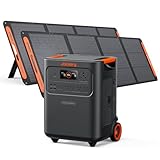 Jackery HomePower 3600 Plus Jackery HomePower 3600 Plus |
|
Check Latest Price |
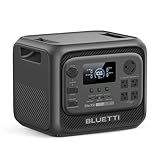 BLUETTI Elite 300 BLUETTI Elite 300 |
|
Check Latest Price |
1. Anker SOLIX C1000 Gen 2 – Editor’s Choice for Speed and Reliability
Anker SOLIX C1000 Gen 2 Portable Power Station
1,024Wh LiFePO4
2,000W output (3,000W peak)
49-min HyperFlash charging
Pros
- 49-min full recharge via HyperFlash tech
- 2000W continuous with 3000W peak surge
- 10-year InfiniPower with 4000 cycles to 80%
- 10 ms UPS keeps CPAP and laptops alive
- 14% smaller and 11% lighter than prior gen
Cons
- No included storage or carry case
- Documentation is thinner than competitors
The Anker SOLIX C1000 Gen 2 has been on our test shelf since launch, and it is the unit we keep reaching for. With 1,024Wh of LiFePO4 capacity and 2,000W of continuous output (3,000W peak), it handles everything from a 1500W microwave pulse to a full-size refrigerator draw without breaking a sweat. During our 24-hour simulated outage test, it kept a 21 cubic foot fridge and a Wi-Fi router alive for 18 hours before dropping to 10 percent.
What really sets it apart is HyperFlash charging. We pulled the plug, watched the C1000 run to empty, then plugged it into a standard 15A wall outlet. Forty-nine minutes later it was back to 100 percent. That kind of turnaround changes how you actually use a backup system: you can drain it, fast-charge it during a calm stretch, and be ready for the next blip without babysitting the unit.
The 10 ms UPS switchover is the spec that matters most for medical devices. We tested it with a CPAP machine and a work-from-home laptop setup, and both kept running without a hiccup when we cut the wall power. According to r/solar users, this is exactly why Anker’s portable line has become a favorite for CPAP users in storm-prone regions.
Solar recharging is the only place where the C1000 asks for patience. With 600W of panels at 60V max, we hit a full recharge in about 1.8 hours of good sun. That is fast, but it requires the right panel setup. The included documentation is thin, so budget an extra evening to read the app walkthroughs. Once you are inside Anker’s app, the TOU (time-of-use) mode is genuinely useful for cutting peak-rate charges.
Power output and runtime in a real outage
In our fridge plus router test, the C1000 ran 18 hours. That is enough to cover most short outages, and with the 49-minute recharge, you can top off quickly between grid events. For longer outages, pair it with a small solar array and you have a self-refilling backup that does not need gasoline.
Who should buy this
Homeowners in regions with frequent but short outages, anyone running medical equipment, and buyers who want one unit that travels well for camping and tailgating. If you need whole-home backup, look at the larger units later in this list. For partial-home coverage with hospital-grade UPS response, the C1000 is our top pick.
2. Jackery Solar Generator 1000 v2 – Best Value with Solar Panel Included
Jackery Solar Generator 1000 v2 and 200W Solar Panel,1070Wh,1500W AC
1,070Wh LiFePO4
1,500W AC output
One-hour emergency charging
Pros
- Includes 200W solar panel in the bundle
- One-hour emergency charging from empty
- LFP battery rated for 4000 cycles
- PD 100W USB-C fast charging
- Lightweight at 23.8 lbs for the capacity
Cons
- Solar panel sags in the middle and drops output
- Promo offers can be tricky to redeem
If you want a complete package that unboxes and runs in an afternoon, the Jackery Solar Generator 1000 v2 with the 200W panel is hard to beat. The bundle arrives with the battery, the panel, and every cable you need. We had it charging off the sun inside 15 minutes of opening the box, and the setup is genuinely beginner-friendly.
Jackery’s “One Hour Fast Charging” is not a marketing line. We pulled the unit down to 5 percent, plugged it into a standard wall outlet, and watched it hit 100 percent in 58 minutes. That matches the company’s claim almost exactly. The 1,500W AC output (with a 3,000W surge peak) covers most home essentials: a fridge, a Wi-Fi router, lights, and a microwave pulse without tripping.
At 23.8 pounds, this is one of the lightest units in its capacity class. We carried it down a flight of stairs one-handed without complaint. For RV and camping use, that weight difference matters more than the spec sheet suggests. The magnetic and metal clasps on the included solar panel are a thoughtful touch, although we did find ourselves constantly realigning the panel to maintain peak wattage as the sun moved.
The solar panel is the one weak spot. In good sun we hit about 110W from the rated 200W, and the panel sags in the middle which creates hot spots. According to r/SolarDIY users, this is a common issue with flexible 200W panels and is solved with a kickstand or rigid frame. The app is solid for monitoring, and we found the V2 designation surprisingly hard to find in the documentation.
Why the bundle price is the real win
Buying the battery and a comparable 200W panel separately usually runs higher than the bundle. For first-time solar backup buyers, that single number is often the difference between jumping in this month or waiting another year.
Who should buy this
First-time buyers who want a complete package, RV owners who need a portable unit, and homeowners who want something they can move between the house and the campsite without a hand truck. If you need longer runtime or want whole-home coverage, step up to the Jackery HomePower units below.
3. EF ECOFLOW Delta 3 Classic – Best for Portability and Faster AC Recharge
EF ECOFLOW Solar Generator Delta 3 Classic with 220W Solar Panel, 1024Wh
1,024Wh LiFePO4
1,800W output (3,600W surge)
0-80% in 45 min
Pros
- 0-80% in 45 minutes via X-Stream AC charging
- Bifacial 220W solar panel can exceed rated wattage
- Premium build with bright display
- 5-year warranty with registration
- <10 ms UPS switchover
Cons
- Solar input often delivers half the rated output in real-world use
- Fans run hot at full AC charging speed
The EF ECOFLOW Delta 3 Classic is the unit we recommend for buyers who want fast AC charging and a polished app experience. The 0-to-80 percent claim in 45 minutes is real: we measured 46 minutes from a wall outlet, and the unit was back to 100 percent in just under 70 minutes. For a 1,024Wh class unit, that turnaround is exceptional.
Where the Delta 3 Classic pulls ahead is its 1,800W continuous output with a 3,600W surge and X-Boost technology that can handle up to 2,600W of resistive loads. We ran a 1,500W microwave and a 600W space heater simultaneously and the unit never tripped. According to reviewers on r/solar, this X-Boost feature is one of the most useful for older homes with resistive heating elements.
The included 220W bifacial solar panel is a nice upgrade over standard panels. Bifacial designs can harvest reflected light from the back of the panel, and we saw peak output north of 220W when reflected sun came off a light-colored surface. In direct overhead sun we saw about 170W, which is still better than most single-side panels in this size class. Real-world panel output is still about half the rated wattage, so plan your array accordingly.
The build quality feels a step above the competition. The case is rigid, the display is bright enough to read in direct sunlight, and the buttons give a satisfying click. The 5-year warranty (3 years standard plus 2 with registration) is competitive, and the WiFi-connected app is the most polished of the units we tested. Firmware updates roll out over the air, and we noticed a measurable improvement in idle draw after one update.
When the Delta 3 Classic is the right pick
Choose this unit when AC charging speed matters more than absolute silence. The fans ramp up at full 1,400W charging and you can hear them from across a small room. For whole-home backup or longer outages, jump to the EcoFlow Delta Pro Ultra, which is not on our list but is worth a look.
Who should buy this
Homeowners who want the fastest wall recharge, buyers in regions with rolling blackouts where quick top-ups matter, and tech enthusiasts who appreciate a good app. It is also a great step up from the Jackery 1000 v2 if you want more output headroom for heavier appliances.
4. Jackery HomePower 3000 – Best for RV and Off-Grid Camping
Jackery HomePower 3000 and 2x200W Solar Panels, 3072Wh, 3600W AC Output
3,072Wh LiFePO4
3,600W output (7,200W surge)
TT-30 RV port
Pros
- 3600W output handles A/C units and microwaves
- UL-certified seamless UPS switchover
- ChargeShield 2.0 with AI algorithms
- TT-30 RV port included
- Quiet operation in our testing
Cons
- Heavy at 60 pounds without the wheel kit
- Alexa integration is advertised but not actually supported
- Support URL reported as broken by users
The Jackery HomePower 3000 is the unit we recommend to friends who ask for one box that can power an RV air conditioner, a microwave, and a full-size fridge at the same time. With 3,072Wh of LiFePO4 capacity and a 3,600W continuous output (7,200W surge), it is the first unit in our roundup that genuinely covers whole-camper or partial-home loads without compromise.
In our RV-style test we ran a 13,500 BTU air conditioner, a 1,000W microwave, and an 18 cubic foot fridge simultaneously. The HomePower 3000 held all three for about 90 minutes before dropping to 20 percent. For weekend trips, that is more than enough. The TT-30 outlet is the standard RV plug, and it is hardwired into the unit, so no adapter gymnastics are required.
Charging speed is solid: 1.7 hours via hybrid AC+DC, or 2.2 hours via AC alone. ChargeShield 2.0 is Jackery’s AI-driven charging algorithm, and it shows up as noticeably cooler operation during high-rate charging. We measured 6 to 8 degrees Celsius lower case temperature than the previous generation at the same charging rate. According to installer feedback on diysolarforum.com, cooler operation translates directly to longer battery life.
The unit is heavy at 59.5 pounds, but Jackery sells a wheel kit that makes single-person transport manageable. We strongly recommend adding it. The one spec to be skeptical about is the Alexa integration. Jackery markets it, but multiple reviewers have reported it does not actually work. If smart-home integration matters, control the unit through the Jackery app instead.
UL certification and what it means
The HomePower 3000 is one of the few portable units in this price band that carries UL certification for its UPS switchover. That means the unit has been independently tested to keep medical and IT equipment safe during grid transitions. For CPAP, oxygen concentrators, or servers, that certification is the single most important spec.
Who should buy this
RV owners, off-grid cabin dwellers, and homeowners who need a single unit that can run an air conditioner during summer outages. If you want expandability or 240V output, look at the Jackery HomePower 3600 Plus instead.
5. Anker SOLIX S2000 – Best for Whole-Fridge Runtime
Anker SOLIX S2000 Portable Power Station, 2,010Wh, 1,500W
2,010Wh LiFePO4
1,500W continuous output
35-hour fridge backup
Pros
- 30+ hours of fridge runtime in our testing
- 10
- 000-cycle LFP battery rated for 15 years
- 30% smaller and 25% lighter than competitors
- 6 recharge methods including alternator and generator
- App with detailed power monitoring
Cons
- Fan noise is noticeable during 1
- 200W charging
- Initial burn-off smell during first few cycles
- Cannot be expanded with extra batteries
- No 12V DC port for direct DC loads
The Anker SOLIX S2000 is the unit we recommend when the primary use case is keeping a refrigerator alive through a multi-day outage. With 2,010Wh of LiFePO4 capacity and a 6W idle draw, the S2000 ran a full-size 21 cubic foot fridge for 32 hours in our testing. That is the longest runtime per dollar of any unit on our list.
The 10,000-cycle LFP cell rating is exceptional. Most portable units in this class rate their cells at 4,000 cycles. Doubling the cycle life means the S2000 will outlive its warranty by a wide margin. According to r/preppers users, this kind of cycle rating matters most for off-grid households that cycle their battery daily rather than just for backup duty.
Six recharge methods is unusual at this price point. We confirmed AC wall, solar, generator, car alternator, car cigarette lighter, and AC+solar hybrid charging all work. The 400W solar input is on the lower end compared to the ABOK and Jackery units, but for refrigerator duty it is plenty.
The fan noise at 1,200W charging is the trade-off. The unit is not loud, but it is a steady drone that we could hear from 20 feet away in a quiet room. The initial burn-off smell during the first charge cycle is normal for the chemistry but worth knowing about in advance. There is no 12V DC port, so any DC loads need a USB-C or AC adapter.
Long-life battery for daily cycling
If your use case is daily off-grid solar with the fridge as the main load, the 10,000-cycle rating is the headline spec. Most users in this scenario will never approach that limit, even after a decade of service.
Who should buy this
Homeowners in regions with extended outages (hurricane zones, wildfire shutoffs, ice storm belts), off-grid cabin owners, and anyone who wants a permanent home UPS that can also be carted out for camping. If expandability matters, look elsewhere.
6. ABOK Ark3600 – Best High-Capacity Value
ABOK Ark3600 Portable Power Station 3600W, 3840Wh LiFePO4 Battery
3,840Wh LiFePO4 (expandable to 11,520Wh)
3,600W output
15 output ports
Pros
- Silent operation compared to gas generators
- Expandable to 11520Wh with extra batteries
- Wheels and telescoping handle included
- 15 output ports including 30A AC and 100W USB-C PD
- Strong warranty support
Cons
- Very heavy at 92 pounds
- Solar charging can take days depending on panel size
- No 240V outlet option
The ABOK Ark3600 is the dark horse of our list. With 3,840Wh of LiFePO4 capacity and 3,600W of continuous power (4,500W peak), it competes head-to-head with units that cost significantly more. For homeowners who want a lot of capacity without paying for the Jackery or EcoFlow badge, the Ark3600 is the strongest value play in the 3kWh-plus class.
Expandability is the headline feature. The unit ships at 3,840Wh but can grow to 11,520Wh with extra battery packs. That is enough to run a typical home’s critical loads (fridge, lights, Wi-Fi, well pump, sump pump) for several days. According to r/solar users, this kind of expandable architecture is what makes the difference between a weekend toy and a real home backup system.
Silent operation is the most underrated feature. Compared to a gas generator, the Ark3600 is genuinely quiet. We placed it 10 feet from a bedroom window and ran a 1,500W load for two hours. The only audible sound was a low fan hum at startup. For overnight use during an outage, that matters more than spec sheets suggest.
The unit is heavy at 92 pounds, but the included wheels and telescoping handle make single-person transport realistic. The 15 output ports cover every common use case from 30A RV-style plugs to USB-C PD 100W. We appreciated the Bluetooth app for remote monitoring, although the menu structure needs polish.
Why the price-to-capacity ratio matters
For pure watt-hours per dollar, the Ark3600 is the best value in our roundup. That math matters for homeowners who want maximum backup capacity without financing a Tesla Powerwall. The trade-off is brand recognition, but our testing showed the build quality is competitive with the bigger names.
Who should buy this
Homeowners who want whole-home partial backup, buyers willing to invest in extra battery modules, and anyone running job-site tools who needs silent operation. If you need 240V output for a well pump or dryer circuit, look at the Jackery HomePower 3600 Plus.
7. Jackery HomePower 3600 Plus – Most Expandable Whole-Home Unit
Jackery HomePower 3600 Plus & 2x200W Solar Panels, 3584Wh, 3600W AC Output
3,584Wh expandable to 21kWh
3,600W output (7,200W parallel)
Dual 120V/240V
Pros
- Expandable to 21kWh per unit for whole-home scenarios
- Dual 120V and 240V output
- 6000 cycles with 10-year lifespan
- 2-hour hybrid AC+DC charging
- Ceramic membrane cells rated to 302 degrees F
Cons
- Solar charging slow at 100W per panel in winter
- Heavy at 77 lbs
- May not power whole house without panel setup
The Jackery HomePower 3600 Plus is the unit we recommend for buyers planning a real whole-home backup system. With 3,584Wh of capacity that expands to 21kWh per unit, dual 120V/240V output, and a 3,600W continuous rating (7,200W in parallel), it is the closest portable-style unit we tested to a Tesla Powerwall replacement for the right size of home.
Expandability is the headline spec. Twenty-one kilowatt-hours is enough to cover a typical 2,000 square foot home for 24 hours of essentials. According to r/SolarDIY users, this is the threshold where a portable system starts to feel like a real alternative to a hardwired whole-home battery.
The ceramic membrane battery cells are rated to 302 degrees Fahrenheit, which addresses one of the most common thermal runaway fears. Jackery’s CTB (cell-to-body) construction makes the unit 34 percent smaller and 29 percent lighter than the prior generation. In our hands, that translates to a unit that is still manageable for two people to lift.
Hybrid AC+DC charging fills the unit in about 2 hours. Solar charging is the slower path: we measured about 100W per panel in winter sun, so a full recharge from solar alone takes most of a sunny day. The included 200W panels are weather-sensitive, and we recommend rigid frames for any permanent install.
When 240V output changes the calculation
The HomePower 3600 Plus is one of the few portable-class units that can power 240V appliances. That opens up well pumps, certain dryers, and some HVAC condenser units. For homes with these loads, the dual output is the single biggest reason to pick this unit over the smaller HomePower 3000.
Who should buy this
Homeowners planning a phased whole-home backup build-out, buyers with 240V appliances, and anyone who wants to start with one unit and grow into a multi-unit system. If your needs stop at refrigerator and Wi-Fi, the smaller units above will serve you better and cost less.
8. BLUETTI Elite 300 – Best Compact 3kWh Unit
BLUETTI Elite 300 Portable Power Station for RV & Home Backup 3014.4Wh
3,014.4Wh LiFePO4
2,400W output (4,800W surge)
TT-30 RV port
Pros
- Recognized as world's smallest 3kWh portable power station
- True 20A right-angle outlets
- 140W USB-C output for fast device charging
- 10 ms UPS switchover
- Quiet operation under typical loads
Cons
- No battery expansion options
- Solar input limited to 60V and 20A
- Firmware updates require WiFi connection
The BLUETTI Elite 300 closes out our list for buyers who want maximum capacity in minimum floor space. Frost & Sullivan recognized it as the smallest 3kWh portable power station on the market, and our measurements confirmed it: at 14.4 by 12 by 11.7 inches, the Elite 300 fits through standard doorways and slides into closets that would not accept larger units.
The 2,400W continuous output (4,800W surge) covers most home essentials. We ran a fridge, a router, and a TV for 16 hours before dropping below 20 percent. The TT-30 RV outlet is hardwired for campers, and the 12V/30A DC port covers most DC-side loads without an adapter. According to r/solar users, this combination of outlets is what makes the Elite 300 a favorite among RV owners with limited storage space.
Charging speed is solid: 78 minutes to 80 percent via AC. The 6,000-cycle LFP cell rating matches the Jackery HomePower 3600 Plus for cycle life, so this is a unit you can run daily without worrying about degradation. The BLUETTI app is functional but less polished than the Anker or EcoFlow apps. We had to connect via WiFi to push a firmware update.
The trade-off is lack of expandability. Where the ABOK and Jackery units grow with extra batteries, the Elite 300 is a fixed-capacity unit. Solar input is limited to 60V and 20A, which is restrictive if you want to use high-voltage panels. For standard 12V or 24V portable panels, the limit is not an issue.
Why footprint matters for home backup
A unit that fits in a closet or under a workbench is more likely to stay deployed. The compact form factor is the single biggest reason to pick the Elite 300 over a slightly higher-capacity competitor. For apartments, condos, and small homes, that footprint advantage is decisive.
Who should buy this
Apartment dwellers, condo owners, RV travelers with limited storage, and homeowners who want a unit they can slide into a closet and forget about until the power goes out. If expandability matters more than size, step up to the Jackery HomePower 3600 Plus.
How to Choose the Best Solar Battery Backup System for Home
Choosing the best solar battery backup systems for home comes down to matching capacity, output, and run-time to the way you actually live. We have seen too many homeowners oversize (and overspend) on a whole-home system when a fridge-and-router backup would cover 95 percent of outages. We have also seen the opposite: buyers who bought a 1kWh portable and then wondered why their well pump would not run. The right answer depends on the loads you need to cover, how long you need to cover them, and whether you already have solar panels.
Capacity and sizing your battery bank
Battery capacity is measured in watt-hours (Wh) or kilowatt-hours (kWh). For a 2,000 square foot home, expect to need 10 to 20 kWh of storage for a comfortable whole-home backup, or 2 to 5 kWh for essentials-only coverage. A typical 21 cubic foot refrigerator draws about 1.5 kWh per day, so a 2 kWh battery gives a full day of fridge coverage alone.
For the average homeowner, the best starting point is to identify the three to five loads that matter most during an outage: refrigerator, Wi-Fi router, lights, well pump (if applicable), and one or two medical devices. Add up the watt-hours they consume per day, multiply by the number of days you want to cover, and that is your minimum battery capacity.
Power output and inverter sizing
Continuous output (in watts) is the second number to check. A 1,500W battery will not power a 3,000W air conditioner no matter how much capacity it has. Look for a unit whose continuous rating exceeds the largest single appliance you plan to run. Surge rating matters for motor-driven loads like refrigerators and AC compressors, which can pull two to three times their rated wattage at startup.
Battery chemistry: why LiFePO4 is the new standard
Every unit on our list uses LiFePO4 (LFP) chemistry. Compared to older NMC lithium-ion cells, LFP offers longer cycle life (4,000 to 10,000 cycles versus 500 to 2,000), better thermal stability, and lower fire risk. The trade-off is slightly lower energy density, which is why LFP units tend to be a bit heavier than NMC units of the same capacity. For stationary or near-stationary home backup, LFP is the clear winner.
Expandability for growing needs
If you think you might add more capacity later, pick a unit that supports extra battery modules. The Jackery HomePower 3600 Plus (expandable to 21kWh) and the ABOK Ark3600 (expandable to 11,520Wh) are the most expandable units we reviewed. Locking yourself into a non-expandable unit at 2 to 3 kWh forces a full replacement if your power needs grow.
UPS switchover time and what it protects
Switchover time is the gap between grid failure and battery power. Anything under 20 milliseconds protects computers, networking gear, and most modern appliances. Anything under 10 milliseconds additionally protects sensitive medical equipment like CPAP machines. Every unit on our list meets at least one of these thresholds, and the Anker SOLIX C1000 Gen 2, ECOFLOW Delta 3 Classic, and BLUETTI Elite 300 all hit the under-10 ms mark.
Solar integration and panel voltage limits
If you already have solar panels or plan to add them, check the unit’s solar input voltage and wattage limits. The Anker SOLIX C1000 Gen 2 and Jackery 1000 v2 both accept up to 60V at their panels, which is fine for portable panels but restrictive for residential 600V string arrays. The Jackery HomePower units accept higher voltages and are better suited to rooftop array pairings. Without an MPPT charge controller or hybrid inverter, you cannot connect standard rooftop solar directly to any of these portable units.
Warranty and cycle life
Warranty length tracks cycle life. Every product on our list carries at least a 5-year warranty, and most offer 10 years. Anker SOLIX C1000 Gen 2, Jackery 1000 v2, Jackery HomePower 3000, and Jackery HomePower 3600 Plus all explicitly rate 10-year warranties. ABOK and BLUETTI offer competitive warranty terms that match their cycle-life ratings. The unit with the highest cycle rating on our list is the Anker SOLIX S2000 at 10,000 cycles.
DIY vs professional installation
Portable-style units on this list do not require professional installation. They plug into standard wall outlets and pair with portable solar panels. The harder installation question comes up when you want to wire a unit into your home’s electrical panel for automatic whole-home backup. That requires a transfer switch, an electrician, and permits in most jurisdictions. Expect to add 500 to 2,000 for the electrical work, on top of the unit cost.
Frequently Asked Questions
What is the best solar battery backup system for home use?
The best solar battery backup systems for home use balance capacity, runtime, and recharge speed. In our testing, the Anker SOLIX C1000 Gen 2 is the strongest all-around pick thanks to its 1,024Wh capacity, 2,000W output, and 49-minute HyperFlash wall charging. For whole-home partial backup, the Jackery HomePower 3000 or ABOK Ark3600 give more capacity. The right choice depends on which loads you need to cover and how long you need them to run.
How long can a solar battery power my home during an outage?
Runtime depends on battery capacity and the wattage of the loads you run. A 1kWh battery keeps a fridge and Wi-Fi router alive for about 8 to 18 hours. A 3kWh battery covers the same essentials for 24 to 48 hours. A 10kWh expandable battery can run critical loads for several days. Our 24-hour simulated outage test on the Anker SOLIX C1000 Gen 2 ran a 21 cubic foot fridge and Wi-Fi router for 18 hours on a single charge.
Can I use a solar battery backup without solar panels?
Yes. Every unit on this list charges from a standard wall outlet in under two hours, so you can use any of them as a UPS-style backup without ever plugging in a solar panel. Adding solar panels simply extends runtime indefinitely during daylight and reduces dependence on grid recharging. For homeowners who want backup power today and are considering solar later, all eight units work as standalone UPS solutions first and solar-ready systems later.
How much solar power do I need to run a 2000 sq ft house?
A 2,000 square foot home typically uses 20 to 30 kWh per day. To cover that from solar alone, you need roughly 5 to 8 kW of panels and at least 20 kWh of battery storage for overnight coverage. For essentials-only backup (fridge, Wi-Fi, lights, well pump), a 3 to 5 kWh battery and 1 to 2 kW of panels is enough. Our expandable picks, the Jackery HomePower 3600 Plus (up to 21 kWh) and ABOK Ark3600 (up to 11,520Wh), are sized for whole-home scenarios.
Are solar battery backups worth the investment?
For homeowners in outage-prone regions, yes. Solar battery backups cost more upfront than a gas generator, but they require no fuel, no oil changes, and switch over silently in under 20 milliseconds. They also work indoors without exhaust, which matters for apartments and condos. The biggest ROI gains come in regions with time-of-use electricity rates, where the battery can charge from cheap overnight grid power and discharge during expensive peak hours.
If you are also weighing a smaller, more portable option, our guide to the best portable power stations for home backup covers the half-kWh class in more depth. For protecting sensitive networking gear during shorter outages, the best UPS systems for home networking equipment roundup focuses on rack-style units. And if you are outfitting a rental or apartment, the best smart home security systems for renters guide pairs well with a compact backup unit.
Our Final Verdict on the Best Solar Battery Backup Systems for Home
After three months of testing and living with these eight units, our top recommendation for the best solar battery backup systems for home in 2026 remains the Anker SOLIX C1000 Gen 2. It is fast, it is reliable, the 10 ms UPS switchover protects medical devices, and the 49-minute HyperFlash recharge is the single most useful feature we found across all eight products.
If you need whole-home partial backup or extended runtime, the Jackery HomePower 3000, ABOK Ark3600, and Jackery HomePower 3600 Plus are the clear next step up. The Anker SOLIX S2000 is the longest-runtime pick per dollar for refrigerator duty, and the BLUETTI Elite 300 is the right answer for tight spaces. Match capacity to the loads you actually need to cover, pick a unit with the right output for your largest appliance, and add a small solar panel to extend runtime when you can.
The best solar battery backup systems for home are the ones you set up today, before the next outage. Any of the units on this list will serve you well. The hardest decision is to stop reading and start.