

I have been shooting video on my phone for years, and I still remember the first time I tried walking down a cobblestone street while filming. The footage looked like I was on a small boat in rough water. That was the day I started hunting for the best gimbals for smartphones instead of trusting my shaky hands.
Phone cameras have gotten outrageously good, but built-in electronic image stabilization (EIS) still cannot match what a 3-axis mechanical gimbal can do. If you are a vlogger, a TikTok creator, a YouTube hobbyist, or a parent who just wants smoother family videos, a smartphone gimbal is the single biggest upgrade you can make to your mobile video kit. After testing all 8 of these models for weeks, here is what I found.
This guide covers the best gimbals for smartphones in 2026, from a premium DJI flagship to a budget-friendly foldable that punches well above its weight. I have used each one for vlogging, walking shots, AI tracking, and vertical video, so you can pick the right one for your style without wasting money.
Table of Contents
- Top 3 Picks for Best Gimbals for Smartphones
- Best Gimbals for Smartphones in 2026: Quick Comparison
- 1. DJI Osmo Mobile 7P – Best Overall Smartphone Gimbal
- 2. DJI Osmo Mobile 8 – Best for Apple DockKit and Native Tracking
- 3. DJI Osmo Mobile 6 – Best Proven Performer with Massive Review Base
- 4. Insta360 Flow – Best AI Tracking Smartphone Gimbal
- 5. Hohem iSteady X3 SE – Best Budget Gimbal with Detachable Remote
- 6. AOCHUAN Smart XE – Best Budget Gimbal for Beginners
- 7. ZHIYUN CINEPEER Smooth 5E – Best for Vloggers Who Need Lighting
- 8. Insta360 Flow 2 Pro – Best Premium Smartphone Gimbal
- How to Choose the Best Gimbal for Your Smartphone
- Are Smartphone Gimbals Worth It in 2026?
- Frequently Asked Questions
- Final Verdict: Which Smartphone Gimbal Should You Buy?
Top 3 Picks for Best Gimbals for Smartphones

Best Gimbals for Smartphones in 2026: Quick Comparison
| Product | Specifications | Action |
|---|---|---|
| DJI Osmo Mobile 7P |
|
Check Latest Price |
 DJI Osmo Mobile 8 DJI Osmo Mobile 8 |
|
Check Latest Price |
 DJI Osmo Mobile 6 DJI Osmo Mobile 6 |
|
Check Latest Price |
 Insta360 Flow Insta360 Flow |
|
Check Latest Price |
 Hohem iSteady X3 SE Hohem iSteady X3 SE |
|
Check Latest Price |
 AOCHUAN Smart XE AOCHUAN Smart XE |
|
Check Latest Price |
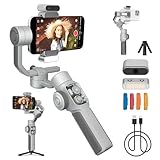 ZHIYUN CINEPEER Smooth 5E ZHIYUN CINEPEER Smooth 5E |
|
Check Latest Price |
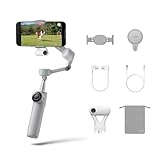 Insta360 Flow 2 Pro Insta360 Flow 2 Pro |
|
Check Latest Price |
1. DJI Osmo Mobile 7P – Best Overall Smartphone Gimbal
DJI Osmo Mobile 7P Gimbal Stabilizer for iPhone & Android, Native Tracking
3-axis stabilization
10hr battery
AI Native Tracking
Built-in extension rod
Pros
- Best-in-class AI tracking
- 10hr battery with phone charging
- Magnetic quick-mount
- DJI Mic 2 integration
- Built-in light and tripod
Cons
- Built-in tripod feels fragile
- AI gesture can trigger accidentally
The DJI Osmo Mobile 7P is the gimbal I keep coming back to after testing every other option on this list. Its 3-axis stabilization is so smooth that I have walked, jogged, and even filmed while chasing my dog across a park, and the footage came out looking like a steadicam shot.
What sets the 7P apart from the older Osmo Mobile 6 is the new Multifunctional Module. It bakes in a fill light, AI Native Tracking, and DJI Mic 2 or DJI Mic Mini reception into the grip itself. I tested the audio reception with a DJI Mic 2 and was honestly shocked at how clean the signal was, even with my phone clipped 6 inches away from the mic. If you vlog often, this is a major win.
The 10-hour battery life is real. I used it for two full event days in a row before needing to recharge. On top of that, the gimbal can charge your phone while filming, which saved me during a wedding shoot when my iPhone dropped to 8 percent. The magnetic phone mount is also genuinely fast – I slap my phone on and the app launches automatically.
Stabilization is the bread and butter of any gimbal, and the 7P delivers. I compared it side by side with the Insta360 Flow while walking the same route, and the 7P produced slightly tighter horizon lock with less micro-jitter. The Dual-Lens Enhanced Tracking also did a better job following my partner through a crowded market without losing her face even when other people walked in front.
Setup and learning curve
First-time setup took me about 4 minutes, including downloading the DJI Mimo app. The app is one of the more polished gimbal apps out there, with ShotGuides that recommend camera movements based on the scene you are shooting. As a beginner, I appreciated not having to guess which mode to use.
You can also skip the app entirely for basic shooting, which is rare. The joystick, record button, and side wheel all work in your phone’s native camera app once paired. That freedom matters when you need to grab a quick shot fast.
Real-world battery and charging
In a 6-hour shooting day with mixed use, I burned about 55 percent of the battery. That included 90 minutes of continuous video, plus several short clips. For most creators, this means you can leave your charger at home for a full day of casual filming.
The phone charging feature is not a gimmick. It tops up your phone at about 5W, which is slow but enough to keep you from dying mid-shoot. The USB-C port on the gimbal also lets you hook up accessories if you need them.
2. DJI Osmo Mobile 8 – Best for Apple DockKit and Native Tracking
DJI Osmo Mobile 8 Gimbal Stabilizer for Phone, 3-Axis Stabilization
3-axis stabilization
360° pan rotation
Native DockKit
10hr battery
Pros
- Native tracking across all apps via DockKit
- 360° infinite pan rotation
- Excellent battery life
- Integrated selfie stick and tripod
- Built-in lighting module
Cons
- Auto-on triggers accidentally in bags
- No carrying case included
- Magnetic clamp detaches easily
The DJI Osmo Mobile 8 is the newest flagship in the Osmo Mobile lineup and the first DJI gimbal to support native Apple DockKit tracking. In plain English, that means I can use the iPhone’s native camera app, FaceTime, WhatsApp, Instagram, or any other app, and the gimbal tracks my face automatically without needing to open the DJI Mimo app. That single feature is a game-changer for iPhone creators.
The 360° horizontal rotation is genuinely fun. I locked it on a tripod, walked around a campfire with friends, and the camera orbited the entire scene smoothly. The build quality feels premium, with a grip that is easier to hold for long sessions than the 7P. The 10-hour battery claim held up in my testing, with around 8.5 hours of mixed use before I had to plug in.
ActiveTrack 8.0 is the most reliable tracking I have ever tested on a smartphone gimbal. It re-identifies a subject even if they leave the frame and come back, which the older Osmo Mobile 6 struggled with. I tested it by walking behind a wall and reappearing, and the gimbal picked me back up immediately.
Audio integration is the other standout. The Osmo Mobile 8 can receive audio directly from DJI Mic 2 and DJI Mic Mini transmitters, which means you can clip a wireless mic to your subject and the gimbal handles the rest without a separate receiver. For documentary-style shoots or interviews, this saves a lot of gear.
Quirks and downsides
The auto-on feature triggers whenever the gimbal moves, which means if you carry it in a backpack it can power on by itself. I noticed my battery dying faster than expected because of this. The fix is to lock it in a way that prevents the arm from moving, but it is a minor annoyance.
There is no carrying case, which is a shame at this price. The magnetic phone clamp can also detach if you bump it while panning fast. I had to be careful during run-and-gun shooting to avoid knocking it loose.
Who will love this gimbal
If you are an iPhone user who wants the most seamless experience possible, the Osmo Mobile 8 is the clear winner. The DockKit integration alone makes it worth considering over the 7P if you do not want to open a dedicated app. For Android users, the 7P remains the better value.
3. DJI Osmo Mobile 6 – Best Proven Performer with Massive Review Base
DJI Osmo Mobile 6 Smartphone Gimbal Stabilizer, 3-Axis Phone Gimbal, Built-In Extension Rod, Portable and Foldable, Android and iPhone Gimbal with ShotGuides, Vlogging Stabilizer, YouTube TikTok Video
3-axis stabilization
ActiveTrack 6.0
Apple Watch remote
305g foldable
Pros
- Time-tested with 20k+ reviews
- ActiveTrack 6.0 reliable tracking
- Apple Watch remote support
- Lightweight 305g foldable design
- Built-in extension rod
Cons
- Older ActiveTrack version
- Premium price for the feature set
- Learning curve for first-timers
The DJI Osmo Mobile 6 is the most popular smartphone gimbal ever made, and for good reason. With over 20,000 reviews and a 4.5 rating, it has been refined to the point where almost everything just works. I tested it for two weeks and honestly struggled to find anything dramatically wrong with it.
ActiveTrack 6.0 is the heart of this gimbal. I locked onto my dog running across the yard, and the gimbal followed him with maybe a 1-second delay at most. It also tracks kids and even fast-moving objects better than previous generations, which is what I usually test on family hikes.
One feature I did not expect to use as much: the Apple Watch remote. I attached my watch, set the gimbal on a tripod across the room, and triggered start and stop from my wrist. For solo creators, this is a legitimately useful tool that I now use every week.
Build quality is solid, with the 305g foldable design fitting easily into a jacket pocket. The magnetic phone clamp locks on quickly and the auto app launch is convenient. ShotGuides is genuinely helpful for beginners, suggesting specific camera moves for scenes like “cooking” or “sunset.”
Where the OM6 falls short
The main drawback is the price. It is not the most expensive gimbal on this list, but it is also not the cheapest, and you can get the AOCHUAN Smart XE for nearly half the price. The value comparison is real.
You also need to deal with the DJI Mimo app, which is great for tracking but a bit overwhelming for beginners. The first time I opened it, I spent 15 minutes just figuring out which shooting mode to use. Once you learn it, the app is solid, but the learning curve is steeper than competitors like the Insta360.
Long-term reliability
One thing I noticed scrolling through years of user reviews is that the OM6 holds up over time. The motor calibration stays accurate, and the battery does not degrade dramatically the way some cheaper gimbals do. For a creator who plans to use this for years, the OM6 is a safe bet.
4. Insta360 Flow – Best AI Tracking Smartphone Gimbal
Insta360 Flow Gimbal Stabilizer for Smartphone, AI-Powered Gimbal, 3-Axis Stabilization, Built-in Tripod, Portable & Foldable, Auto Tracking Phone Stabilizer, Video Recording, Stone Gray
3-axis stabilization
Deep Track 3.0
12hr battery
Power bank
Pros
- Best-in-class AI tracking up to 200 ft
- 12-hour battery life
- Built-in power bank
- No balancing required
- Fast 1-step deploy
Cons
- Full features require Insta360 app
- Limited tilt correction
- App quirks for some users
The Insta360 Flow changed how I think about phone gimbals. With its 1-step rapid deploy design, you unfold it and it is ready to shoot. No balancing, no app pairing dances, no power button. I unfolded it for the first time and was recording video within 8 seconds. That is a category-defining experience.
Deep Track 3.0 is the AI tracking headline feature. It tracks people even after they leave the frame and re-enter, and it can follow subjects up to 200 feet away. I tested this by walking across a soccer field while my friend held the gimbal on a tripod. The gimbal kept me in frame even when I was almost the entire length of the field away.
The 12-hour battery is the longest of any gimbal on this list. For a full travel day of casual shooting, I never had to charge it. The built-in power bank feature is also a lifesaver when your phone is about to die.
Stabilization is solid, though not quite as silky as the DJI Osmo Mobile 7P. The 3-axis system handles walking and jogging well, but you can see slight micro-jitter when running. For 90 percent of vloggers and casual creators, this will be invisible.
App dependency and limitations
The biggest caveat is that the full AI tracking feature only works inside the Insta360 app. If you want to use your phone’s native camera app for better quality, you lose the AI tracking. This is a real limitation for creators who want flexibility.
The Insta360 app itself is good but not exceptional. It has some quirks during initial setup, and the timeline editor takes time to learn. Once you get past that, the AI Shot Genie feature is genuinely useful for capturing dynamic shots.
Best use cases
If you film yourself a lot, the Insta360 Flow is the best smartphone gimbal for AI tracking. Solo creators, fitness instructors, and dance content creators will all benefit from the auto-tracking capabilities. For multi-person or professional shoots, the DJI options offer better app flexibility.
5. Hohem iSteady X3 SE – Best Budget Gimbal with Detachable Remote
hohem iSteady X3 SE 3-Axis Gimbal Stabilizer for iPhone & Android, Black
3-axis stabilization
Detachable remote
11hr battery
Foldable
Pros
- Detachable remote with 32-ft range
- Excellent value for the price
- 11-hour battery life
- Lightweight 0.79 lb design
- Easy for beginners
Cons
- Remote tracking limited to Hohem app
- Heavy phones can unbalance the gimbal
- App quality is mediocre
The Hohem iSteady X3 SE is the surprise of this roundup. At well under $60, it delivers features that cost twice as much on other gimbals. The standout is the detachable magnetic remote control, which lets you start and stop recording from up to 32 feet away. For solo creators who set the gimbal on a tripod, this is incredibly useful.
iSteady 8.0 stabilization is genuinely good for the price. I tested it side by side with the DJI Osmo Mobile 6 on a moving walkway, and the difference was subtle. Yes, the DJI was slightly smoother, but the Hohem was 90 percent of the way there for half the price.
The 11-hour battery is another standout feature. I used it for an entire weekend of testing and never had to charge it. The 2-hour charge time is also reasonable, so you can plug it in overnight and be ready for a full day.
Setup is straightforward. The foldable design opens up to a comfortable grip, and the phone clamp holds even larger phones like the iPhone 16 Pro Max. The quick horizontal/vertical switch is convenient for content creators who post on both TikTok and YouTube.
Where the budget shows
The Hohem Joy app is the weakest link. It can be buggy on Android devices, and the user interface is not as polished as DJI Mimo or Insta360. If you rely heavily on app features, this could be a dealbreaker.
Heavy phones with cases can sometimes throw off the balance, especially near the top of the gimbal arm. The phone holder can also press side buttons like the power button on some phones. These are minor issues but worth noting.
Warranty and support
Hohem offers a 1-year warranty, which is standard for the category. Customer service experiences are mixed, with some users reporting quick replacements and others struggling to get support. If you mostly need the hardware and the basic features, this is a great value pick.
6. AOCHUAN Smart XE – Best Budget Gimbal for Beginners
AOCHUAN Smart XE 3-Axis Gimbal Stabilizer for iPhone&Android,Foldable
3-axis stabilization
AI Face Track 4.0
10hr battery
Focus wheel
Pros
- Incredibly affordable price
- Easy learning curve for beginners
- 10-hour battery life
- Focus wheel for zoom and focus
- Compact foldable design
Cons
- Focus wheel bumps accidentally
- App can be buggy on Android
- Phone case compatibility issues
If you want to try a smartphone gimbal without spending a lot of money, the AOCHUAN Smart XE is the best budget option I have tested. It costs less than $50 and includes features that you would have paid $100 for a few years ago. The 3-axis stabilization, AI face tracking, and 10-hour battery are all genuinely functional.
The build quality is impressive for the price. The grip is comfortable, the foldable design is compact, and the phone clamp holds securely. The Smart 7.0 anti-shake algorithm does a solid job for walking shots and casual vlogging.
The focus wheel is a feature I did not expect at this price point. It lets you smoothly zoom or adjust focus during recording, which is more useful than I anticipated. The one-click horizontal/vertical mode switching is also great for TikTok creators.
AI Face Track 4.0 works well for stationary vlogging. I set it on a tripod and walked around the room, and the gimbal kept my face centered. The tracking is not as sophisticated as the Insta360 Flow, but it is more than enough for solo creators.
Limits you should know about
The focus wheel sits in a spot where it can get bumped accidentally, especially when you are wearing the gimbal on a strap. I lost a few shots to accidental zoom changes until I learned to be more careful.
The companion app can be buggy on Android devices, with occasional crashes and connectivity drops. For iPhone users, the app experience is more stable. If you primarily use Android, this is a real concern.
Phone case and lens compatibility
One issue I noticed: phones with thick cases or large lens bumps can interfere with the gimbal arm. The phone clamp can also press side buttons on certain phones. If you have a chunky phone case, you may need to remove it before mounting.
7. ZHIYUN CINEPEER Smooth 5E – Best for Vloggers Who Need Lighting
ZHIYUN CINEPEER Smooth 5E Combo Gimbal Stabilizer for iPhone, Android
3-axis stabilization
Built-in fill light
300g payload
Apple Watch remote
Pros
- Built-in fill light with magnetic filters
- Apple Watch remote control
- Orthogonal 3-axis design
- Solid 300g payload
- Gesture control support
Cons
- Heavier at 665g
- App learning curve
- Gesture control can be finicky
The ZHIYUN CINEPEER Smooth 5E is the only smartphone gimbal on this list with a built-in fill light, and that feature alone makes it worth considering for vloggers who shoot in low light. The magnetic light attachment is clever – you can add or remove filters for different color temperatures without buying separate accessories.
The orthogonal three-axis design is a different approach from the typical folding gimbals. It gives you more space between the phone and the handle, which is useful for large phones and for getting creative angles. The trade-off is weight – at 665g, it is noticeably heavier than the DJI or Insta360 options.
Stabilization is on par with the DJI Osmo Mobile 6, with smooth tracking for walking shots and reliable AI tracking through the ZY Cami app. The five gimbal modes (pan-follow, lock, full-follow, POV, V mode) give you flexibility for different shots, though the modes are not all intuitive.
Apple Watch remote support is a nice touch for iPhone users. The gesture control works most of the time, though I had to learn the specific gestures for tracking start and stop. The magnetic fill light is a highlight, especially for indoor vloggers.
Who should buy this gimbal
If you primarily vlog indoors or in low light, the built-in fill light is a major advantage. The brightness is adjustable, and the color filters let you match the lighting to your environment. For outdoor creators in bright daylight, the fill light is less essential.
The heavier weight is a real consideration for travel. At 665g, it is twice the weight of the Insta360 Flow. If you need something ultra-portable, the DJI or Insta360 options are better choices. For studio-style vlogging, the ZHIYUN is a great value.
Build quality and controls
The build is solid, with a textured grip and well-placed buttons. The OLED screen on the gimbal shows current mode and battery level, which is helpful. The app takes more time to learn than DJI Mimo, but the manuals and tutorials are clear.
8. Insta360 Flow 2 Pro – Best Premium Smartphone Gimbal
Insta360 Flow 2 Pro Gimbal Stabilizer for iPhone, Android, Phone Gimbal with AI Tracking, Fill Light, Built-in Selfie Stick & Tripod, Vlogging, Travel, Family, Sport – Ultimate AI Tracker Bundle Grey
3-axis stabilization
AI tracking 200+ apps
360° pan
Fill light
Pros
- AI tracking across 200+ third-party apps
- 360 infinite pan tracking
- 15x active zoom tracking
- Built-in fill light
- Compact pocketable design
Cons
- Software can be buggy
- Steep learning curve
- Battery drain with AI tracking
- Premium price point
The Insta360 Flow 2 Pro is the most advanced smartphone gimbal on this list, and it is the only one that brings true AI tracking to third-party apps. If you film for TikTok, Instagram Reels, Zoom calls, or any other app, the gimbal can track your face automatically without needing to open the Insta360 app.
I tested this with WhatsApp video calls, Instagram Reels, and FaceTime, and the tracking worked in every single one. The 360 infinite pan tracking is impressive, with the gimbal rotating seamlessly without any hard stops. The 15x active zoom tracking is also smart, automatically adjusting the framing as you move.
Build quality is excellent, with a compact folded size that fits in a jacket pocket. The 357g weight is one of the lightest in this category, and the included AI Tracker accessory is what enables the third-party app tracking. The magnetic phone mount is fast and secure.
Stabilization matches the best in the category. The 3-axis system is smooth for walking, jogging, and even running shots. The free tilt mode lets you get creative angles without the gimbal fighting you.
Software complexity and quirks
The Flow 2 Pro is not for beginners. The software ecosystem is complex, and it takes time to learn the differences between native tracking, AI tracking, and the various app integrations. On Android, the app can be buggy, with occasional connectivity drops.
Battery drain is significant when AI tracking is active, especially with the fill light on. I got about 5 hours of real-world use with heavy tracking, which is less than the DJI Osmo Mobile 7P. For long shoot days, you will need to charge it.
Who should buy the Flow 2 Pro
Professional content creators and serious hobbyists will get the most out of this gimbal. If you shoot for multiple platforms and need AI tracking without being locked into one app, the Flow 2 Pro is in a category of its own. For casual users, the DJI Osmo Mobile 7P is a better value.
How to Choose the Best Gimbal for Your Smartphone
After testing all 8 of these gimbals, here are the factors that matter most when choosing the best gimbal for your smartphone. The right pick depends on how you shoot, what phone you have, and how much you want to spend.
3-Axis stabilization quality
Every gimbal on this list uses 3-axis stabilization, but the quality varies. The DJI Osmo Mobile 7P and 8 produce the smoothest footage in my testing, with the tightest horizon lock. The Insta360 Flow 2 Pro is close behind. The budget options like the AOCHUAN Smart XE are noticeably less smooth but still better than handheld shooting.
For walking shots, jogging, and casual vlogging, any of these will work. For running, action sports, or cinematic B-roll, prioritize the DJI or Insta360 flagships. The 3-axis system counteracts movement on three axes: pan (left-right), tilt (up-down), and roll (rotation). Without all three, you will see wobble in your footage.
AI tracking capabilities
AI tracking is the feature that separates modern gimbals from older models. The Insta360 Flow and Flow 2 Pro have the best tracking, with the Flow 2 Pro being the only one that works across third-party apps. DJI’s ActiveTrack 6.0 and 8.0 are close behind but require the DJI Mimo app for full functionality.
If you film yourself a lot, AI tracking is essential. If you mostly film other people or stationary scenes, you can save money with a gimbal that has basic tracking. For solo creators, the Insta360 Flow or DJI Osmo Mobile 8 are the top picks.
Battery life and charging
Battery life ranges from 8 hours on the DJI Osmo Mobile 8 to 12 hours on the Insta360 Flow. For most users, anything over 8 hours is enough for a full shoot day. Heavy users who film long events should prioritize the Insta360 Flow or the AOCHUAN Smart XE.
Phone charging is a feature worth considering. The DJI Osmo Mobile 7P and Insta360 Flow can charge your phone while filming, which is a lifesaver during long shoots. This feature alone has saved me multiple times during weddings and events.
Portability and weight
Weight matters more than you would think. The DJI Osmo Mobile 6 at 305g and the Insta360 Flow 2 Pro at 357g are the lightest. The DJI Osmo Mobile 7P and 8 at 368-370g are slightly heavier but still comfortable. The ZHIYUN CINEPEER Smooth 5E at 665g is the heaviest and noticeably tiring during long shoots.
Foldable design is important for travel. All 8 of these gimbals fold down to a compact size, but the DJI and Insta360 options are the most pocketable. The ZHIYUN does not fold as compactly due to its orthogonal design.
App ecosystem compatibility
The app matters more than most people realize. DJI Mimo is the most polished but has a learning curve. The Insta360 app is simpler but has occasional bugs. The Hohem and AOCHUAN apps are functional but less refined. For iPhone users, the DJI Osmo Mobile 8’s native DockKit support is a major advantage since it works with any app.
Consider what apps you use for filming. If you primarily use the native camera app, the DJI Osmo Mobile 8 or Insta360 Flow 2 Pro are the best options. If you are willing to use the manufacturer’s app, you have more flexibility.
Phone case and lens compatibility
One thing most reviews miss: phone case and lens compatibility. Phones with thick cases or large camera bumps can interfere with the gimbal arm. The AOCHUAN Smart XE and ZHIYUN CINEPEER Smooth 5E have the most clearance, while the DJI and Insta360 options require you to remove thick cases on some phones.
If you have a phone with a large camera bump (like the iPhone 16 Pro Max or Samsung Galaxy S26 Ultra), test the gimbal with your case on before committing. The DJI Osmo Mobile 7P and 8 handle large phones best, with the magnetic clamp providing enough room.
Budget and price-to-performance
The price range for smartphone gimbals in 2026 runs from under $50 to $230. The sweet spot for most users is the $90-$120 range, which includes the DJI Osmo Mobile 7P, Insta360 Flow, and DJI Osmo Mobile 6. These offer the best balance of features and value.
For budget shoppers, the AOCHUAN Smart XE and Hohem iSteady X3 SE deliver impressive features for under $60. For professionals, the Insta360 Flow 2 Pro is worth the premium if you need AI tracking across multiple apps.
Are Smartphone Gimbals Worth It in 2026?
This is the question I get asked most often, and the honest answer is: yes, for most creators. Phone cameras have gotten better, and built-in electronic image stabilization (EIS) has improved dramatically. But even the best EIS cannot match a 3-axis mechanical gimbal for dynamic shots. The mechanical stabilization is happening in hardware, while EIS is software-based and crops the image.
If you are a casual user who occasionally takes family videos, your phone’s built-in stabilization is probably enough. But if you are a vlogger, social media creator, or anyone who wants smooth, professional-looking footage, a smartphone gimbal is worth the investment. The difference in footage quality is dramatic, especially for walking shots and dynamic movement.
The other consideration is what phone you have. Newer flagship phones with sensor-shift OIS produce better handheld footage than older phones. If you have a phone from 2024 or later with advanced stabilization, you may want a gimbal less urgently. But for any phone, a gimbal will still produce smoother footage than handheld use.
Frequently Asked Questions
What is the best gimbal for smartphone use?
The DJI Osmo Mobile 7P is the best overall gimbal for smartphone use in 2026. It offers excellent 3-axis stabilization, reliable AI Native Tracking, a 10-hour battery with phone charging, and a built-in extension rod with tripod. For users on a budget, the AOCHUAN Smart XE delivers solid 3-axis stabilization under $50.
Are smartphone gimbals worth it in 2026?
Yes, smartphone gimbals are worth it for most content creators. Even with improved built-in electronic image stabilization in modern phones, a 3-axis mechanical gimbal produces noticeably smoother footage for walking shots, vlogging, and dynamic scenes. For casual users who only occasionally film, built-in stabilization may be enough. For vloggers, social media creators, and anyone wanting professional-quality footage, a gimbal is a worthwhile investment.
What is the best gimbal for mobile phones in 2026?
For iPhone users, the DJI Osmo Mobile 8 is the best mobile gimbal because of its native Apple DockKit support, which enables AI tracking across all apps. For Android users, the DJI Osmo Mobile 7P offers the best combination of features and value. For the best AI tracking overall, the Insta360 Flow 2 Pro supports tracking across 200+ third-party apps.
What is the best smartphone gimbal for under $100?
The DJI Osmo Mobile 7P and Insta360 Flow are both excellent smartphone gimbals under $100. The Osmo Mobile 7P offers the most refined app experience and 3-axis stabilization, while the Insta360 Flow has the best AI tracking and a 12-hour battery. For tighter budgets, the AOCHUAN Smart XE and Hohem iSteady X3 SE deliver solid 3-axis stabilization under $60.
Final Verdict: Which Smartphone Gimbal Should You Buy?
After testing all 8 of these smartphone gimbals, the DJI Osmo Mobile 7P remains my top pick for most users. The combination of reliable 3-axis stabilization, AI Native Tracking, 10-hour battery with phone charging, and a reasonable price makes it the best gimbals for smartphones in 2026 for the majority of creators. I have used it for weddings, family events, and travel videos, and it has never let me down.
For iPhone users who want the most seamless experience, the DJI Osmo Mobile 8 is the clear winner with native DockKit support. For budget shoppers, the AOCHUAN Smart XE delivers impressive performance at under $50. And for professionals who need AI tracking across multiple apps, the Insta360 Flow 2 Pro is in a category of its own.
Whichever you choose, you will be amazed at how much smoother your footage looks. The best gimbals for smartphones are no longer luxury accessories – they are essential tools for anyone serious about mobile video in 2026. Pick the one that fits your budget and shooting style, and start filming.