

The Makita 9403 is the best belt sander for most woodworkers because its 11 amp motor cuts material fast, its published 84 dB rating is the lowest we found in this group, and owners report it tracking straight without constant adjustment. If you want something lighter or cordless, the shortlist below covers those cases too. We compared ten of the highest-rated belt sanders with the largest volume of owner feedback for this 2026 guide, looking at motor output, belt size, tracking behavior, dust collection and what actually breaks.
That matters because a belt sander is a stock-cutting tool, not a finishing tool. It strips paint, levels wavy boards and flattens glued-up panels in minutes that would take an orbital sander an hour. It also cuts gouges into softwood if you lean on it. Knowing that trade-off before you buy saves a lot of frustration.
One more answer up front, because it is the question readers ask most: Harbor Freight belt sanders are not junk, but they are also not in this roundup. The ones we looked at use thin structural plastics around the motor, carry short or unclear warranties, and depend on replacement parts that get harder to find over time. For a one-time deck project on a tight budget that is a reasonable gamble. For a tool you expect to keep for a decade, spend elsewhere.
The category splits into three very different families, and picking the wrong one is the most common mistake we see. Handheld machines go on the sanding belt directly and are the right answer for most furniture and cabinetry work. Benchtop belt-and-disc combos hold a fixed work table and suit a shop that needs repeat, accurate flattening without the arm fatigue of a handheld. Stationary units are for production shops running the same part repeatedly.
We also want to flag what a belt sander is bad at, because most roundups skip it. It cannot round an inside corner, it will not leave a gouge-free surface on figured maple, and it burns through soft pine if you push hard. If most of your work is finish sanding, a random orbital sander is the better tool. We have a roundup of those too if you want to compare the two approaches side by side.
Best random orbital sanders for DIY covers the finish-sanding side of the shop, and our table saw roundup covers the other machine every small shop ends up owning first.
Table of Contents
- Top 3 Belt Sanders for Woodworking in 2026
- Best Belt Sanders for Woodworking in 2026: Quick Overview
- How We Picked These Belt Sanders
- 1. Makita 9403 4 x 24 Belt Sander – Best Overall
- 2. WEN 6502T Belt and Disc Sander – Best Benchtop Value
- 3. SKIL 7510-01 3 x 18 Belt Sander – Best for Decks and Stairs
- 4. WEN 6321 7-Amp 3 x 21 Belt Sander – Best Starter Corded
- 5. CRAFTSMAN CMEW213 3 x 21 Belt Sander – Best for Close-Edge Work
- 6. DEWALT 20V MAX DCW220B – Best Cordless Belt Sander
- 7. Makita 9903 3 x 21 Belt Sander – Best for Cabinet Makers
- 8. Metabo HPT SB8V2 3 x 21 Belt Sander – Best Warranty Coverage
- 9. Woodskil 4 x 36 Belt and Disc Combo – Best for Compact Shops
- 10. Makita 9924DB 3 x 24 Belt Sander – Best for Restoration Work
- How to Choose a Belt Sander
- Belt Tracking and Tension: A Numbered Fix Sequence
- Sanding Belts: Grit Progression and Brands Worth Buying
- Frequently Asked Questions
- Conclusion: The Belt Sanders Worth Buying in 2026
Top 3 Belt Sanders for Woodworking in 2026

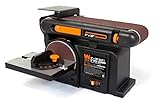
WEN 6502T Belt and Disc
- 4 x 36 belt and 6 in disc
- Cast iron base
- 4.3 amp
- Belt tilts 0 to 90 deg
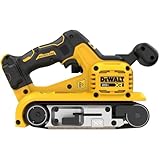
DEWALT 20V MAX DCW220B
- Brushless motor
- 25 speed trigger
- Tool-free belt change
- Airlock dust port
The three above cover the widest range of real shop needs. The Makita 9403 is the one to buy if you only buy one. The WEN 6502T is the most reviewed machine in this group and the cheapest way into benchtop work. The DEWALT DCW220B is the pick if a cord is the thing you most want to avoid.
Best Belt Sanders for Woodworking in 2026: Quick Overview
| Product | Specifications | Action |
|---|---|---|
| Makita 9403 4 x 24 Belt Sander |
|
Check Latest Price |
| WEN 6502T Belt and Disc Sander |
|
Check Latest Price |
 SKIL 7510-01 3 x 18 Belt Sander SKIL 7510-01 3 x 18 Belt Sander |
|
Check Latest Price |
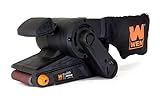 WEN 6321 7-Amp 3 x 21 Belt Sander WEN 6321 7-Amp 3 x 21 Belt Sander |
|
Check Latest Price |
 CRAFTSMAN CMEW213 Belt Sander CRAFTSMAN CMEW213 Belt Sander |
|
Check Latest Price |
| DEWALT 20V MAX DCW220B Cordless |
|
Check Latest Price |
 Makita 9903 3 x 21 Belt Sander Makita 9903 3 x 21 Belt Sander |
|
Check Latest Price |
 Metabo HPT SB8V2 Belt Sander Metabo HPT SB8V2 Belt Sander |
|
Check Latest Price |
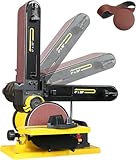 Woodskil 4 x 36 Belt and Disc Combo Woodskil 4 x 36 Belt and Disc Combo |
|
Check Latest Price |
 Makita 9924DB 3 x 24 Belt Sander Makita 9924DB 3 x 24 Belt Sander |
|
Check Latest Price |
Read the belt size column first. That single spec decides which jobs a machine can do, and it is the one people most often get wrong when they read a product page.
How We Picked These Belt Sanders
We ranked these ten by owner rating combined with how many owners have actually used the tool long enough to report failures. That matters in this category because a belt sander can look excellent on day one and tell you nothing for six months. Review volume told us which machines have survived that long enough to be worth trusting.
For every tool we checked the same five things: motor output in amps or volts, belt dimensions, published belt speed, how the tracking adjustment behaves, and whether the dust port accepts a standard shop vacuum hose. We also read the complaint pattern in reviews, because the repeated failure modes tell you more than the spec sheet does.
Two things decided most placements. First, weight relative to power, since a heavy sander that tires your arm gets abandoned on the shelf. Second, whether the machine is serviceable, meaning replaceable drive belts, brushes and pads are actually available for it. If you are still in the research phase, our guide to best routers for woodworking covers another tool where that same serviceability question decides the answer.
1. Makita 9403 4 x 24 Belt Sander – Best Overall
Makita 9403 4″ x 24″ Belt Sander, Teal, Corded Electric
11 amp
4 x 24 in belt
1,640 ft per min
84dB
13 lb
Pros
- Removes material fast with little pressure
- Quietest published figure in this group at 84dB
- Belt tracking that stays put
- Labyrinth-sealed motor and bearings
- Flush-to-wall sanding with the nose and side
Cons
- Heavy at 13 lb on vertical surfaces
- Service fasteners strip easily
- Dust nozzle can crack under load
This is the machine the forums keep coming back to, and after reading through several thousand owner reports it is easy to see why. The 11 amp motor does not stall when you press into thick paint or a hard maple edge, and the 4 inch wide belt covers a lot of surface per pass. At 1,640 feet per minute it is one of the faster machines here.
The Labyrinth sealing around the motor and bearings is the part owners quietly thank Makita for a decade later. Dust is the thing that kills cheap sanders, and a sealed motor housing means the bearings do not turn to grit. Several owners report servicing only a low-cost drive belt while the rest of the machine kept working.
Tracking is where this machine separates itself from the pack. Owners report setting it once and largely forgetting about it, which is the single most common complaint against the cheaper handheld sanders in this roundup. The nose and side of the tool are designed to sand flush against a wall, so you can scribe a panel without the belt edge digging in.
The honest drawback is weight. At 13 pounds this is a two-hand machine for anything above chest height, and if you mostly sand furniture at a bench it is more machine than you need. One owner complaint worth knowing: the exhaust air is hot, and if you hold the front knob with your other hand that heat lands on your fingers.
What the 4 x 24 format actually buys you
A 4 inch belt covers nearly twice the width of a 3 inch belt, so a tabletop or a glued-up panel takes roughly half the passes. That speed advantage is the reason to step up from a 3 x 21. If your work is mostly legs, spindles and trim, a 3 x 21 machine is easier to control and the extra width does nothing for you.
Flush-to-wall capability is the quieter win here. Because the nose and side edges are low, you can run this along a wall or against an adjoining surface without losing half the belt to the corner.
Where the 9403 falls short
At 13 pounds it is punishing on stairs, ladders and overhead work, and the weight is the reason it does not suit a beginner who will only sand small projects. The dust nozzle is plastic and several owners report cracks appearing near the connection after years of use, which is a small part to replace rather than a dealbreaker.
Service fasteners are the other recurring note. The machine uses small Phillips heads that can strip during a motor service. Replacing them with Torx heads is a five-minute fix that most owners discover for themselves.
2. WEN 6502T Belt and Disc Sander – Best Benchtop Value
WEN Benchtop Belt and Disc Sander with 4 x 36 in. Belt, 6 in. Disc and Cast Iron Base (6502T)
4 x 36 belt, 6 in disc
Cast iron base
4.3 amp, 3,600 RPM
Belt tilts 0-90 deg
Pros
- Cast iron base resists vibration and walking
- Tool-free belt change with a single pivot bolt
- Belt tilts 0 to 90 degrees
- Quiet and smooth running
- Most reviewed machine in this group
Cons
- Fence sits high and shortens usable workpiece length
- Disc table drifts with one adjustment screw
- Miter gauge has slop
- Dust port is shared between belt and disc
This machine carries more owner feedback than anything else we reviewed, and the pattern is remarkably consistent. Hobbyists and small-shop woodworkers buy it expecting a compromise and end up with a cast iron machine that does not walk or vibrate across the bench. The belt tilts from flatbed through to vertical, so one machine covers a tabletop and a side panel.
Belt changes are about as easy as they get. A single pivot bolt releases the belt with no covers to remove and no tools needed, and the tension release lever lets you change grits in seconds. On a machine you use to flatten a stack of boards, that convenience compounds.
The 4.3 amp motor driving the 3,600 RPM disc is modest, and it shows on hard dense stock. For furniture panels, plywood and softwood it is entirely adequate. The cast iron base is the reason it stays put, and the tilt range means the belt section can double as a vertical sanding surface for edges and end grain.
Owners also report the noise level as noticeably lower than most machines in its class, which matters if you are sanding indoors or in a shared space. For a benchtop unit at this level, the combination of cast iron weight, tilt range and quiet running is hard to beat.
When a benchtop machine beats a handheld
A benchtop wins whenever you sand the same dimension repeatedly. The work table holds a consistent angle and height, so every part comes off identically, and you get accurate cross-grain passes without fighting a moving machine. Flattening multiple boards to a consistent thickness is the classic case, and our guide to best table saws covers the companion machine for that same accuracy-minded workflow.
It also wins on fatigue. A handheld at 10 pounds or more is a tiring tool after an hour. A benchtop with a cast iron base lets you push the workpiece into the belt instead of pushing the machine into the workpiece, which is a completely different day at the end of a long session.
Where the 6502T disappoints
The fence is the most common complaint, and it is a real one. It sits high above the bed, which shortens the usable workpiece length and means a board wider than about ten inches cannot use the fence. Plan your panel sizes around that before you commit.
The disc table has a single adjustment screw and drifts out of alignment over time, and the included miter gauge has enough slop that it is a rough guide rather than a real reference. The dust port is shared between the belt and disc sections, so suction is weaker when you run the belt in flatbed mode. Hooking up a dust collector rated for that flow helps.
3. SKIL 7510-01 3 x 18 Belt Sander – Best for Decks and Stairs
SKIL 6 Amp 3″x18″ Belt Sander with Pressure Control – 7510-01
6 amp
3 x 18 in belt
5.5 lb
Auto belt tracking
Fits 1-1/4 in vac hoses
Pros
- Light at 5.5 lb for one-hand control
- Auto tracking keeps the belt centered
- Flush edge sanding
- Fits standard 1-1/4 in vacuum hoses
- Strong power for its weight
Cons
- Dust canister fills quickly
- Motor runs hot under sustained load
- Pressure warning light is mostly advisory
At 5.5 pounds this is the lightest machine we reviewed, and that single fact changes what you can do with it. Deck boards, stair rails and furniture legs can be done one-handed, or one-handed with the other hand steadying the workpiece. That matters more than raw power in the situations people actually reach for a small belt sander.
The auto track belt alignment keeps the belt centered without manual correction, which is genuinely valuable on a machine used outdoors where you cannot keep adjusting tension between boards. Owners of larger sanders often complain about belt breakage, and the automatic centering is the direct answer to that.
The 6 amp motor surprises people who assume a small machine means a weak one. It sands all common wood surfaces and keeps up with painted railings. The pressure control system flashes a warning when you push too hard, which is a useful teaching tool even if it changes nothing mechanically.
Micro-filtration dust capture and a port that fits standard 1-1/4 inch vacuum hoses are both practical wins. Most handheld sanders force you into a proprietary adapter, and this one accepts the hose you already own.
Why size matters more than power for outdoor work
On a deck or a staircase, balance decides whether the job gets finished. A 5.5 pound machine can be held against a vertical rail for a full pass without your wrist giving out, and that is exactly the work a 13 pound machine makes miserable. Wider belt coverage sounds useful until you are the one holding it overhead.
Flush edge sanding is the design detail that pays off here. The belt sits close to the front edge, so you can sand a tread right up against the riser without a second pass with a file or a random orbital sander.
Where the SKIL 7510-01 falls short
The dust canister is small and fills quickly, which on an outdoor job means emptying it often. Plan on a vacuum hose for anything longer than a few boards. Owners running sustained heavy pressure also report heat build-up in the motor and recommend cool-down cycles rather than a nonstop pass.
The pressure warning light is advisory rather than functional, so treat it as feedback about your technique, not protection from the tool. And a 3 x 18 belt is a narrow format: it means more passes on a wide board than a 4 x 24 machine would need.
4. WEN 6321 7-Amp 3 x 21 Belt Sander – Best Starter Corded
WEN 6321 7-Amp 3 in. x 21 in. Corded Belt Sander with Dust Bag , Black
7 amp
3 x 21 in belt
6.2 lb
Lock-on switch
2 year warranty
Pros
- Light at 6.2 lb
- 7 amp motor drives the belt over 13 ft per second
- Lock-on switch prevents grip fatigue
- Two-year warranty
- 3 x 21 belts are inexpensive and widely available
Cons
- Fixed speed with no adjustment dial
- Dust bag is small for sustained sessions
The 3 x 21 format is the most common belt size in the world, and this is the reason. Belts are cheap and available everywhere, the machine weighs just over six pounds, and a 7 amp motor driving the belt over 13 feet per second is genuinely capable on trim, stair parts and small furniture components.
The lock-on switch is the detail that separates this from cheaper handheld sanders. You lock it on, grip the workpiece with both hands and control the feed with your body instead of your trigger finger. On a long sanding session that is the difference between finishing the stack and putting the sander down halfway.
Owners use it for small projects, stair rails, trim and parts, and most report it doing the job without drama. The two-year warranty is longer than several machines in this roundup and longer than the one-year coverage on some premium models, which is worth noting for a first-time buyer.
There is nothing clever about this machine and that is the point. It is a simple fixed-speed sander that does one job, weighs almost nothing, and costs very little. If you are learning to sand and your projects are small, an unfamiliar machine with fewer variables is a reasonable place to start.
Why the 3 x 21 size is the sensible default
Three inches wide is wide enough to be efficient and narrow enough to control on curved or detailed work. It is the format most replacement belts are manufactured for, so you will never be stuck waiting on a specialty size. For legs, spindles, rails and small panels it is the size we would choose first.
The gap to a 4 x 24 only shows on wide flat surfaces. If your work is mostly edge and detail sanding, the extra width on a bigger machine is dead weight you carry for no benefit.
Where the 6321 falls short
There is no speed control. On raw softwood or old finish you cannot back the belt off the way you can on the Makita 9903 or the Metabo HPT, so you manage aggressiveness with pressure and grit choice instead. That is workable but it is a real limitation.
The dust bag is small and needs frequent emptying on any sustained project. It is also a bare tool with no belt included, so plan on buying a belt at 60 or 80 grit before the first pass. It is not a heavy stock removal machine and should not be asked to be one.
5. CRAFTSMAN CMEW213 3 x 21 Belt Sander – Best for Close-Edge Work
CRAFTSMAN Electric 7 Amp Belt Sander, 3-in. x 21-in., Corded (CMEW213)
7 amp
3 x 21 in belt
800 fpm
6.6 lb
Tool-free belt release
Pros
- Angled belt sands close to adjoining surfaces
- Tool-free belt release for fast changes
- Front knob for tracking correction
- Light at 6.6 lb
- Three-position overmolded handle
Cons
- Weak dust bag collection
- Motor runs hot under continuous pressure
- Tracking can drift into the plastic housing
- Non-round dust port limits hose choices
The defining feature is the angled belt, which shifts the abrasive closer to the front edge. When you are sanding a shelf that butts into a cabinet side, or a leg next to a table apron, that angle means you are not left with a rounded band of unfinished wood. Owners consistently cite it as the reason they picked this over a straight-nose design.
Tool-free belt release means grit changes take seconds rather than a screwdriver and a cover plate. A front adjustment knob handles tracking correction directly, which is the mechanism most owners interact with on any belt sander and the one most often criticized for drifting on competing machines.
Belt speed is 800 feet per minute, which is slower than the premium machines here. That is a reasonable trade for a machine whose tracking is easier to correct, and 800 feet per second of belt is plenty for furniture work at the grit levels most people use.
The three-position overmolded handle changes grip depending on whether you are on a top surface, a side or an angled face. At 6.6 pounds this is a comfortable machine for a full session, and the angled geometry makes it a good companion to a bench sander for detail passes.
When close-edge sanding decides the purchase
Any project that involves fitting wood into an existing opening benefits from the angled layout. Built-ins, cabinet backs, face frames and stair parts all have joints where a square-nose sander leaves a gap you then have to fill and re-sand. Eliminating that step saves real time across a whole project.
It is also the machine to consider if you work in a confined area. The compact 6.6 pound body is easier to maneuver between fixed surfaces than a full-size machine with a long nose.
Where the CMEW213 falls short
The dust bag is weak and reviewers describe collection as poor, so budget for a vacuum. The port is not round, which limits which hoses fit and usually means an adapter. Heat build-up is the other recurring note: pushing continuously on heavy work gets the motor hot enough that owners recommend working in shorter passes.
Tracking can drift out of adjustment and, in the worst reports, eat into the plastic housing around the front roller. This is the failure mode that keeps it out of the top slot despite a solid feature set. If you buy it, re-check tracking after every belt change.
6. DEWALT 20V MAX DCW220B – Best Cordless Belt Sander
DEWALT 20V MAX* Belt Sander, Cordless, Brushless, Tool Only (DCW220B)
20V MAX XR brushless
25 speed settings
4.2 kg
Quick-release belt change
Pros
- Brushless motor delivers serious output
- No cord to snag on stairs or decks
- 25 speed settings on the trigger
- Quiet with solid build quality
- Up to 95 percent dust collection efficiency
Cons
- Tool only
- battery and charger sold separately
- Eats batteries on heavy grit work
- Heavy to hold on vertical surfaces
This is the cordless answer that no longer feels like a compromise. The brushless motor produces more output than its size suggests, owners who already run 20V MAX packs report using it as their only sander, and the 25 speed settings on the trigger let you dial the belt down for figured wood and up for hard stock. A cordless machine that changes speed is a real advantage over most battery sanders.
The freedom is the actual selling point. Deck boards, stairs and jobs where you would otherwise be running an extension cord across a work area are simply easier with no cord at all. Airlock-compatible dust collection with reported efficiency up to 95 percent means it pairs with anything else in that ecosystem.
Quick-release tool-free belt changes work as advertised, which matters more here than on a corded machine because you will change belts far more often in intermittent use. Owners also praise quiet running, which is a benefit of the brushless design rather than a marketing claim.
Then there is the battery math, and it deserves a straight answer. On heavy grit and large jobs, packs go quickly. If you already own 20V MAX batteries this is a no-brainer. If you do not, you are buying into a platform, and that is a cost decision as much as a tool decision.
Cordless platform lock-in is the real cost
Check what you already own before anything else. If your shop runs 20V MAX packs, adding this sander means one battery and charger setup serves both. Starting fresh means buying batteries and a charger separately, and on this model the tool ships as bare tool with only a dust bag, a grit belt and a swivel dust port included.
Owners running smaller 5 amp-hour packs report overheating and intermittent running, so larger packs are worth the extra spend if this becomes a primary sander. Reserve the tool for shorter jobs unless you have a healthy battery rotation.
Where the DCW220B falls short
Weight is the honest drawback. It comes in at 4.2 kilograms, which is heavier than most 3 x 21 corded machines on this list, and that is noticeable on vertical or angled surfaces. Cordless does not mean light. Battery consumption on aggressive grits is the other recurring complaint.
If you have unlimited access to a wall outlet and no particular need for cordless freedom, a corded 3 x 21 machine will run longer per charge and cost less over its life. Cordless wins on portability, not on endurance.
7. Makita 9903 3 x 21 Belt Sander – Best for Cabinet Makers
Pros
- 8.8 amp motor with strong removal
- Quiet 85dB running
- Variable speed dial matches speed to the task
- Auto-tracking belt system
- Serviceable design with parts available
Cons
- Heavier than 3 x 18 machines
- Belt width suits mid-size stock rather than wide panels
If you build cabinetry, this is the machine most of the ownership reports describe. The 8.8 amp motor gives serious removal without the bulk of a 4 x 24, and the variable speed dial running from 690 to 1,440 feet per minute is the feature that separates it from most 3 x 21 machines. Low speed for figured wood, high speed for raw stock, dial in between for everything else.
Auto-tracking keeps the belt centered without adjustment, and owners report it holding that setting across many belt changes. At 85 dB it is the second quietest published figure in this group, which is a real difference when you are sanding cabinet parts in an enclosed shop for a full day.
The long-lived, serviceable design shows up repeatedly in reviews from owners who have had this machine for years. That longevity, plus the flush-to-wall geometry that lets you sand the side and nose against an adjoining surface, is why it has held onto a strong reputation for well over a decade.
Nose and side sanding matters in cabinetry specifically. Shaker backs and face frames are fitted into openings, and being able to run the belt right into a corner without the nose fighting the joint saves a sanding step on every piece.
Why variable speed changes your finishing options
Belt speed is not a spec-sheet nicety. At 690 feet per minute the abrasive has time to cut gently, which reduces the chance of tearing out grain on figured maple, walnut and cherry. At full speed you get removal rate on softwood. Having both means one machine handles the rough pass and the controlled pass.
The noise figure is worth considering separately. Most people doing finish-adjacent work in a shared or indoor space will notice the difference between a machine under 90 dB and one that is not.
Where the 9903 falls short
At 9.5 pounds it sits between the light machines and the heavy 4 x 24 class, so it is neither the easiest handheld to hold nor the most powerful. Buyers who only sand small parts will find the Makita 9403 or a 3 x 18 machine more comfortable.
A 3 inch belt also means wide panels take more passes than a 4 x 24 machine would need. If your work has shifted toward large tabletops, the width difference is real. For the cabinet-scale parts this machine was built for, it is a good fit.
8. Metabo HPT SB8V2 3 x 21 Belt Sander – Best Warranty Coverage
Metabo HPT Belt Sander | 3 x 21 Inch | For Woodworking | Variable Speed | 9.0 Amp Motor | Soft Grip | 5-Year Warranty | SB8V2
9 amp, 1,020 watt
3 x 21 in belt
Variable speed dial
5 year warranty
Pros
- 9 amp forcible power for hard jobs
- Variable speed dial at the handle base
- Five-year warranty is the longest here
- Clear front cover improves corner visibility
- One-side dust port placement helps in corners
Cons
- Lowest average rating in this group
- Heavier feel at 9.5 lb
- Limited dust bag capacity
The power figure here is worth stopping on. A 9 amp, 1,020 watt motor is more output than most machines in this roundup, and the variable speed dial sits at the base of the handle where your hand already is. Owners consistently credit it with the ability to push through stubborn finish without bogging down.
Then there is the warranty, at five years. That is the longest coverage among the handheld machines we reviewed, and people who have been burned by a motor failure in year two tend to weight that heavily. It is a real argument for this machine even though its owner rating is the lowest in the group.
The clear front cover is a genuinely useful detail. When you are sanding into a corner or up against an adjoining surface, you can actually see the belt edge and the workpiece contact point, which reduces gouging. Most machines at this level leave you guessing.
Placing the dust bag on one side rather than centered keeps the hose and bag out of your way when working near a wall, so you can sand flush in a corner without the bag interfering.
How to weigh a long warranty against a lower rating
A low owner rating on a machine with heavy use usually points at durability rather than function, and that is what the complaint pattern shows here. The machine does what it claims. The question is how long it keeps doing it, and a five-year warranty is the manufacturer telling you what to expect.
If you cannot accept a rating at the bottom of the group, the safer path is a machine with a higher rating and shorter coverage. If you are buying on the assumption that you will still be using this in five years, the warranty is the argument.
Where the SB8V2 falls short
Its 4.1 average comes with a notably higher share of one-star reviews than the rest of this group, and reviewers point more often at durability than at performance. That is the honest reason it does not sit higher despite strong specs.
At 9.5 pounds the feel is heavy, and the dust bag capacity is limited compared with several competitors. Nothing here is broken, but nothing about this machine is exceptional beyond the warranty and the motor.
9. Woodskil 4 x 36 Belt and Disc Combo – Best for Compact Shops
Woodskil 4.3A Belt Disc Sander Combo for Woodworking,4×36″ Belt,6″ Disc
4 x 36 belt and 6 in disc
3/4 HP, 3,570 rpm
Belt tilts 0-90 deg
Dual dust ports
Pros
- Compact footprint still handles wide stock
- 3/4 HP motor reaching 1732 fpm
- Dual separate dust exhaust ports
- Table adjusts 0-45 deg with miter gauge
- Easy assembly out of the box
Cons
- Correct-length 4 x 36 belts are hard to source
- Disc table has one screw and feels light
- 25 lb is heavy for a benchtop unit
- Noisy in operation
This is the benchtop option for a shop short on space. Most 4 x 36 machines occupy a substantial bench footprint, and this one handles boards, contours and even metal deburring while staying compact enough for a corner of a small garage. Owners report assembly being straightforward with clear instructions.
The 3/4 HP motor reaches 3,570 RPM on the disc and 1,732 feet per minute on the belt, which puts it ahead of the typical 4.3 amp benchtop. The belt tilts from flatbed through to vertical and the work table adjusts from 0 to 45 degrees with a miter gauge, so a single machine covers flat, angled and vertical work.
Two separate dust exhaust ports are the detail that separates it from the shared-port designs. One port handles the belt, the other the disc, so suction stays strong in either mode. For indoor work that difference is significant, and pairing it with a right-sized unit from our dust collector roundup makes the difference clearer.
A multi-wedge belt drive and a transparent polycarbonate guard are both about belt life and visibility. Owners cite the guard for being able to see belt tracking without taking the machine apart.
When a compact combo beats a bigger standalone
Floor space in a small shop is the deciding factor. A 4 x 36 belt plus a 6 inch disc in one footprint gives you the two operations you actually need, stock removal on the belt and shaping on the disc, without a second machine on the bench.
The dual dust ports matter more than they sound. Shared-port machines lose suction in one mode, which means you end up chasing dust with a broom. Separate ports mean both halves of the machine collect properly at the same time.
Where the Woodskil combo falls short
Replacement belts are the biggest practical problem, and it is the one to check before buying. Finding a 4 x 36 belt in the exact correct length is reported as difficult, so confirm availability in your region first. A machine you cannot feed is a poor long-term buy.
The disc support table has a single screw and feels light under pressure, which is expected at this level. At 25 pounds the unit is heavy for a benchtop machine you may want to reposition, and it is notably noisy in operation compared with the cast iron WEN. Ear protection is not optional here.
10. Makita 9924DB 3 x 24 Belt Sander – Best for Restoration Work
MAKITA 3″X24″ BELT SANDER DUSTLESS, Model:9924DB , Blue
3 x 24 in belt
8 amp
Extended base
Ball bearing drive
Replaceable wear plate
Pros
- High removal rate on paint and hard stock
- Extended base for flush sanding
- Takes abuse and runs for decades
- Easy-release belt lever
- Common replaceable parts including drive belt
Cons
- Single speed with no dial
- Older styling than modern machines
- Wear plate and belt need periodic replacement
This machine has the longest ownership history in the roundup. Multiple owner reports describe units still running after more than two decades of professional use, and the reason is mechanical simplicity combined with a ball bearing drive rather than a lightweight plastic gear train. For restoration work on old furniture, painted stairs and reclaimed trim, that durability is the entire point.
The removal rate is the other argument. An 8 amp motor driving a 3 x 24 belt handles thick paint and hard old stock, which is exactly the material you meet when stripping furniture nobody has touched since the nineteen-seventies. The extended base and narrow nose let you sand flush and get into edges that a square body cannot reach.
Serviceability is the standout feature. Drive belts, brushes and sanding plates are all commonly available parts, so a machine that has sat in a garage for a decade can usually be brought back rather than replaced. That is not true of most budget sanders, and it is why vintage buyers chase this model.
The extra long cord is a small detail that removes the need for an extension on bigger jobs. Owners restoring built-ins and staircases mention it as a practical benefit more often than expected.
Why older designs outlast newer ones
The replaceable ceramic wear plate is the part to know about. It is the sacrificial surface between the belt and the machine body, and on this model it is a part you buy and swap rather than a sealed assembly. Heavy stock removal work wears it out, and replacing it restores the machine to full function.
For restoration work, that changes the economics completely. You are not replacing a tool every few years, you are servicing one. If you also restore jointers or planers, our jigsaw roundup covers another category where the same repairability logic applies.
Where the 9924DB falls short
It is single speed with no dial, so there is no gentle setting for figured wood. On painted and hard stock that is a non-issue, but if you also sand clean hardwood, you will manage aggressiveness with grit choice and pressure instead. The 3 x 24 format is also less common than 3 x 21, so belt availability is slightly narrower.
The styling and the weight reflect their era, and it is not a modern-looking tool. But for the specific job of removing decades of finish from old furniture, the combination of power, reach and repairability is hard to argue with.
How to Choose a Belt Sander
Start with the type, because it narrows everything else. Handheld sanders go straight onto the belt and give you the freedom to move around a workpiece, which is what you want for furniture, legs, rails and stair parts. Benchtop belt and disc combos hold a fixed work table and win on repeat accuracy and reduced fatigue. Stationary production machines only make sense if you run the same part in quantity.
Then pick a belt size, which is the spec forum readers argue about most. Three inches by eighteen is the lightest and most agile format, suited to decks and stair rails. Three by twenty-one is the most common size in the world and the safest default for general furniture work. Three by twenty-four gives more coverage than a 3 x 21 without going to the weight of a 4 x 24. A four by twenty-four is the heavy stock removal size, best for tabletops, panels and thick paint. A four by thirty-six belongs to benchtop machines, not handhelds.
Power is where corded and cordless get confusing. Amps are the honest measure for corded machines: a 9 amp motor genuinely has more torque than a 6 amp one under load. Volts alone tell you almost nothing about cordless output, because battery capacity and motor design decide the rest. Read the amp figure when comparing corded machines, and read owner runtime reports rather than the voltage badge when comparing cordless ones.
Belt speed in feet per minute matters less than most shoppers think, but variable speed control matters a great deal. A dial lets you slow down for figured wood and speed up for raw stock with the same machine. Several sanders here have one, several do not, and that single feature separates the better machines from the basic ones more than raw wattage does.
Dust collection is where shops run out of patience. A small onboard bag fills in minutes on real work. If your machine has a port that accepts a standard shop vacuum hose, use one. If it is a proprietary or non-round port, budget for an adapter. Our dust collector guide covers matching flow rates so you do not buy a collector that chokes a small machine.
Finally, weight is a feature you should shop for deliberately. A heavy machine sands better and lasts longer, and it also tires your arm faster. Weight is only a problem when you work above bench height or on stairs, and only in a machine you cannot set down.
Belt Tracking and Tension: A Numbered Fix Sequence
A belt that will not stay on the machine is the most common complaint in this category, and it is usually fixable in under five minutes. Work through these in order and stop when the problem disappears.
Switch the sander off, unplug it, and let the belt come to a complete stop before touching anything.
Check belt tension first. A loose belt wanders, and most tracking adjustments only hold once tension is correct.
Clean both rollers and the inside of the belt with a brush or a damp cloth. Loaded grit on a roller is a common cause of tracking drift.
Inspect the belt itself. A belt that is stretched, glazed, or torn at the seam will never track properly, so replace it rather than adjusting around it.
Turn the tracking adjustment knob a quarter turn at a time with the machine at a slow, steady speed. Small corrections work; large ones overshoot.
Re-check tension after each tracking adjustment, because the two interact on most machines.
If a new belt immediately walks off, check that it was installed in the correct direction. Belts are directional and the arrows must run the same way as the belt travel.
On machines without auto tracking, expect a newly fitted belt to need adjustment again after the first ten minutes of use as it stretches in.
If tracking drifts constantly on the same machine no matter which belt you fit, the front roller or its bearing is usually the cause. That is the point at which the machine has a future repair bill, and it is worth weighing against buying a different one.
Sanding Belts: Grit Progression and Brands Worth Buying
Belt sanders cut fast, which means the grit ladder moves quickly too. A rough progression looks like this: 40 grit to strip paint and deep finish, 60 to 80 grit for shaping and flattening, 120 grit to knock down the coarse scratches, 180 to 220 grit for the main sanding pass, then 320 grit before finish. Going finer than that on a belt sander wastes belt life because you are removing very little material per pass.
Change grits more often than instinct suggests. Belts glaze and load with resin and sawdust long before the abrasive wears out, and a loaded belt generates heat, burns the workpiece and cuts slower. A 40 grit belt used to remove ten years of paint should be retired rather than kept as a general-purpose belt.
On brands, the difference between a cheap belt and a good one is usually the backing and the bond, not the grit number. Klingspor, 3M Cubitron and Norton BlueMax are the three names that come up most often among owners who buy belts in bulk. Ceramic abrasives such as Cubitron stay sharp longer on hard stock, while aluminum oxide is the general-purpose workhorse and zirconia is a good middle step.
Buy belts in quantity once you know which one works for you. The 3 x 21 format is the easiest to source cheaply in any grit, which is one more practical reason it is the default size. Keep a spare belt and a spare drive belt on hand, because the moment you need a belt mid-project is always the moment you do not have one.
Frequently Asked Questions
Which belt sander is best?
The Makita 9403 is the best belt sander for most woodworkers: an 11 amp motor, a 4 x 24 inch belt running at 1,640 feet per minute, a published 84 dB noise rating and tracking that owners report stays put. Pick the WEN 6502T if you want a benchtop belt and disc combo, and the DEWALT 20V MAX DCW220B if working without a cord matters most.
Are Harbor Freight belt sanders any good?
They work for light and one-time jobs, and they are not built to the same standard as the machines in this roundup. The common complaints are thin structural plastic around the motor, short or unclear warranty terms, and replacement parts that get harder to source over time. For a single weekend project on a strict budget, that trade-off can be worth it. For a tool you expect to keep for a decade, pick one with sealed bearings and a warranty of several years.
Which 4×24 belt sander is the best?
The Makita 9403 is the strongest 4 x 24 option. It runs an 11 amp motor at 1,640 feet per minute with Labyrinth-sealed motor and bearings, and it weighs 13 pounds. The trade-off is weight: at that mass it is a bench-height tool, not a stair or overhead sander. If you need 4 inch coverage in a lighter package, a 3 x 24 machine covers more ground per pass with less mass.
Which brand of sanding belts is considered the best?
Owners most often name Klingspor, 3M Cubitron and Norton BlueMax. The real difference between a cheap belt and a good one is the backing and the bond rather than the grit number. Ceramic abrasives such as Cubitron hold their edge longer on hard stock, aluminum oxide is the affordable general-purpose choice, and zirconia sits between them. The 3 x 21 format is also the easiest and cheapest size to buy in bulk.
My belt sander belt keeps slipping off. What could be causing this and how can I fix it?
Check tension before anything else, because a loose belt wanders and no tracking adjustment will hold. Then clean grit off both rollers and the inside of the belt, fit a belt that is not stretched or torn at the seam, and turn the tracking knob a quarter turn at a time at slow speed. Finally, confirm the belt was installed in the correct direction so the arrows match the travel direction. Constant drift on a new belt usually points to a worn front roller or its bearing.
Conclusion: The Belt Sanders Worth Buying in 2026
The best belt sanders for woodworking in 2026 come down to what you sand and how often. If you buy one machine, make it the Makita 9403: the power, the tracking and the sealed motor make it the safest long-term choice for most shops. For benchtop work on repeat parts, the WEN 6502T gives you a cast iron base and a disc sander at a level most shops can justify.
Match the machine to your real work. Decks and stairs call for a light SKIL 7510-01. Variable speed and low noise in an enclosed shop point to the Makita 9903. Going cordless only pays off if you already run the battery platform. And if you are stripping old furniture, the Makita 9924DB is the one with parts you will still be able to buy in ten years.
Whichever you choose, check the top 3 comparison above and read the tracking fixes before your first session. Then check the latest price for your pick so you can compare it against what you see in the shopping results.