
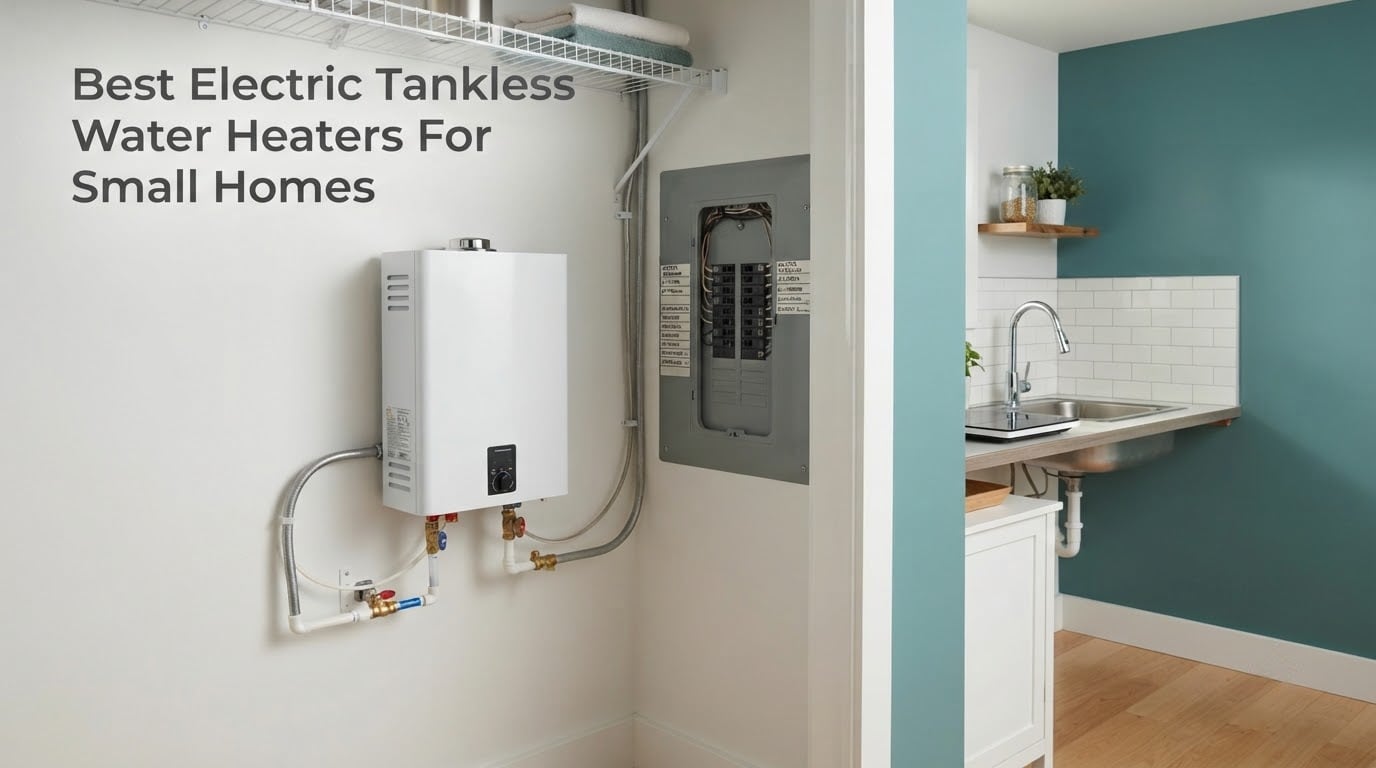
If you live in a one-bath apartment, a tiny house on a trailer, an ADU, or a small cottage, the best electric tankless water heaters for small homes come down to three numbers: kilowatts, gallons per minute, and the amperage your electrical panel can spare. Everything else is trim.
That is the honest framing, because the marketing pages for these units rarely mention that a 24 kW heater needs a dedicated double-pole breaker and a panel with real headroom. Buy above your panel’s capacity and the extra money goes into a service upgrade instead of into hot water.
We spent weeks reading spec sheets, owner reviews, and installer threads on electric tankless units in the 4.5 kW to 18 kW range, then matched each one against the layouts that actually cause problems: a single sink under a cabinet, a one-bath condo, and a small house where two fixtures run at once. The ten units below cover all three cases, and we tell you where each one stops being enough.
One note up front: none of these units is cheap to install compared with a small storage tank. The savings show up in floor space, in never running out of hot water mid-shower, and in standby losses that a 40-gallon cylinder does not have. If your home already has a closet full of slack, read our honest section on whether you need tankless at all before you commit.
Table of Contents
- Top 3 Picks for Small Homes in 2026
- Quick Overview: The 10 Best Electric Tankless Water Heaters for Small Homes in 2026
- 1. CAMPLUX 4.5kW 120V Point-of-Use Tankless – Best Overall for Small Homes
- 2. Rheem RTEX-18 18kW 240V Tankless – Best for Multiple Fixtures
- 3. Rheem RTEX-13 13kW 240V Tankless – Best Value for One-Bath Homes
- 4. ThermoMate ET180 18kW 240V Tankless – Best for Two Showers
- 5. EcoSmart ECO 8 8kW Point-of-Use Tankless – Best 240V Point-of-Use Option
- 6. Rheem RTEX-11 11kW Multi-Fixture Tankless – Best Entry Multi-Fixture Unit
- 7. Ranein 18kW 240V Whole-House Tankless – Best Stainless Steel Build
- 8. WINTEMP 18kW 240V WiFi Tankless – Best Smart WiFi Control
- 9. SIVUATEK V7B-180B 18kW 240V Tankless – Best Compact 18 kW Design
- 10. MIZUDO 14kW 240V Compact Tankless – Best Mid-Kilowatt Compact Unit
- Do You Have Enough Amperage? The Question That Decides Your Purchase
- GPM and Temperature Rise: Sizing Math for One-Bath Homes
- How to Choose an Electric Tankless Water Heater for a Small Home
- Maintenance and Descaling in Hard Water Areas
- Do You Even Need Tankless in a Small Home?
- Frequently Asked Questions
- Conclusion: The Best Electric Tankless Water Heaters for Small Homes in 2026
Top 3 Picks for Small Homes in 2026

CAMPLUX 4.5kW Point-of-Use
- 4.5kW 120V under-sink install
- 1.0 GPM at 50F rise
- 40A breaker
- 2.52 inch deep

Rheem RTEX-13 Tankless
- 13kW 240V output
- 3.17 GPM at 54 amps
- external digital thermostat
- 240V hardwired
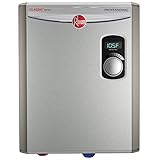
Rheem RTEX-18 Whole-Home
- 18kW 240V
- 4.4 GPM rated flow
- 99.8 percent efficient
- field-serviceable copper elements
Those three cover the realistic range. The CAMPLUX unit solves a single-sink problem in a bathroom cabinet with no panel concerns at all. The Rheem RTEX-13 is the middle ground that plumbers point to for a one-bath home. The RTEX-18 handles the case where a shower and a dishwasher genuinely overlap.
Quick Overview: The 10 Best Electric Tankless Water Heaters for Small Homes in 2026
| Product | Specifications | Action |
|---|---|---|
| CAMPLUX 4.5kW 120V Point-of-Use Tankless |
|
Check Latest Price |
| Rheem RTEX-18 18kW 240V Tankless |
|
Check Latest Price |
| Rheem RTEX-13 13kW 240V Tankless |
|
Check Latest Price |
 ThermoMate ET180 18kW 240V Tankless ThermoMate ET180 18kW 240V Tankless |
|
Check Latest Price |
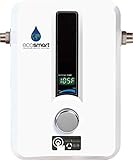 EcoSmart ECO 8 8kW Point-of-Use Tankless EcoSmart ECO 8 8kW Point-of-Use Tankless |
|
Check Latest Price |
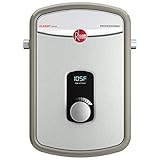 Rheem RTEX-11 11kW Multi-Fixture Tankless Rheem RTEX-11 11kW Multi-Fixture Tankless |
|
Check Latest Price |
 Ranein 18kW 240V Whole-House Tankless Ranein 18kW 240V Whole-House Tankless |
|
Check Latest Price |
 WINTEMP 18kW 240V WiFi Tankless WINTEMP 18kW 240V WiFi Tankless |
|
Check Latest Price |
 SIVUATEK V7B-180B 18kW 240V Tankless SIVUATEK V7B-180B 18kW 240V Tankless |
|
Check Latest Price |
 MIZUDO 14kW 240V Compact Tankless MIZUDO 14kW 240V Compact Tankless |
|
Check Latest Price |
Six of these ten want a two-pole breaker in the 40A to 60A range, and three of them ask for two double-pole breakers at once. Only the CAMPLUX unit runs on 120V. That single fact matters more than any feature list when you are working inside a small existing panel.
1. CAMPLUX 4.5kW 120V Point-of-Use Tankless – Best Overall for Small Homes
CAMPLUX Tankless Water Heater Electric 120V, 4.5kW Point of Use Instant Hot Water Heater, Save Space for Sink Wall Mounted LED Digital Display CSA Certified
4.5kW output
120V, 40A breaker
Serves one sink
7.4 x 10.9 x 2.52 inch
Pros
- Mounts under a sink or inside a tight cabinet
- Hot water in roughly 3 seconds
- Self-modulating draw keeps power use low
- Touch panel with LED temperature display
- CSA certified with a 2-year limited warranty
Cons
- Must be hard wired on a 40A breaker with no plug option
- Needs at least 0.26 GPM so it serves one point of use
- Output temperature can fall short at higher flow
Best For: one bathroom sink in an apartment, condo, or tiny house where panel capacity is limited.
This is the unit we come back to most often for genuinely small spaces, and the reason is boring and simple: it runs on 120V with a single 40A breaker. No panel upgrade conversation, no second set of double-pole breakers, no debate about whether your service can handle 76 amps.
The body measures 7.4 inches wide by 10.9 inches tall by 2.52 inches deep and weighs 4.5 pounds, so it disappears under a sink or inside a vanity. Owners consistently report hot water in about three seconds, and the self-modulating element ramps power to match whatever flow the tap asks for. Reviewers also single out the sealing on this model, which matters in a cabinet where a slow leak wets insulation.
Rated flow is 1.0 GPM at a 50 degree temperature rise, which is a low bar compared with the 105 degree rises most people actually shower at. Real-world output at a higher temperature rise is lower, so treat this as a sink and hand-washing unit rather than a shower heater. The touch control panel and LED display let you set temperature without opening a cover, and dry combustion protection is built in.
How this fits a real small-home layout
Picture a one-bath condo where the existing 40-gallon tank sits in a closet and you would rather not touch the electrical panel. Swap it for this unit at the bathroom vanity and the tub-shower mixer loses its hot supply, which is fine if the shower is a secondary feature for you. If the shower is the main event, keep reading.
Where it falls short
Hard wiring is not optional. It needs 10 AWG wire, a 40A breaker, and a 1/2 inch NPT water connection, so a plug-in expectation ends at the box. Because it serves a single point of use, two simultaneous outlets will not work, and a minority of buyers report the output temperature is not hot enough when they open the tap wide.
2. Rheem RTEX-18 18kW 240V Tankless – Best for Multiple Fixtures
Rheem 18kW 240V Tankless Electric Water Heater, Gray
18kW output
240V hardwired
4.4 GPM rated
99.8 percent efficient
Pros
- Strongest rated flow in this group at 4.4 GPM
- External digital thermostat with one degree accuracy
- Field-serviceable copper immersion elements
- Compact wall-mount body frees floor space
- Self-modulating power matches demand
Cons
- Needs 240V hard wiring and real breaker capacity
- Copper elements are vulnerable to scale in hard water
- Costs more than most 18kW rivals on the market
- Not a point-of-use design
Best For: a small house or cottage where a shower and another fixture overlap, and where the panel can support a 240V circuit.
The RTEX-18 sits at the top of this list on flow rate, and that rating is backed by a large owner base with more than 2000 reviews behind it. At 18 kW it is the smallest-capacity unit here that credibly handles two hot fixtures running at the same time.
Owners highlight two things repeatedly: the external digital thermostat, which you can adjust in one degree increments from outside the casing, and the copper immersion elements, which can be replaced in the field rather than forcing a whole-unit swap. The wall-mount body measures 14.5 inches wide by 18.25 inches tall and 18.25 inches deep, and bottom 3/4 inch NPT connections keep the plumbing layout conventional.
Efficiency is listed at 99.8 percent, and the self-modulating control is what makes that meaningful on an electric unit: instead of cycling a fixed element, the heater trims power as the outlet flow drops. In practice that is the difference between a stable shower and a shower that oscillates when someone else opens a tap.
Reading the 4.4 GPM rating honestly
That number is a rated figure at a modest temperature rise with favourable inlet water. Once you ask for a 105 degree shower, the usable flow drops. If your household runs the shower and the dishwasher together on a regular basis, budget for the gap and consider whether an 18 kW unit is genuinely the ceiling of your electrical service before you pick it.
Who should pass on it
If your incoming water is hard and you are not going to flush the unit, the copper immersion elements are the weak point. Reviewers report scale building up on those elements over time, and this is the model where maintenance discipline matters most.
3. Rheem RTEX-13 13kW 240V Tankless – Best Value for One-Bath Homes
Rheem 240V Heating Chamber RTEX-13 Residential Tankless Water Heater, GRAY
13kW output
240V, 54 amps
3.17 GPM rated
8.25 x 12.62 inch body
Pros
- 13kW balances flow and electrical draw for small homes
- Compact body mounts near the point of use
- External digital thermostat adjusts in 1 degree steps
- Field-serviceable copper immersion elements
- Highest share of five-star ratings in this group
Cons
- 240V hardwired installation required
- 3.17 GPM ceiling means one or two outlets at a time
- Copper elements can scale in hard water
- Needs a dedicated 54A breaker
Best For: the one-bath home that wants unlimited hot water without a panel upgrade conversation.
This is the middle of the road and, for most small homes, the right road. It draws 54 amps on a dedicated circuit, which is well inside a 100-amp service, and it delivers up to 3.17 GPM. Plumbers discussing electric tankless on r/askaplumber consistently point to this power class as the sweet spot for a single-bathroom house rather than reaching for the largest unit available.
The chassis is small, 8.25 inches wide by 12.62 inches tall and only half an inch deep, so it mounts flat against a wall close to the bathroom. Side 1/2 inch compression connections come with NPT adapters included, which is unusual at this size and saves a trip to the supply house. Rheem recommends a water-saving shower head rated at 1.5 GPM alongside it, and that pairing is how you keep the shower within the unit’s comfort zone.
Reviewers describe the build as solid and the external temperature control as precise, with the highest proportion of five-star ratings among the 240V models we looked at. The elements are field-serviceable, so a future repair is a part swap rather than a replacement.
Why 13 kW keeps coming up
Ask for too little and the shower slows when a second tap opens. Ask for too much and you are paying a licensed electrician to enlarge your service for capacity you never use. Thirteen kilowatts is the point where a one-bath home gets comfortable hot water on a panel that most small houses already have.
The honest limitation
Two outlets at once is the ceiling, and that ceiling arrives sooner than the 3.17 GPM figure suggests because that rating assumes a moderate temperature rise. If you plan to run a washing machine and a shower together in the same minute, step up a size.
4. ThermoMate ET180 18kW 240V Tankless – Best for Two Showers
Tankless Water Heater Electric 18kW at 240 Volt, ThermoMate On Demand Instant Hot Water Heater Up to 4.4GMP, Self-Modulating Energy Saving for Residential Indoor Shower, Draw 76Amp
18kW output
4.4 GPM
Draws up to 76 amps
13.12 x 17.12 x 3.12 inch
Pros
- Hot water in roughly 3 seconds
- 4.4 GPM handles two concurrent showers
- Only 3.12 inches deep for wall mounting
- Heating element isolated from the water tube
- Digital display from 80 to 140 degrees in 1 degree steps
Cons
- Draws up to 76 amps on two double-pole 40A breakers
- Some buyers report temperature swings and weak self-modulation
- Needs larger panel capacity which adds install cost
- Wall box accepts only two cable entries on some models
Best For: a small home with two full bathrooms where two people shower at the same time.
This is the highest-flow unit in the roundup relative to its physical size, and the design choice that sets it apart is simple: the heating element sits apart from the water tube. That separation reduces the surface where scale forms, which matters if you are on a well or in a hard-water area.
Hot water arrives in about three seconds and the digital display adjusts from 80 to 140 degrees in single-degree steps. Owners report noticeable reductions in monthly electric bills once they stopped heating a standing tank of water. The wall-mount body is 13.12 inches wide, 17.12 inches tall, and just over 3 inches deep, which fits a utility closet wall without eating floor space.
ETL certification is there, along with overheat and no-water auto stop protection, which is the baseline safety set you want on a hardwired appliance mounted inside a living space.
What the 76 amp draw actually means for you
This model requires two double-pole 40A breakers and two sets of 8 AWG conductors, so it consumes eight panel slots in a residential panel. That is a real constraint in a 100-amp service with a few spare spaces, and it is the single most common reason a buyer ends up with a smaller heater than the one they wanted.
Where owners report trouble
A minority of buyers describe output swinging from very hot to cool, which points to inconsistent self-modulation rather than to the size of the unit. If you are installing this, a licensed electrician should verify the circuit and the element control before you accept the install as finished.
5. EcoSmart ECO 8 8kW Point-of-Use Tankless – Best 240V Point-of-Use Option
EcoSmart ECO 8 Tankless Water Heater, Electric, 8-kW – Quantity 1, 12 x 8 x 4
8kW output
2 GPM rated
Single 40A breaker
8 x 11.5 x 4 inch body
Pros
- Compact 8 x 11.5 inch footprint for cabinets
- Modulating thermostat handles pressure swings well
- Stainless steel internals with in-flow sensors
- Lifetime warranty on electronics and element
- Many multi-year owners report reliability
Cons
- Low 2 GPM rating with some owners reporting drop-out near 1 GPM
- 1/2 inch fittings need adapters for standard 3/4 inch lines
- Electrical connections are internal
- No gravity drain
- which complicates winterizing
Best For: a laundry room, garage workshop, or bathroom where a 240V circuit is available but a bigger unit is not needed.
The ECO 8 is a useful middle ground between the 120V Camplux unit and the larger 240V whole-home heaters. It runs on a single 40A double-pole breaker and reaches 99.8 percent listed efficiency, with stainless steel internal plumbing parts rather than copper.
Its strength is control logic. The modulating thermostat responds to both inlet and outlet temperature sensors set in the water flow, so it holds a set point even when incoming pressure fluctuates. That is the difference between a steady stream and a spray that wanders hot and cool. The 1/2 inch inlet and outlet connections sit near the top of the case, and multiple fitting adapters ship in the box.
Long-term owners tend to be the most enthusiastic about this model, with multi-year reports of steady operation. The lifetime warranty on the electronics, heat exchanger, and element is the strongest parts coverage in this roundup, though labor is not included.
What 2 GPM really covers
This is a single-fixture heater in practical terms. Low-flow activation is where the unit performs well, and a minority of owners report the element cutting out as flow approaches 1 GPM. If your use case is a laundry sink or a single bathroom lavatory, that is fine. If it is a shower, it is not.
Two installation details to plan for
The electrical terminals are inside the case, so the cover has to come off to land the conductors, and there is no gravity drain at the bottom of the unit, which makes winterizing a garage or crawl-space-adjacent install more work.
6. Rheem RTEX-11 11kW Multi-Fixture Tankless – Best Entry Multi-Fixture Unit
Rheem 11kW Multi Fixture Tankless Electric Water Heater – 240V
11kW output
2.68 GPM
One 50A breaker
8.25 x 12.63 inch body
Pros
- 11kW sized for two or three outlets in a small home
- Compact wall-mount body
- Digital thermostat from 80 to 140 degrees in 1 degree steps
- No venting required for installation
- Multi-unit owners report long problem-free service
Cons
- Lowest rated star average of the Rheem units here
- Some buyers report only a trickle of hot water at one outlet
- Nylon fittings rather than threaded pipe
- Cover secured by rear-access screws that are hard to reach
- Internal plastic components can crack during installation
Best For: a small home or rental unit serving two or three outlets, where 100-amp service is the panel you have.
Rheem specifies a recommended minimum of 100A household service for this model, one 50A double-pole breaker, and one set of number 8 AWG copper conductors with ground. No venting is required, which is the practical reason many small-home owners choose electric over gas in the first place.
The compact wall-mount body is roughly 90 percent smaller than a conventional tank heater, and owners who have installed several report long, problem-free service. The digital thermostatic control adjusts from 80 to 140 degrees in single-degree increments.
This is also the model with the thinnest owner feedback among the Rheem units here. It carries the lowest average rating of the three, and the complaint themes are consistent: hot water volume that feels thin, and installation hardware that fights the installer rather than helping.
Sizing this one against the RTEX-13
The step between 11 kW and 13 kW is smaller than the price gap, and the difference shows up when two fixtures run together. If your household has one bathroom and a laundry room on the same supply, we would take the extra kilowatts.
What to check during install
Nylon fittings and rear-access cover screws make this more fiddly than a threaded unit with a front-removable case. Internal plastic components can crack if the housing is torqued down too tightly, so the installer should hand-tighten and then snug, nothing more.
7. Ranein 18kW 240V Whole-House Tankless – Best Stainless Steel Build
Ranein 18kW Tankless Electric Water Heater, Max 4.3 GPM, 240V, Whole House
18kW output
4.3 GPM
Brass inlets and outlets
13.8 x 18.7 x 3.1 inch
Pros
- 4.3 GPM supports two or three simultaneous outlets
- Only 3.1 inches deep for wall mounting
- Brass water inlets and outlets instead of plastic
- Fast heat-up with clean simple controls
- Stainless heating elements resist scale
Cons
- Widest rating spread with a noticeable share of one-star reviews
- Some buyers report nuisance breaker tripping
- Limited manufacturer warranty responsiveness
- Confusing model lineup without clear capacity labels
- Maximum temperature tops out at 131 degrees
Best For: a small house on hard water where materials matter more than brand name recognition.
The hardware choices on this unit are better than most at the price band. Brass water inlets and outlets instead of plastic fittings, stainless steel heating elements instead of copper, and a CSA certification with leakage, overheat, and dry-fire protection. The shallow 3.1 inch body mounts flat against a wall.
Thermal efficiency is listed at 99 percent, with the manufacturer claiming up to 60 percent energy reduction versus a tank heater. The control knob and LED display adjust from 86 to 131 degrees in one degree steps. Installation requires two 40A double-pole breakers and two sets of 8 AWG cable, with 3/4 inch NPT water connections.
Owners mention fast heat-up, solid construction, and a clear installation template that made the wall cutout straightforward. Those are small things that save real time when you are mounting a hardwired appliance into a finished wall.
Why stainless elements matter on a well
Scale resistance is the reason this model earns its place. Where copper elements lose output as mineral deposits build, stainless elements hold performance longer, and that difference compounds in a house where nobody remembers to flush the heater.
Read the rating spread carefully
This is the unit with the widest disagreement among owners: many five-star reports alongside the largest share of one-star ratings in the group. The complaints cluster around random breaker trips and slow warranty response, and the 131 degree ceiling is lower than several rivals. Weight those against the material quality before you choose.
8. WINTEMP 18kW 240V WiFi Tankless – Best Smart WiFi Control
WINTEMP 18kW Electric Tankless Water Heater 240V ETL Certified WiFi
18kW output
4.3 GPM
WiFi temperature control
11.1 x 19.2 x 4 inch
Pros
- Only unit here with remote WiFi temperature adjustment
- 4.3 GPM with self-modulating control
- Compact 4 inch deep wall-mount housing
- ETL certified with a 2-year limited warranty
- Self-modulates to inlet temperature and flow rate
Cons
- Needs a 150A service panel with two 40A breakers and 8/2 AWG wire
- Tallest body in this group at 19.2 inches
- ABS housing material
- Smallest owner feedback base of the 240V models
Best For: a small home with a recently upgraded panel where remote temperature control is worth the extra wiring.
The distinguishing feature is straightforward: this is the only unit in the group that adjusts temperature from a phone over WiFi. For an ADU or a cottage you are not living in full time, that is genuinely useful rather than a novelty, because you can dial the set point before you arrive.
Underneath, it is a conventional 18 kW design rated to 4.3 GPM at 240V, drawing a maximum of 75 amps with self-modulating control that responds to inlet temperature and flow rate. ETL certification covers leakage, overheat, and dry-fire protection, and the manufacturer claims up to 99 percent energy savings in standby.
Owners praise the WiFi control and the stable self-modulated temperature. At 11.1 inches wide, 19.2 inches tall, and 4 inches deep, it is also the tallest body here, so measure the wall cavity before you commit.
Check your panel before anything else
This model specifies a recommended 150A household electrical service with two 40A double-pole breakers and 8/2 AWG wiring. That is a bigger ask than any other unit in the roundup, and it is the reason this picks a spot with a utility upgrade already done.
What the smaller review base means
Fewer than 250 owners have rated this model, so you have less long-term evidence than the Rheem and EcoSmart units carry. The rating is strong, but the history is short, and that is a fair trade-off to accept for app control.
9. SIVUATEK V7B-180B 18kW 240V Tankless – Best Compact 18 kW Design
18kW Tankless Water Heater Electric 240V,Self-Modulating
18kW output
2.8 GPM rated
Only 3 inch deep
Standard 3/4 inch NPT
Pros
- Heating chamber separates water and electrical lines
- Compact 3 inch deep wall-mount body
- Owners report covering two bathrooms plus a kitchen
- ETL listed with multiple protection circuits
- Touch sensor display with intuitive controls
Cons
- Some owners report the touch screen failed and would not power on
- Output temperature swings for some users
- Two double-pole breakers consume eight panel slots
- Maximum temperature listed at only 125 degrees
- Slower output in cold incoming water
Best For: a shallow wall cavity or utility closet where depth, not flow, is the binding constraint.
At 11 inches wide and just 3 inches deep, this is one of the shallowest 18 kW bodies available, which solves a real problem in older homes where a stud wall leaves only a narrow gap. The V7B-180B heating chamber separates the water line from the electrical line, a design that reduces both leakage risk and scale deposition.
Self-modulating power input responds to real-time flow rate and temperature setting, and the unit uses standard 3/4 inch NPT connections rather than the compressed adapters some competitors require. ETL listing covers leakage, dry-heating, high-temperature, and auto-stop protection.
Owners report that the unit covers two bathrooms plus a kitchen sink, and the claimed 99.8 percent efficiency comes with an efficiency-based water heating cost savings figure of up to 50 percent against a conventional tank.
Why the 2.8 GPM rating is lower than its wattage
An 18 kW nameplate does not guarantee high flow. This unit lists 2.8 GPM, noticeably below the 4.3 to 4.4 GPM claimed by other 18 kW models, which tells you the manufacturer is quoting a more conservative figure. Plan around the lower number.
Two limitations worth pricing in
The 125 degree maximum temperature is the lowest ceiling in this roundup, and two double-pole breakers still occupy eight panel slots. A small group of owners also report touch screens that stopped powering on, so check what the warranty offers on electronics before you commit.
10. MIZUDO 14kW 240V Compact Tankless – Best Mid-Kilowatt Compact Unit
14kW Tankless Water Heater Electric, 240 Volt on Demand Hot Water Heater
14kW output
1.4 to 3.4 GPM
60A two-pole breakers
9.57 x 14.3 x 2.8 inch
Pros
- Compact 2.8 inch deep body for small cabinets
- Heats up in about 3 seconds at 98 percent efficiency
- LED touch display with one degree claimed stability
- Up to 60 percent electricity cost reduction versus tank heaters
- ETL certified with several safety protections
Cons
- Lowest rated star average with the smallest review base
- Ceiling of 3.4 GPM limits you to one or two outlets
- 1/2 inch NPT connections need adapters from standard lines
- Requires 60A two-pole breakers and 6 AWG wiring
- Thin iron housing material
Best For: one or two point-of-use outlets in a small home that wants 240V capacity on a 60-amp circuit.
Fourteen kilowatts lands between the RTEX-11 and the RTEX-13 in electrical appetite while claiming a higher ceiling of 3.4 GPM. The flow rate itself varies from 1.4 to 3.4 GPM depending on inlet water temperature, which is the most honest flow specification in the roundup.
The control chip adjusts heating power up to 20000 times per second in the manufacturer’s stated testing, which is their explanation for the plus or minus one degree temperature stability claim. The LED touch display adjusts from 86 to 140 degrees. An installation template, filter, and mounting hardware are all included in the box, which saves a supply run.
The body is 9.57 inches wide, 14.3 inches tall, and 2.8 inches deep, so it fits inside a standard cabinet with room to spare. ETL certification covers leakage, over-temperature, and dry-heating protection.
Buy this for the wiring, not the rating
The reason to consider a 14 kW unit is the electrical side: one set of 6 AWG conductors on a 60A two-pole breaker is a lighter install than the 18 kW models that need two double-pole breakers and 8 AWG or heavier. If your goal is whole-home capacity without a major service change, this is the middle path.
The honest caveat
This model carries the smallest owner base in the group, and feedback splits on both sides of the rating scale. Owners like the quick heat-up and the footprint; others report first-degree and second-degree ratings. With a 3.4 GPM ceiling, treat it as a two-outlet heater and not more.
Do You Have Enough Amperage? The Question That Decides Your Purchase
The number one reason electric tankless projects stall in small homes is not the appliance. It is the panel. Work through the breaker requirements before you choose a model, because they will tell you which units are even possible.
A 40A double-pole breaker serves the CAMPLUX 120V unit and the EcoSmart ECO 8. The Rheem RTEX-11 asks for a single 50A double-pole breaker and recommends a minimum 100A household service. The RTEX-13 draws 54 amps. The MIZUDO 14 kW needs 60A two-pole breakers with 6 AWG wire. The three largest units here, at 18 kW, draw 75 to 76 amps and require two double-pole 40A breakers each.
Two double-pole breakers means eight panel slots, and older 100-amp panels with a full breaker row are the common failure point. Homeowners in r/homeowners threads describe discovering this only after the appliance was already chosen, which is why we put the amperage question before the buying guide. Plumbers weighing in on r/askaplumber point out that a one-bathroom home rarely needs more than roughly 24 kW of electrical capacity, and that oversizing is how people end up paying for a panel they did not need.
Two rules cover most cases. If you have a 100-amp panel with room, a 13 kW or 14 kW unit installs without drama. If your service is 150A or 200A, or you want 18 kW of capacity, have a licensed electrician confirm available slots before you order anything.
GPM and Temperature Rise: Sizing Math for One-Bath Homes
Every GPM figure on a spec sheet is measured at a stated temperature rise, and the rise you care about is the one that gets you a 105 degree shower. The relationship is simple: watts divided by 8.34 and by the temperature rise gives you gallons per minute. Read a rating at 50 degree rise and it will fall by roughly half at a 105 degree rise.
That is why an 18 kW unit can advertise 4.4 GPM while a 13 kW unit advertises 3.17 GPM and neither figure tells you what happens in January when incoming water is cold. Inlet temperature is the hidden variable. Colder inlet water means a larger rise needed for the same outlet temperature, which means less flow for the same wattage.
For a one-bath home, the practical targets are these. A single bathroom sink needs under 1 GPM. A low-flow shower at 1.5 GPM with a comfortable temperature rise is the realistic goal for a 13 kW unit. Running a 1.5 GPM shower and a dishwasher together needs closer to 3 GPM delivered, which is where the larger units earn their panel requirements.
Two outlets at once is the honest ceiling for most of the mid-size units in this list, and it is worth walking through your own routine before you buy. If nobody in your house showers and washes dishes in the same ten-minute window, you do not need the highest-flow option here.
How to Choose an Electric Tankless Water Heater for a Small Home
Start with flow rate, then confirm it against temperature rise, then confirm the electrical requirement. Everything else is preference. Our full guide to tankless electric water heaters for the home covers larger floor plans, but the sequence below is the one that matters in a small space.
1. Flow rate matched to real fixtures. Count the fixtures that will run simultaneously, not the total in the house. Under 1 GPM for a sink, 1.5 to 2 GPM for one shower, 3 GPM or more for a shower plus a second hot outlet.
2. Kilowattage that matches your panel. Work backward from the breaker your panel can host. If you can only fit one double-pole breaker, 11 kW to 14 kW is your range. If you can fit two, 18 kW is open to you.
3. Voltage and circuit type. Only one unit in this roundup runs on 120V, and it is also the only one that serves exactly one sink. Everything else needs 240V hard wiring.
4. Climate and inlet temperature. In cold climates, the same wattage delivers less usable flow. Our guide to tankless water heaters for cold climates covers the alternative approach when the wattage you need is not available.
5. Certification. Look for ETL or CSA listing and confirm what the protections cover: overheat, dry-fire, leakage, and no-water shutoff are the baseline.
6. Element material and serviceability. Copper elements are cheap and widely replaceable. Stainless elements resist scale better. A field-serviceable element matters far more in hard water than it does in soft water.
7. Warranty on parts, not just the unit. EcoSmart’s lifetime warranty on the electronics, heat exchanger, and element is the strongest parts coverage here, with labor excluded. Compare that against a 2-year limited warranty on several rivals before deciding the risk you are taking.
If your home is bigger than one bathroom, our roundup of electric water heaters for large homes covers higher-capacity setups.
Maintenance and Descaling in Hard Water Areas
Electric tankless heaters fail from scale, not from age. Hard water deposits minerals on heating elements, output falls, and eventually the element or the heat exchanger gives up. In a soft-water area this is a minor chore. On a well or in a hard-water region it decides how long the unit lasts.
The cheapest fix is an inline sediment or scale filter installed on the cold inlet, and it costs far less than a replacement element two years later. Among these ten units, the Ranein 18 kW and the ThermoMate ET180 both use stainless elements or a separated heating chamber to slow scale, while the two Rheem units use field-serviceable copper immersion elements that scale faster but are cheap and easy to replace.
Flush the unit annually in hard water and twice a year if you are on a well. On the Rheem models, the elements can be swapped in the field rather than replacing the whole heater, which changes the economics of maintenance considerably.
Skip the maintenance and the symptom is familiar from owner reports: hot water that starts cool and gets cooler as the shower runs. That pattern is an element losing output to scale, not a thermostat problem.
Do You Even Need Tankless in a Small Home?
Sometimes you do not, and we would rather say so than take the sale. Plumbers discussing tankless on r/askaplumber describe electric tankless as a niche category, well suited to small homes but not universally better than a conventional tank. Homeowners in colder climates repeatedly recommend hybrid heat pump water heaters instead, noting that two showers can run at once with no loss.
A 40 to 50 gallon storage tank still wins in three situations. If nobody in your household runs two hot fixtures at once, a tank heats a small amount of water and holds it, and the total cost is lower. If your incoming water is very cold and your panel cannot support the wattage you would need, a heat pump hybrid draws far less electricity. And if your electrical service is 100 amps with no spare slots, the install cost of a panel upgrade can exceed the cost of the heater several times over.
What tankless genuinely gives a small home is floor space, since a wall-mounted unit is a fraction of the footprint of a cylinder, and no cold-first-shower mornings after a long gap. If your household runs a shower and a dishwasher at overlapping times and you have the panel capacity, the ten units above are a real improvement.
Frequently Asked Questions
What size tankless water heater do I need for a small house?
For a one-bath small home, target 2 to 3 GPM at a 105 degree rise, which a 13 kW to 14 kW unit delivers. Add capacity for each simultaneous hot fixture: a 1.5 GPM shower plus a dishwasher needs closer to 3 GPM delivered, pushing you toward 18 kW. Check your panel amperage before choosing, since two simultaneous fixtures and a low-flow shower head are the deciding details.
What voltage does an electric tankless water heater require?
Almost all electric tankless water heaters require a 240V dedicated double-pole circuit. Exceptions are small 120V point-of-use units rated around 3.5 to 4.5 kW, which serve a single sink only. Breaker requirements range from a single 40A or 50A double-pole for 8 to 11 kW models up to two double-pole 40A breakers for 18 kW units, so confirm panel capacity before you order.
What is the best tankless water heater for a tiny home?
For a tiny house or one-bath apartment, a 120V 4.5 kW point-of-use unit is the easiest fit because it needs only a 40A breaker and no panel work, but it serves one sink. If you want a shower, a 13 kW 240V model on a 54A breaker covers one bathroom well inside a 100-amp panel. Our top pick is the CAMPLUX 4.5kW for sink-only use and the Rheem RTEX-13 for a full bathroom.
What is the most reliable electric tankless water heater?
Reliability tracks brand service parts and element design more than headline specifications. The Rheem RTEX-13 and RTEX-18 use field-serviceable copper immersion elements that can be replaced without replacing the unit, and EcoSmart’s ECO 8 carries a lifetime warranty on the electronics, heat exchanger, and element. In hard water, stainless elements resist scale better than copper.
How long does an electric tankless water heater last?
Life expectancy is driven mostly by water quality and maintenance rather than the appliance itself. With annual flushing and an inline scale filter, electric tankless units commonly run for well over a decade. In hard water with no flushing, mineral deposits on heating elements cut output within a few years and can force an early element replacement.
Conclusion: The Best Electric Tankless Water Heaters for Small Homes in 2026
For most small homes in 2026, the Rheem RTEX-13 at 13 kW and 54 amps is the answer, because it fits a 100-amp panel and still gives you a comfortable shower. If your panel is tight or you only need one sink, the CAMPLUX 4.5kW 120V unit solves the problem with no electrical work at all. If two hot fixtures genuinely overlap, step up to an 18 kW model and confirm you have the panel capacity for two double-pole breakers.
Check your amperage first, read GPM at your actual temperature rise, and pick elements that suit your water. Those three checks will save you more money than any feature comparison will earn you.